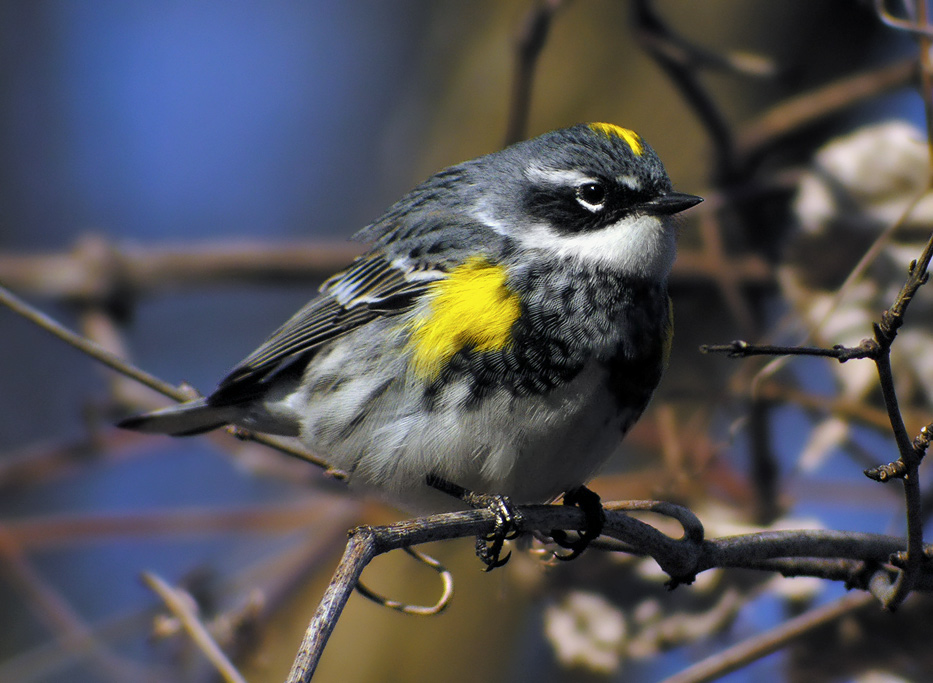
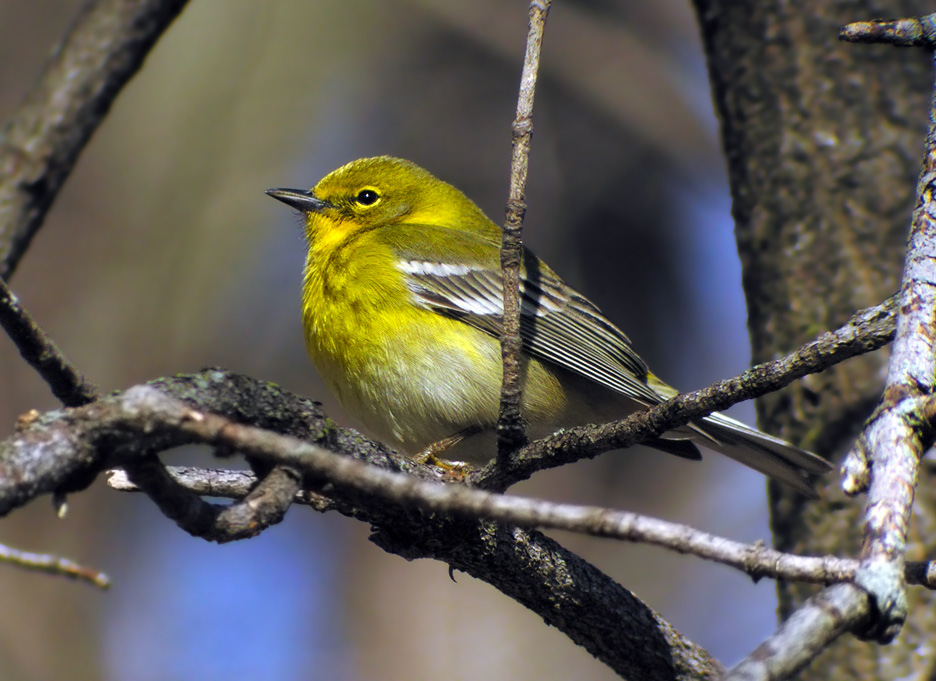
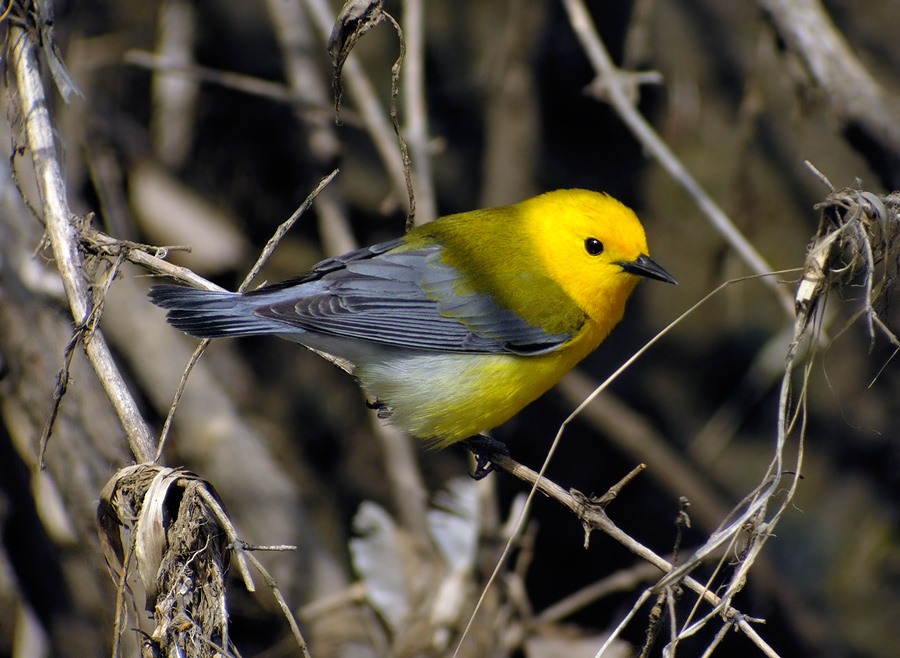
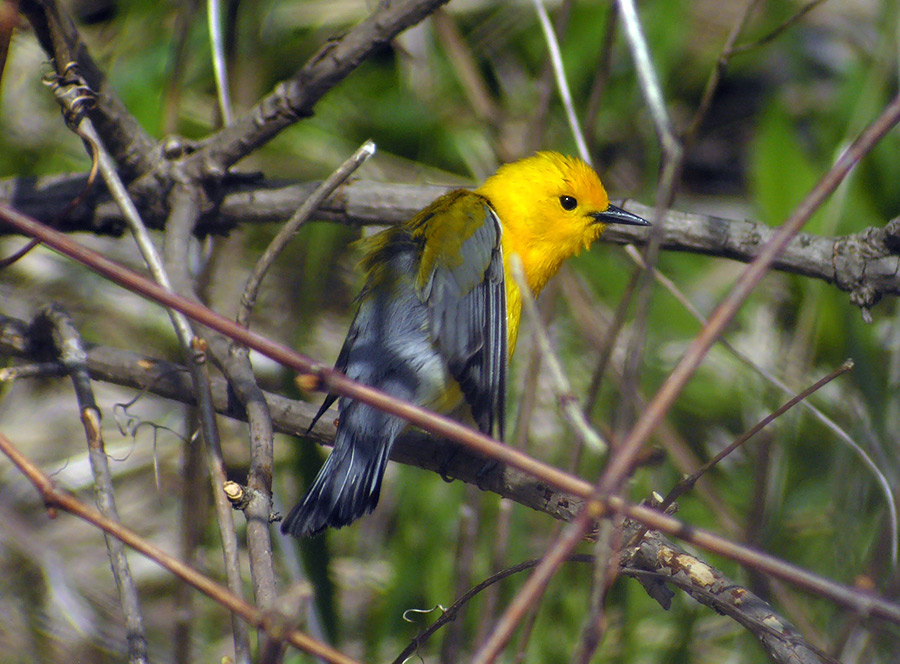
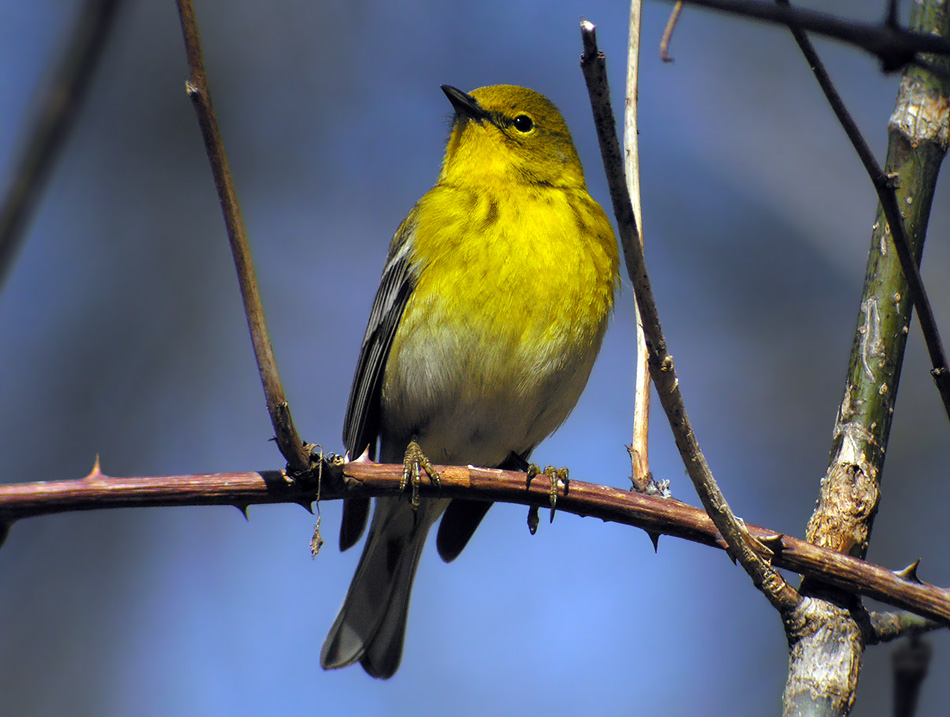
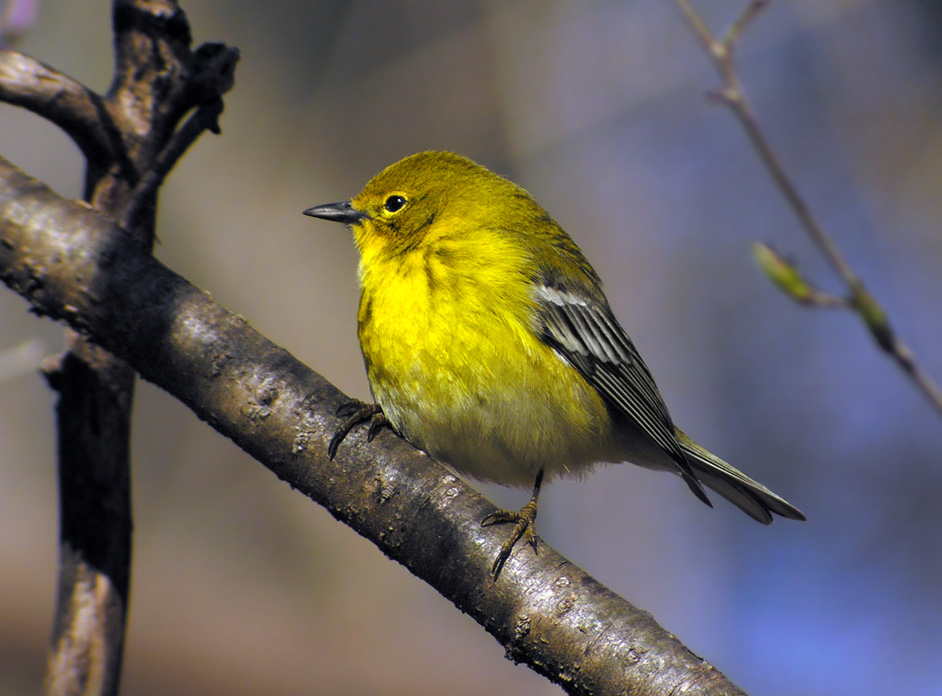
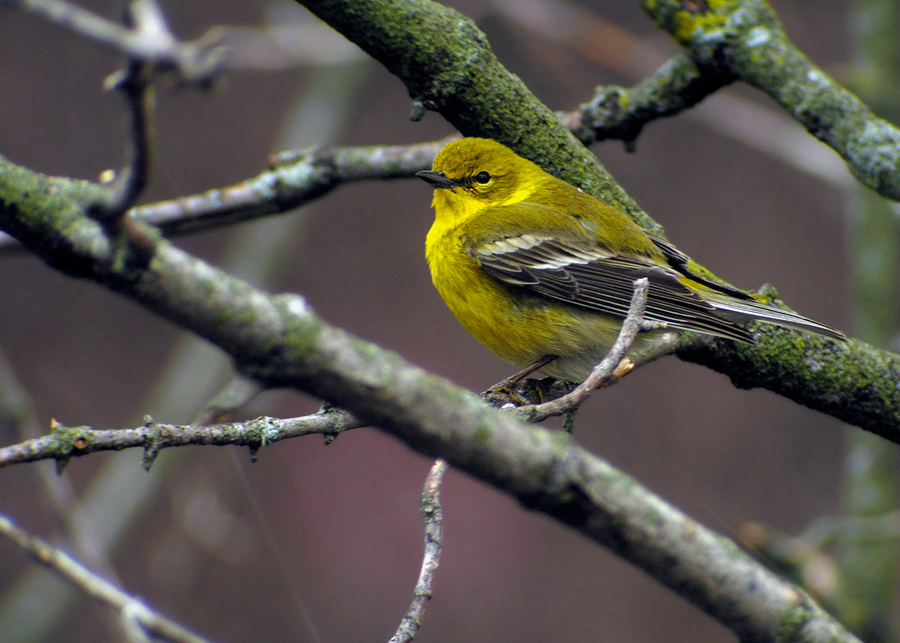
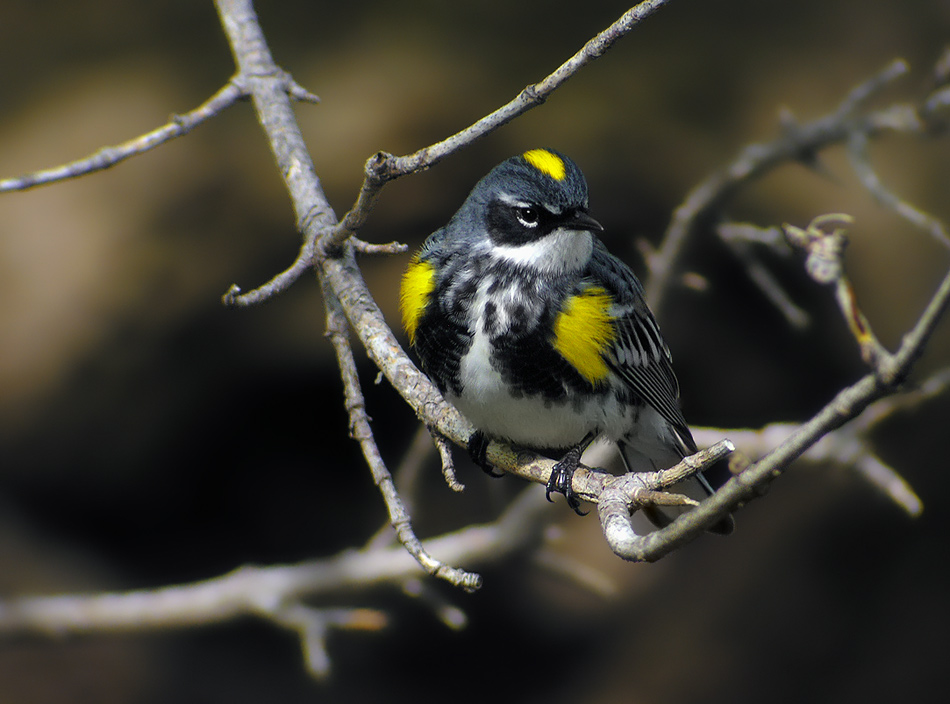
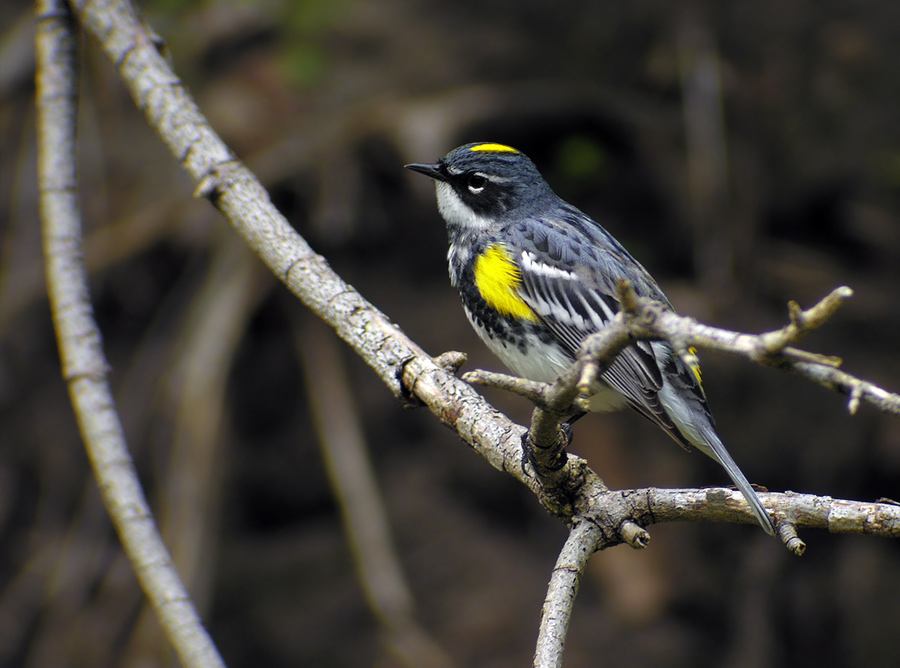
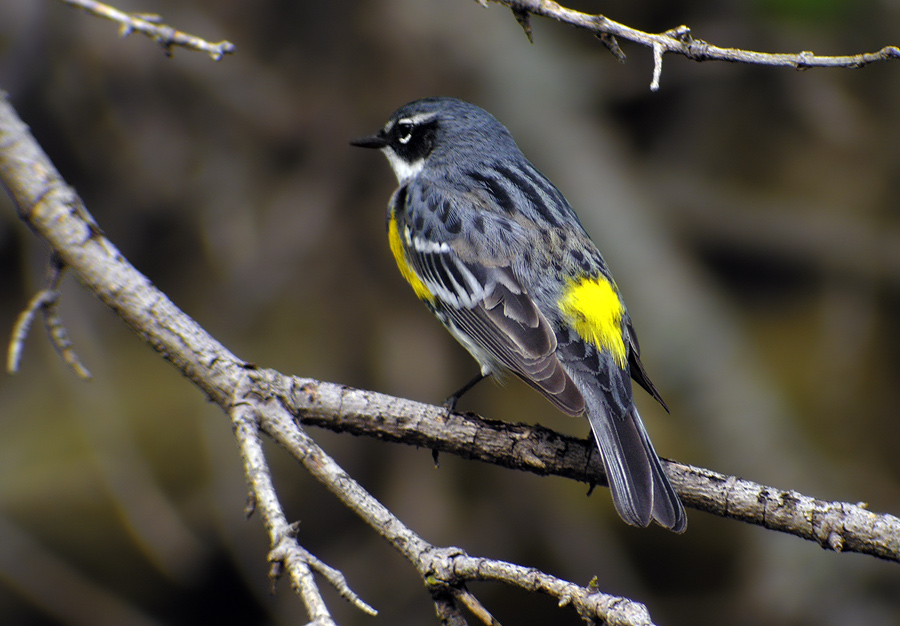
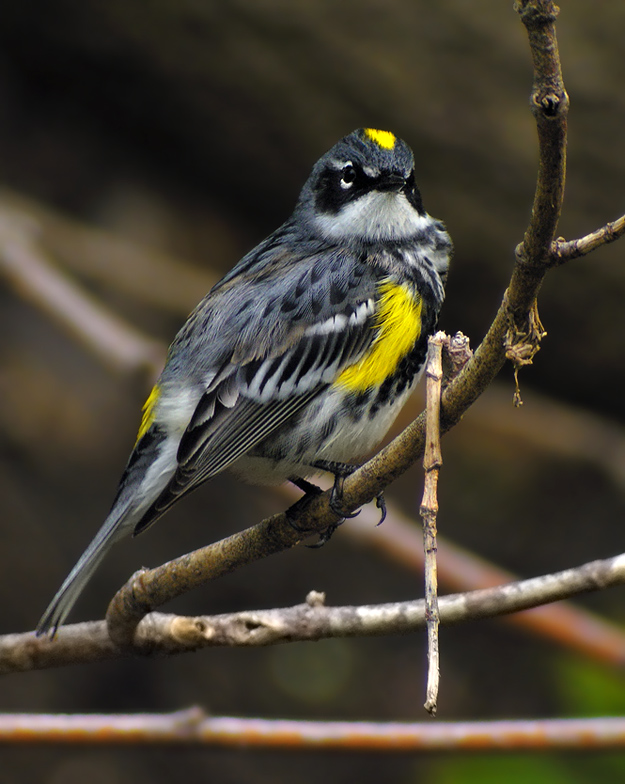
A very cold and rainy April comes to an end. Highlights include early Northern Parula and Prothonotary Warbler, but I won't forget the impressive number of Yellow-rumped Warblers that were stalled at Pheasant Branch Conservancy for several days. One day I estimated 15 to 20 individual birds every 100 feet for nearly 2 trail miles. Conservatively, that's nearly 1,500 yellow-rumps just along the creek corridor trail, but no doubt there were thousands more spread throughout the 500 acre conservancy. I observed male yellow-rumps displaying super aggressive behavior, which included a harsh rapid series of chip-notes I don't recall ever hearing before. My counts for Pine Warbler were above average as well and I was finally able to get nice photographs of this species.
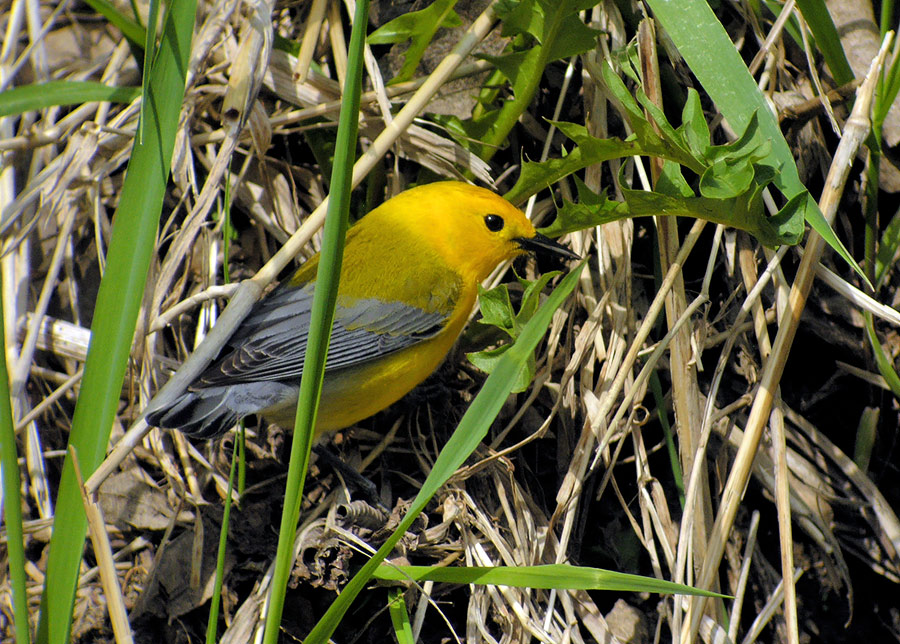
After being captivated by three Pine Warblers foraging together in the grass near the Parmenter Street bridge on Sunday, Dottie Johnson and I simultaneously locked on an even brighter yellow bird perched in the thicket along the creek bank. We were rendered speechless for a few seconds as our minds worked to make the identification of the bird. I finally acknowledged "Prothonotary Warbler!" We weren't expecting that!
While the record-early for Prothonotary Warbler in Dane County is April 16th, I typically don't see them (if at all) at Pheasant Branch Conservancy until the end of the first week of May. This dazzling 'golden swamp warbler' spent most of its time foraging in the grass along the bank. To our delight, we also got to watch it bathe and preen.
Preening after a bath.
Certainly one of the most stunning birds you can see in southern Wisconsin, Dottie mentioned this was the species that got her interested in birding in the first place. As a few other birders joined us, a few non-birders stopped and asked what we were watching. I let them use my binoculars and even got the bird in my spotting scope for them; they were amazed by the bird's awesome colors. A memory now recorded in photographs, you can see why this exquisite bird has inspired people to become more interested in birds.
Location: Pheasant Branch Observation date: 4/24/11 Number of species: 55
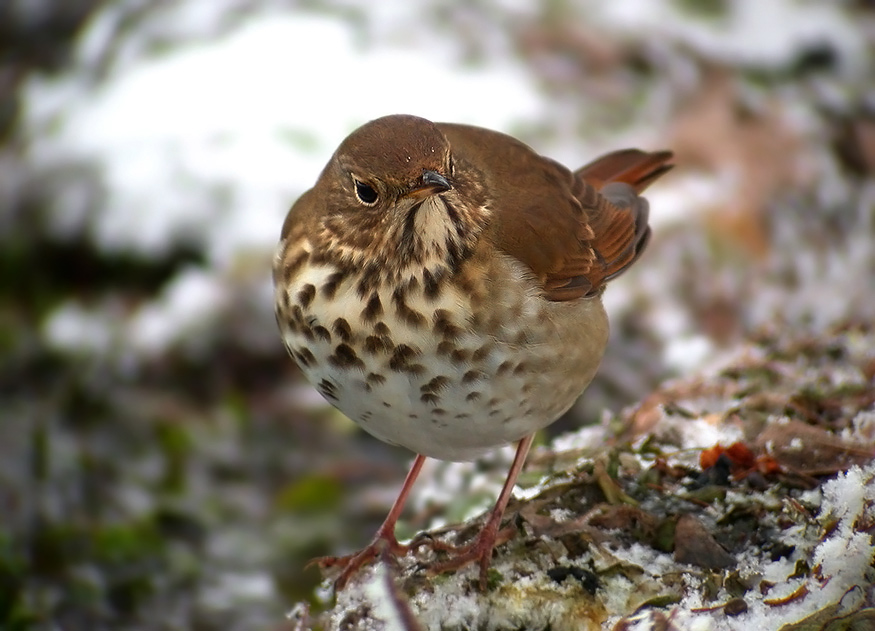
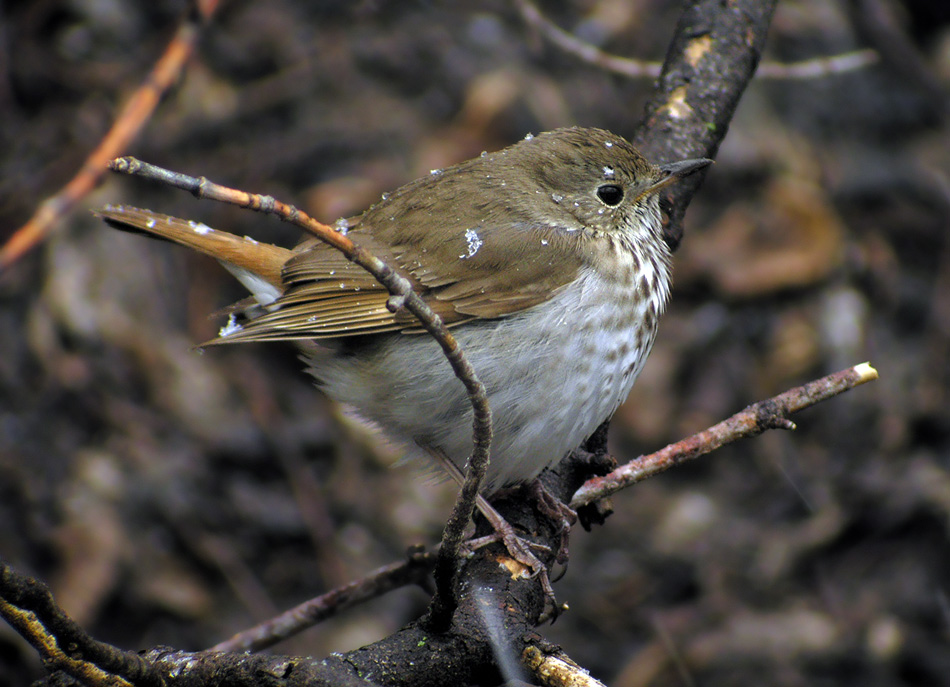
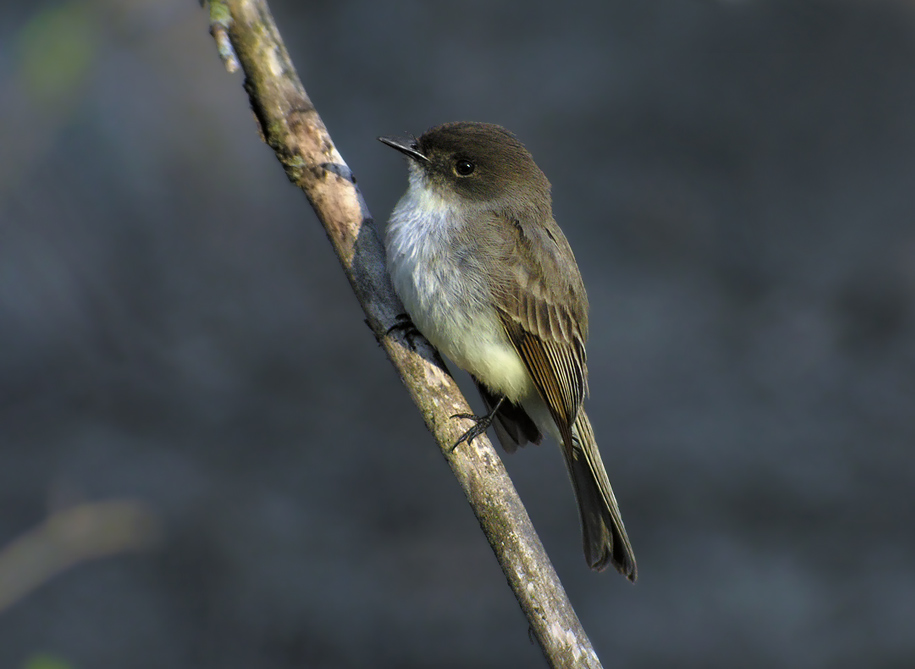
With yesterday's harsh wintery weather, I wondered if birding this morning would be a gloomy experience. Would I find Ruby-crowned Kinglets struggling on the ground searching in vain for insects that weren't there? I wondered how the birds were faring in the cold and snow, but I thought it might be too depressing to watch. The curious naturalist eventually won over the sentimentalist and I'm happy to report that the birds are doing fine. I observed Yellow-rumped Warblers eating dead insects on frozen puddles. Kinglets were finding bugs on honeysuckle. Hermit Thrushes were turning over leaves and finding food items. Insects that hadn't succumbed to the overnight cold were under bridges where Eastern Phoebes and Yellow-rumps were making meals out of them. Another group of Yellow-rumps were hunting through the rocks under the Parmenter Street bridge, just like the one in the video during the bad weather on Saturday. It was also interesting how comparatively easy it was to spot thrushes on the snow-covered forest floor.
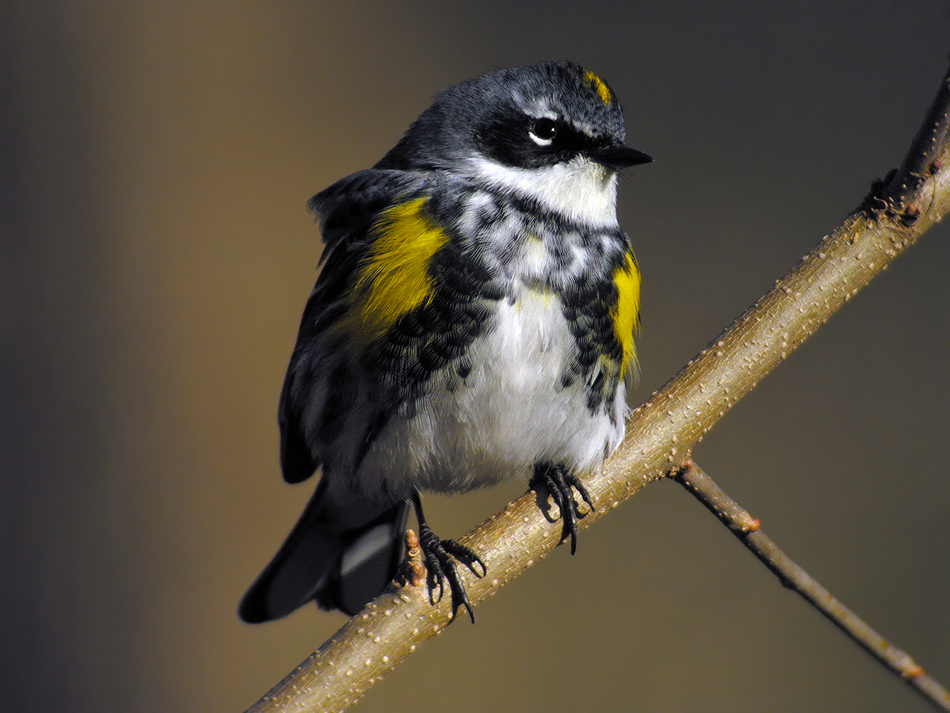
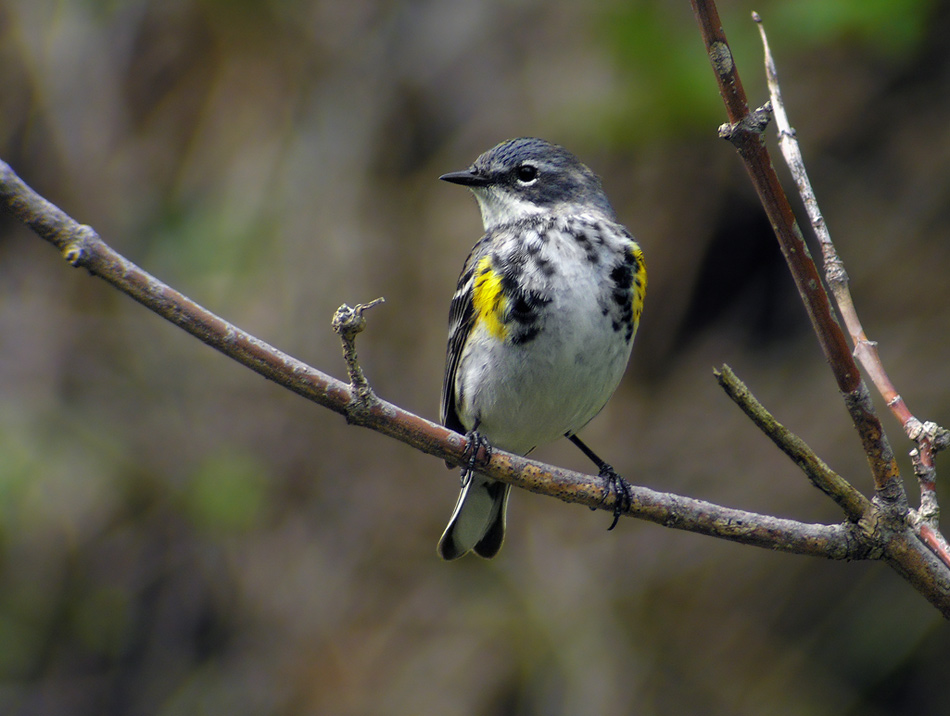
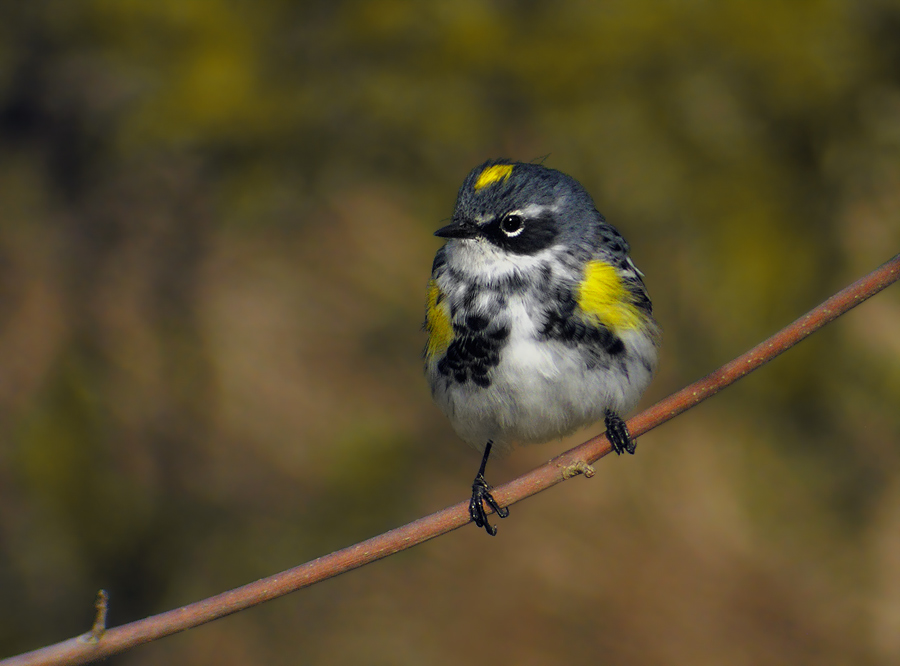
Ever since 2002 when I started digiscoping, it's become a tradition of mine to capture a stunning Yellow-rumped Warbler portrait each spring. There are a couple reasons I do this. First of all, it's fun! Secondly, it gets me warmed up for the swarm of migrants that will pour in late April and May – it's really good practice for fast-moving birds. And it's also a way to gauge my progress over the years. Just look at 2002's Yellow-rump portrait for a comparison! This morning I'm content that the above image is 2011's. He's a beauty, isn't he? Naturally, I'll still digiscope a Yellow-rump if I find a cooperative one in inviting light, but for now I feel like I've accomplished this seasonal goal.
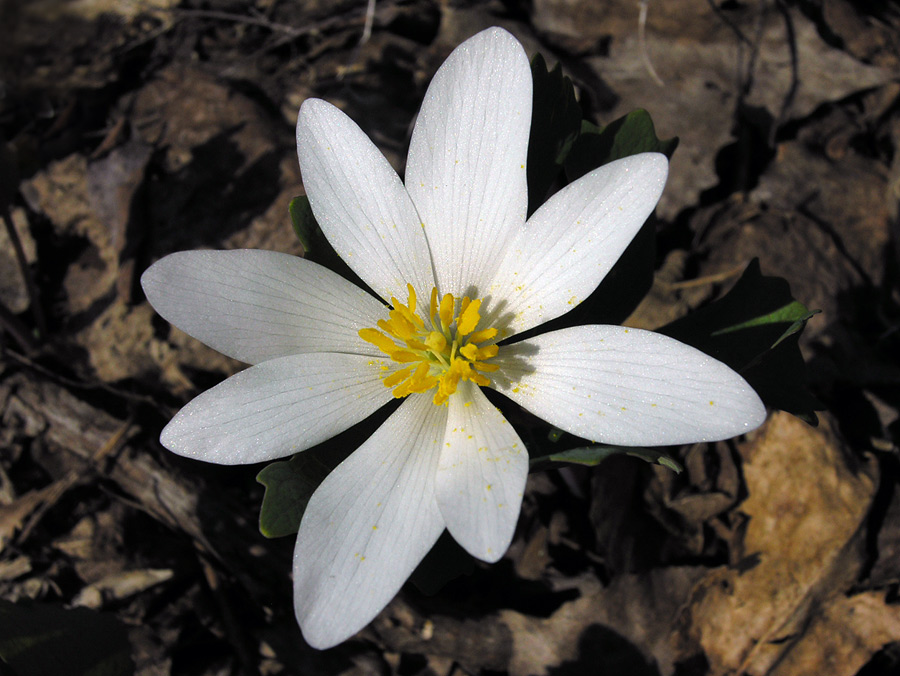
Bloodroot
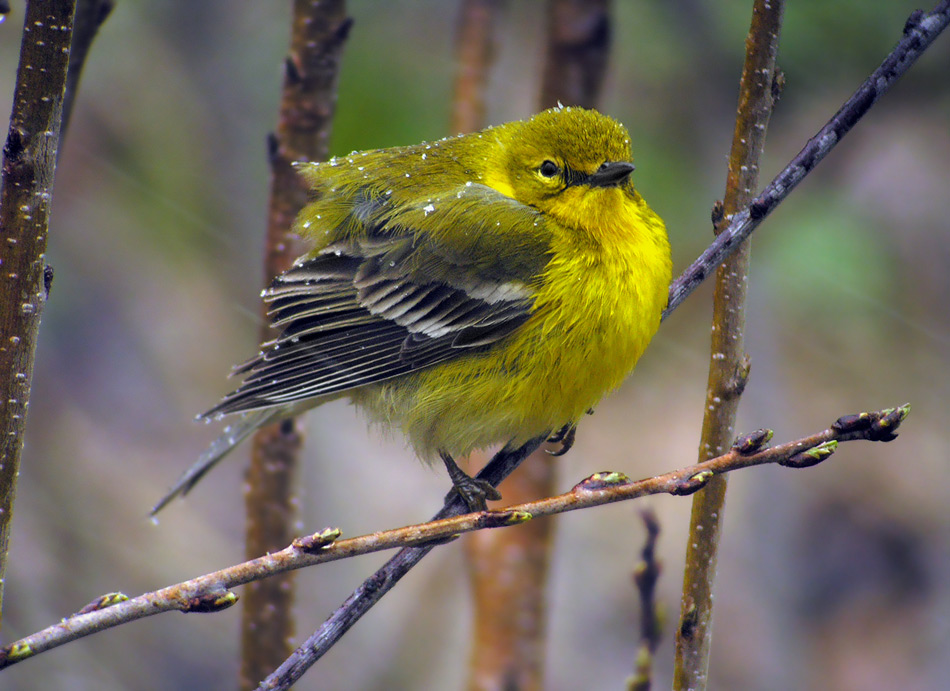
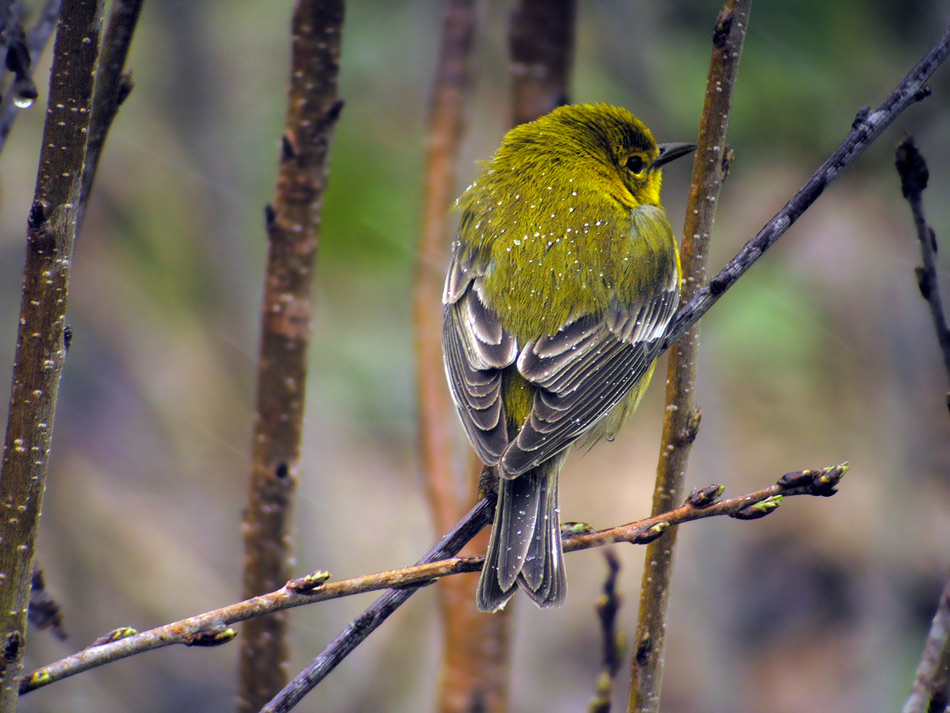
Though the strong winds didn't die down overnight, we at least had clear skies and lots of sunshine today. The temperature was still in the low 30's in the morning, but it warmed up to the upper 40's by noon. The warbler flock I was with in the sleet yesterday was still present near the Parmenter Street bridge. The sprightly birds looked quite a bit more comfortable and there were lots of midge flies for them to eat. They'll need it. We're supposed to get around an inch of snow tonight, so food will probably be difficult for them to find in the morning. Once it warms up, they'll be back in business. The Pine Warblers were also still present and I was able to get some nice images of them today:
Location: Pheasant Branch Observation date: 4/17/11 Number of species: 52
Chilling winds carried a vile mixture of rain, sleet, and snow for most of the day. Overnight weather was unfavorable for bird migration. I anticipated that a mixed songbird flock I saw yesterday along the creek corridor near the Parmenter Street bridge would still be there today. But going against my usual rule of digiscoping only on sunny days, I decided to bring my gear along.
Black-capped Chickadee watching the snow.
Not surprisingly, most of the warblers (and other birds) were foraging on or near the ground because there were very few insects to be found up in the trees. There were dozens upon dozens of Yellow-rumped Warblers flitting around. Sorting through them, I also found an Orange-crowned Warbler, Black-and-white Warbler, Louisiana Waterthrush, and two Pine Warblers:
Pine Warbler
Getting pelted with rain, sleet, and snow.
The birds had it a little rough today, but I feel confident they'll endure. Stalled at Pheasant Branch isn't such a bad fortune for them; it's a very suitable migratory stop-over point while they wait for favorable weather so they can continue north.
Hermit Thrush
I was getting soaked from being pelted with sleet, so I went under the bridge to wipe the water droplets from my glasses, binoculars, camera, and spotting scope. To my astonishment, I discovered I had company. Several Yellow-rumped Warblers were searching for insects around the rocks:
Location: Pheasant Branch Observation date: 4/16/11 Number of species: 38
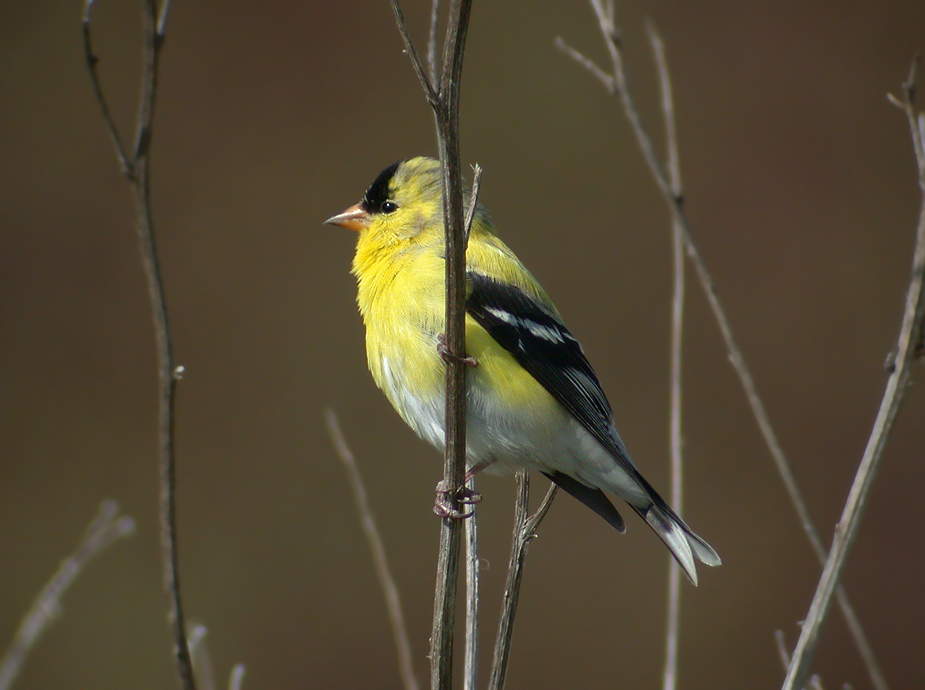
Canada Goose Wood Duck Mallard Great Blue Heron Mourning Dove Great Horned Owl Belted Kingfisher Red-bellied Woodpecker Yellow-bellied Sapsucker Downy Woodpecker Hairy Woodpecker Northern Flicker Eastern Phoebe Blue Jay American Crow Black-capped Chickadee Tufted Titmouse White-breasted Nuthatch House Wren Golden-crowned Kinglet Ruby-crowned Kinglet Hermit Thrush American Robin European Starling Cedar Waxwing Orange-crowned Warbler Yellow-rumped Warbler Pine Warbler Black-and-white Warbler Louisiana Waterthrush Chipping Sparrow Song Sparrow White-throated Sparrow Dark-eyed Junco Northern Cardinal Red-winged Blackbird Brown-headed Cowbird American Goldfinch
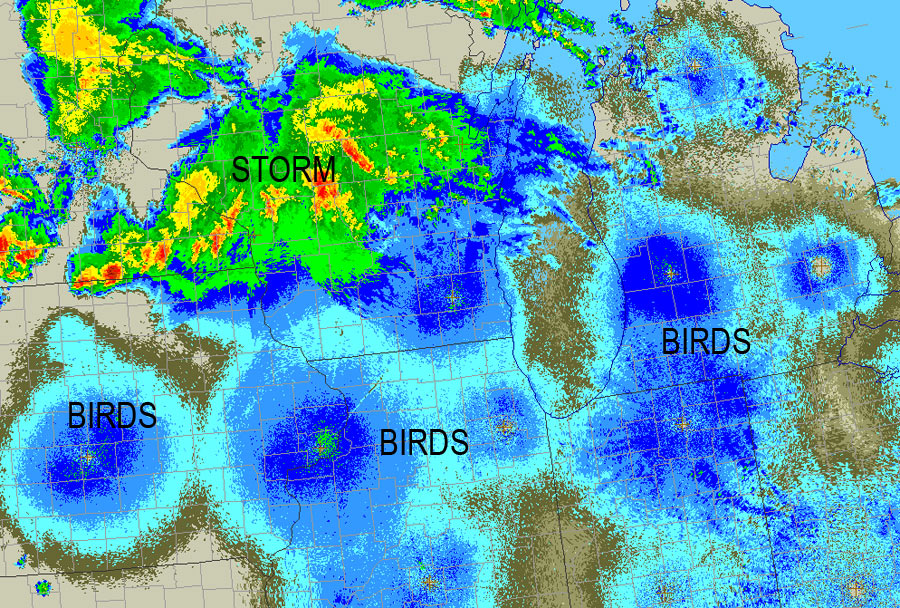
One glimpse at Saturday night's NexRad map over Wisconsin and I knew Sunday morning was going to be good. You can see migration over Iowa, Illinois, and Indiana, but the birds were stopped in southern Wisconsin by a strong thunderstorm. Sure enough, I went from a previous high outing total of 47 bird species to 59. New birds included Brown Thrasher, Eastern Towhee, Field Sparrow, Savannah Sparrow, Louisiana Waterthrush, Swamp Sparrow, and more. There were major influxes of Yellow-rumped Warblers, Northern Flickers, Yellow-bellied Sapsuckers, Chipping Sparrows, and Ruby-crowned Kinglets.
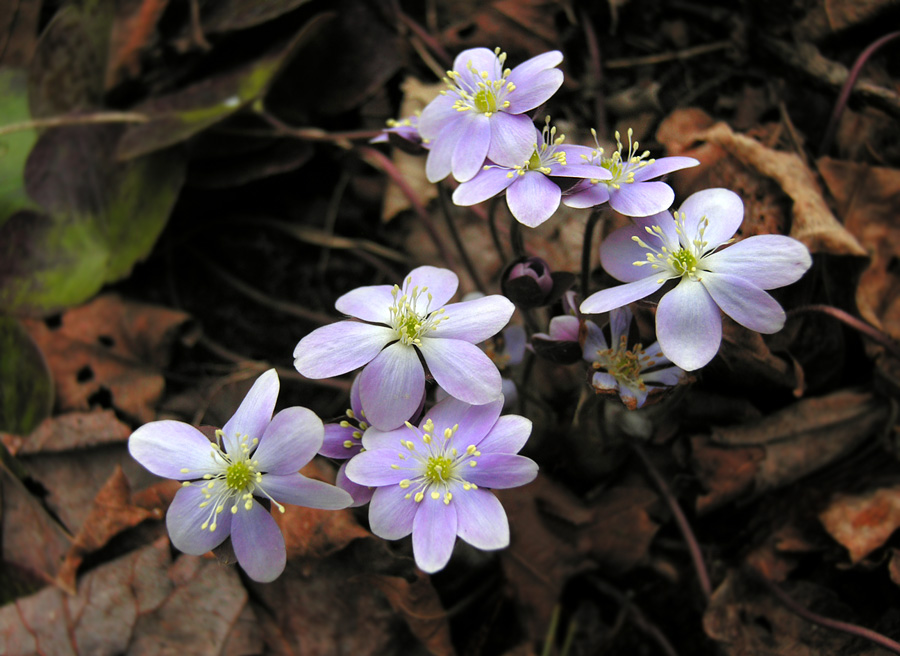
The unseasonably warm weather (82 degrees F.) brought insect hatchings as well; I saw my first Mourning Cloak and Red Admiral butterflies of spring. This Round-lobed Hepatica was my first wildflower of the year:
Over the past several days more Yellow-rumped Warblers have been passing through Pheasant Branch Conservancy on their return journey to the northern forests. There are no leaves yet making it a lot easier to view and photograph these particular woodland birds. The males tend to migrate before the females and that's all I've been seeing so far.
In terms of evolution and adaptation of a species, yellow-rumps are a grand success, but with that there is a loss of love by birders. Our tendency is to appreciate biological success stories less; the emotions we experience when spotting a bird that's rare, given a small population size or outside of its normal range, are much more powerfully felt. When the first yellow-rump returns it's "Hey! The yellow-rumps are back!" but by mid-May as we sort through a dozen warbler species or more it becomes "Oh. It's just another yellow-rump, sorry."
This sentiment is interesting, but it's true for other species, too. Everything is rare somewhere, I suppose. You're certainly not going to see me get too excited over my first Ring-billed Gull of spring migration, but I really enjoy the time the yellow-rumps are with us. During spring, we see these beautiful warblers in southern Wisconsin in only April and part of May. It's the only time of the year we get to hear their songs and see them in their striking alternate plumage.
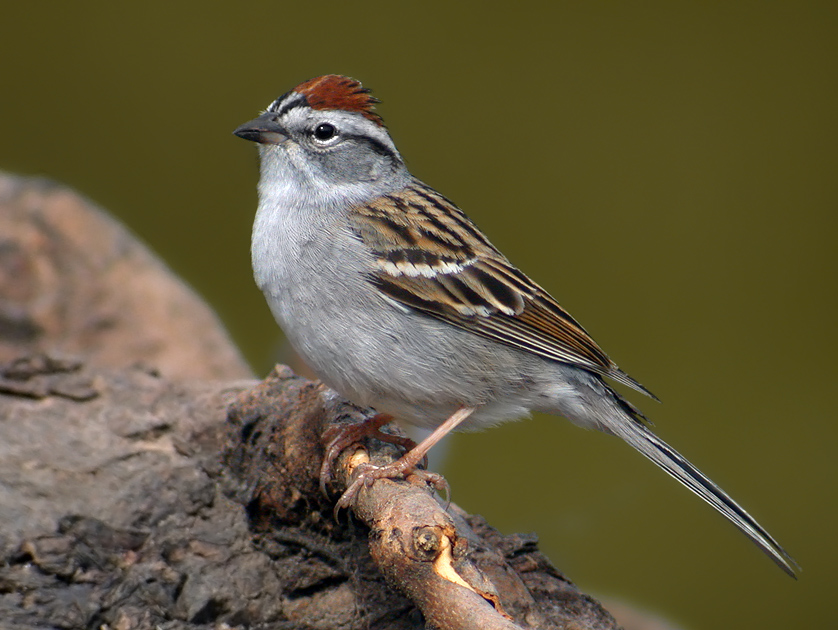
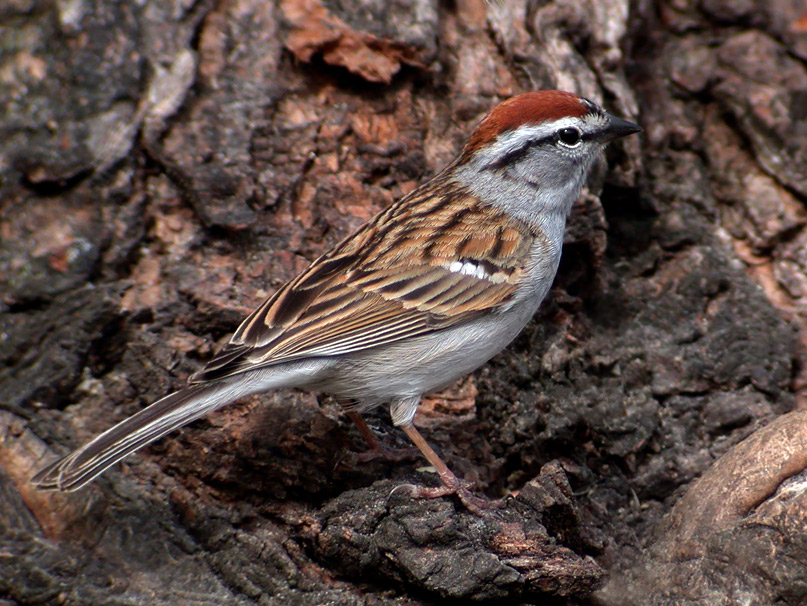
The creek corridor trail was teeming with activity and song this morning. There were newly arrived Tree Swallows circling over the confluence ponds and I found my first Chipping Sparrow of the year near the end of Clark Street. "Chippies," as some like to call them, are common throughout most of North America during the spring and summer season. Though abundant, I find them to be delightful and spunky backyard characters, replacing the Dark-eyed Juncos that kept me company throughout the winter season.
Location: Pheasant Branch Observation date: 4/7/11 Number of species: 47
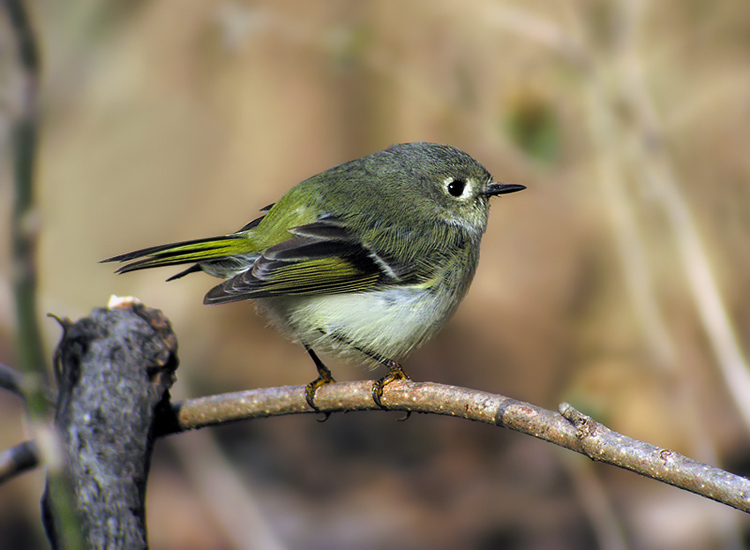
It's raining this morning, but last evening there was a mixed-flock of songbirds that included Yellow-rumped Warblers, Golden-crowned Kinglets, a very early Northern Parula, and my first Ruby-crowned Kinglet of spring. The birds were actively feeding on what appeared to be a hatching of midge flies. Speaking of kinglets, did you know that despite their current taxonomic placement, Ruby-crowned and Golden-crowned kinglets are not particularly closely related within Regulidae?
The 2 North American kinglets (Golden-crowned and Ruby-crowned) are probably not closely related sister taxa. They differ in scutellation pattern of toe 4, a pattern that Golden-crowned Kinglet shares with the Eurasian species (Clark 1974, pers. comm.). Electrophoretic studies (Ingold et al. 1988) produced a substantial genetic difference between Golden-crowned and Ruby-crowned kinglets, a distance typical of different passerine genera … a comprehensive study of all species of Regulus, both biochemical and behavioral, is needed to define correct affinities.
Small branches and twigs littered the creek corridor trail from last night's powerful hailstorm. Clumps of nickel-sized hailstones still remained even though it's been above freezing. As I walked down the corridor trail, I was relieved to hear so many songs of birds. I checked in on the owls – they were fine. A male Great Horned Owl had his wings drooped at his flanks to dry them out. Judging from the number of individuals and species, the birds seemed largely unaffected by the hail. Kingfishers were busy zooming around and wood ducks were cruising down the creek – all was well!
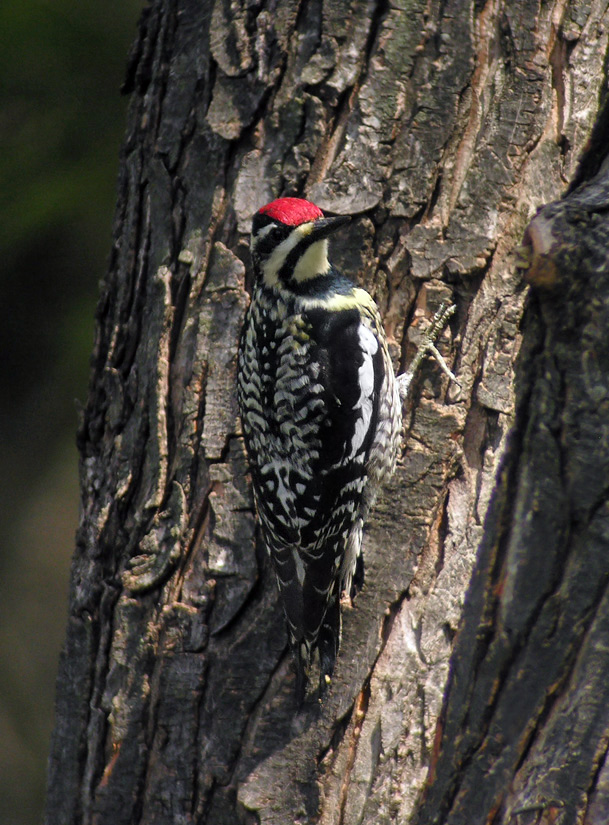
Continuing on, I found a flock of Golden-crowned Kinglets foraging in the understory. There were more Eastern Phoebes and Yellow-bellied Sapsuckers than the previous day, so at some point during the night more birds moved into the conservancy. A little further down I heard a familiar chip-note belonging to a Yellow-rumped Warbler. The first one is always exciting because it's the leader in a succession of warbler waves to come. Though they're one of the most common warblers in North America, these birds are no less a participant in one of the greatest animal migrations on Earth. Common or not, they're beautiful birds to look at.
Location: Pheasant Branch Observation date: 4/4/11 Number of species: 36
Severe thunderstorms rolled through southern Wisconsin last night and dumped the largest hailstones I've ever seen. Unfortunately, my car was outside when the storm hit. Moving as quickly as I could, I put on my heavy-duty rain gear, ran outside, and got my car into the garage. I knew from the loud impacts the hood and roof were being dented. I got thwacked on the head a few times in the few seconds I was exposed. Storms like this cause me to ponder what happens to birds and other wildlife that can't find shelter in time, or at all. I sure hope I don't find any dead critters this morning at Pheasant Branch.