3.18.2010

The Badger Won!


Naturally, the Badger design won by a landslide:
  • Badger: 6,167 votes for 68%
  • Great blue heron: 2,890 votes for 12%
  • Eastern bluebird: 2,846 votes for 12%
  • Red-headed woodpecker: 1,905 votes for 8%
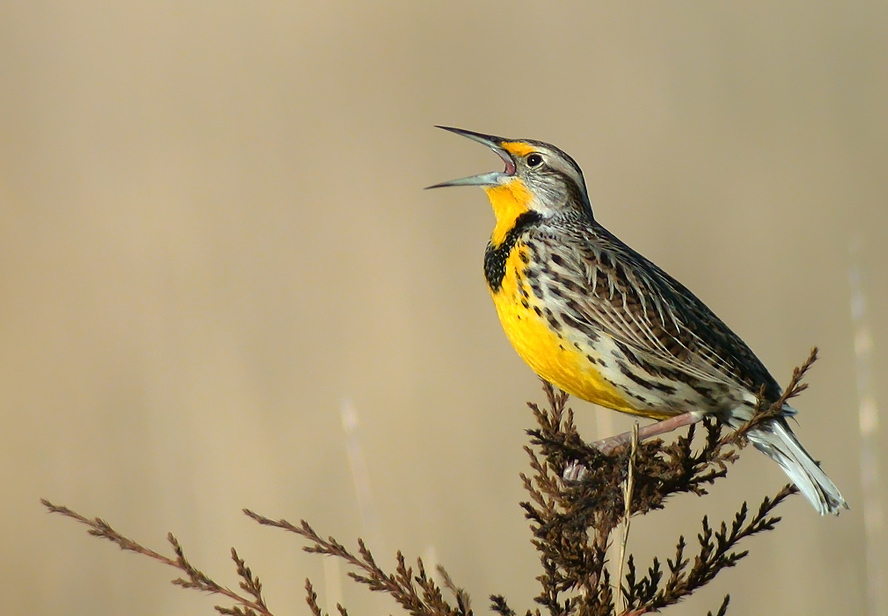
So, a Western Meadowlark I digiscoped in Nebraska will appear (upper right) on the new Wisconsin Endangered Resources license plate!

3.17.2010

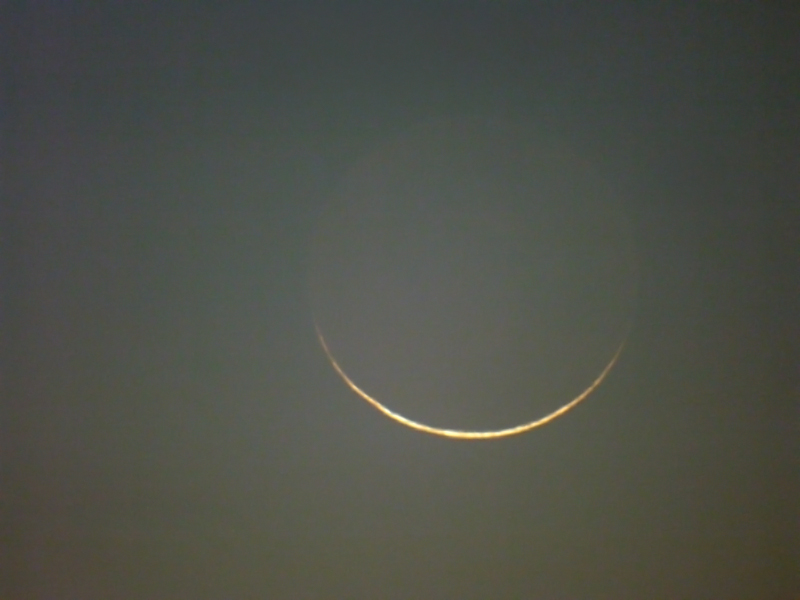
A Very Young Moon


Last night while listening and watching Timberdoodles (American Woodcock) at the prairie parcel of Pheasant Branch Conservancy, I noticed a gleaming sliver of light just above the western horizon. Did you see it? It was one of the youngest moons you were likely to see with the naked eye. Once I noticed it, I realized I just had to get a photograph of it with my digiscoping rig. The new moon was at 4:01 p.m. on March 15th. This photograph was taken 27.5 hours after that and that's technically how old the moon phase is. To read more about young moons, check out this website.

© 2010 Mike McDowell

3.15.2010

Weekend Woodland Birding


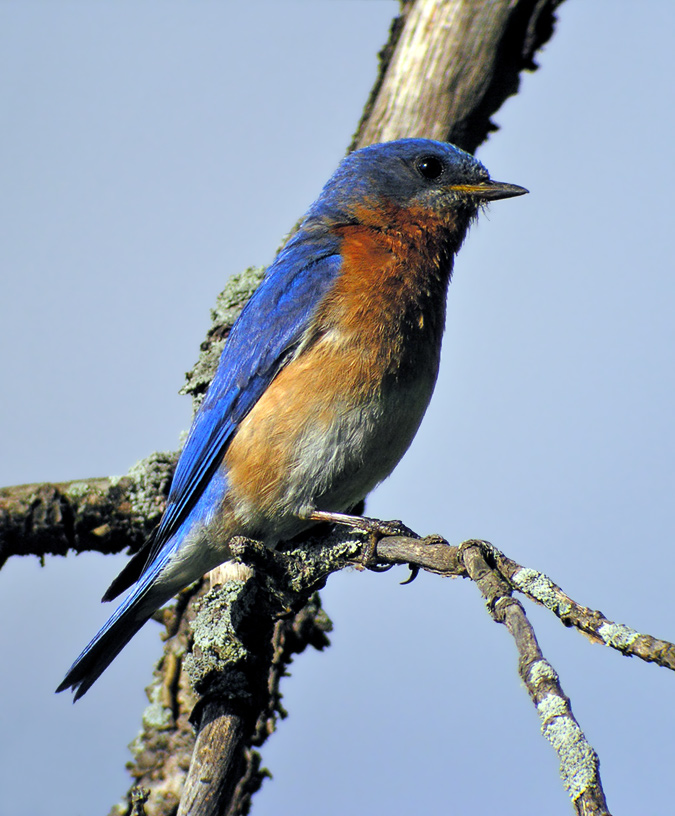
The bluebird had come from the distant South
To his box in the poplar tree
And he opened wide his slender mouth,
On purpose to sing to me.

- Henry David Thoreau, The Bluebirds

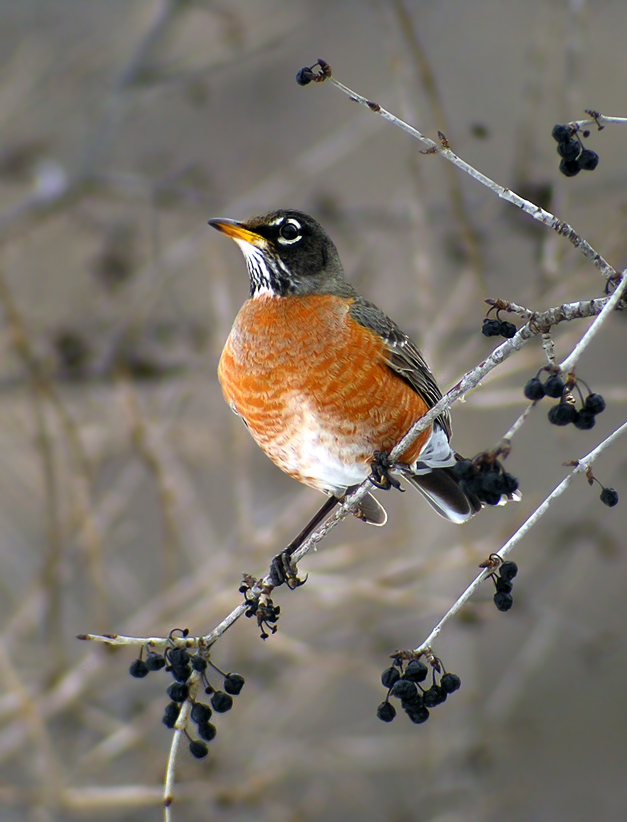
While nearly all of our snow has melted in just under a week, there's still half of March and early April to get through. April snowstorms are not all that uncommon in southern Wisconsin! At Pheasant Branch Conservancy yesterday, I witnessed my first Eastern Bluebird of the year - a gorgeous male perched on a branch close to the trail. He flew several sorties down to the trail and sipped from small pools filling from melted snow.  March birds all manner of song and color were busy singing, foraging, and making preparations for the upcoming nesting season. It was a fantastic day to be out, birding, walking, breathing, and enjoying the spring-like weather!


"Nature is wonderful - it is the center of everything - and if you take a serious interest, it changes your life … as you become more aware, you start to get a feel for the reasons for things. All nature acquires meaning. You realize then - and it is perhaps the most important thing to realize - that simply to be alive and aware in such a world as this is a privilege. If people in high places felt this, the world would be very different."

- Colin Tudge, The Bird


Pheasant Branch Conservancy:  March 14th, 2010:

Canada Goose
Mallard
Ring-necked Pheasant
Turkey Vulture
Red-tailed Hawk
Sandhill Crane
Killdeer
Ring-billed Gull
Herring Gull
Mourning Dove
Great Horned Owl
Barred Owl
Red-bellied Woodpecker
Downy Woodpecker
Hairy Woodpecker
Northern Flicker
American Crow
Horned Lark
Black-capped Chickadee
Tufted Titmouse
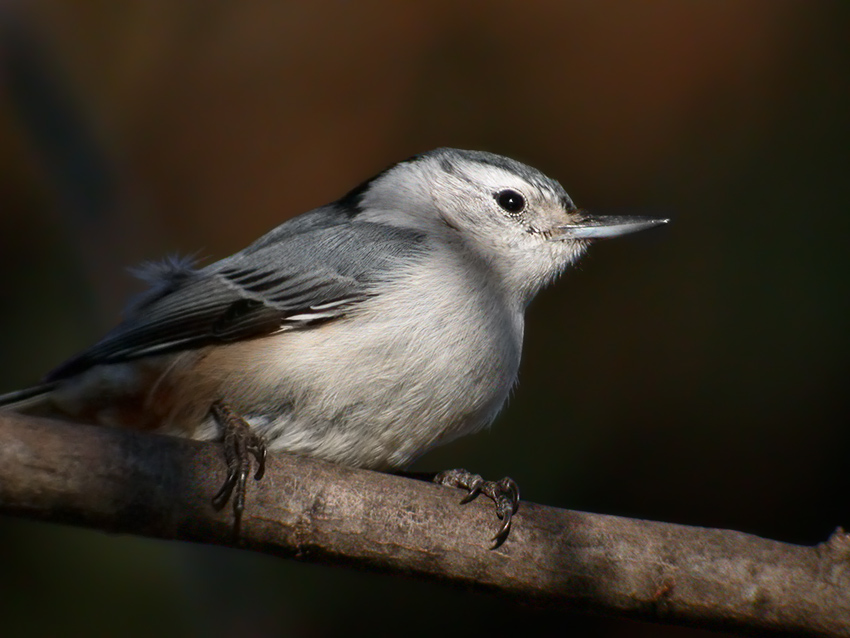
White-breasted Nuthatch
Carolina Wren
Eastern Bluebird
American Robin
European Starling
Cedar Waxwing
American Tree Sparrow
Song Sparrow
Dark-eyed Junco
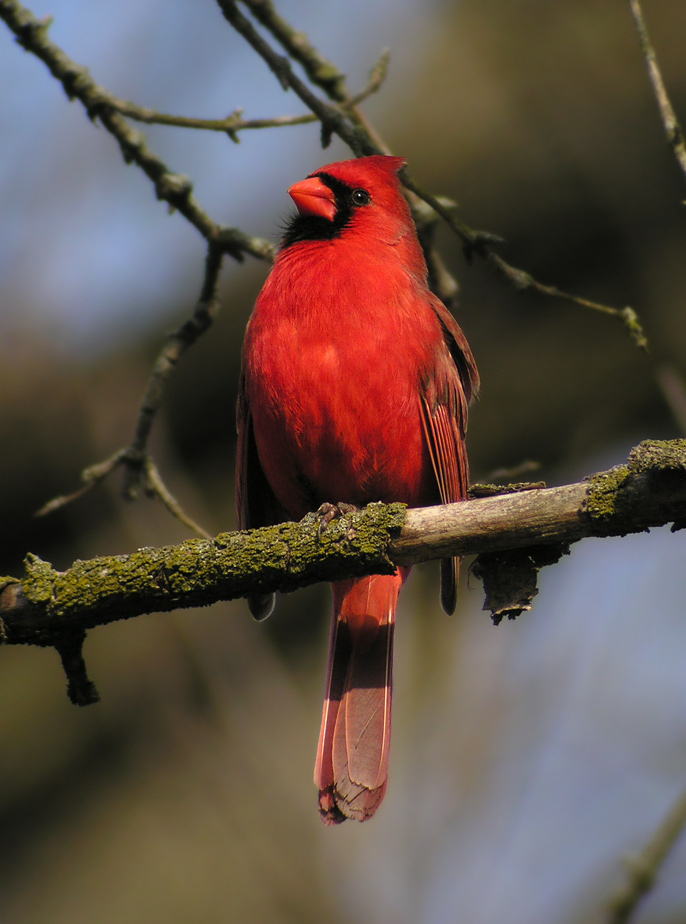
Northern Cardinal
Red-winged Blackbird
Common Grackle
Brown-headed Cowbird
House Finch
American Goldfinch
House Sparrow

All images © 2010 Mike McDowell

3.12.2010

Not so ordinary!


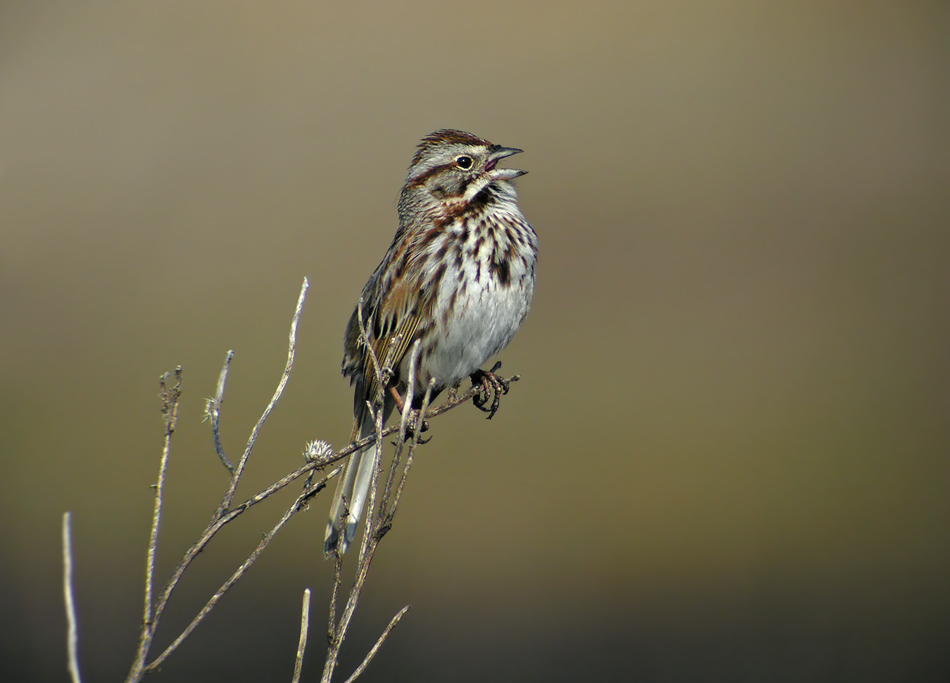
This Song Sparrow will never concern itself with giving half-hearted attempts belting out his melodious arrangement of notes and phrases. How fortunate for him! Though nature provides ample material to write about, my inspiration can often be elusive. After blogging for so long, sometimes I feel like I keep telling the same stories over and over, so I probably wouldn't make a good Song Sparrow. Before getting ready for work this morning, I realized it was warm enough to open my apartment windows. Almost immediately, I heard my first Song Sparrow of the year. Inspecting the courtyard with my binoculars, I counted three of them foraging on the grass where there was snow just a few days ago. All three birds were taking turns singing and might be, perhaps, part of a community of Song Sparrows of the courtyard. I enjoyed believing that, anyway. After reading Donald Kroodsma's book, The Singing Life of Birds, I'm not nearly as dismissive of these common little brown jobs as I was over a decade ago.

What sounds to us like the same series of notes repeated over and over is quite a bit more complex than we're able to discern without special recording equipment. A truly fascinating thing I've learned about Song Sparrows is their ability to use songs for both type matching and repertoire matching with neighboring brethren. A Song Sparrow has a choice when responding to another male's song. If he knows his neighbor's song, he might respond by singing it back (type match), but he might also come back with a different song the two birds also share in common (repertoire match). By using sonograms and playing back songs, it's been discovered that early in the breeding season, as males are establishing territories and trying to attract a mate, they mostly type match songs with one another. But as the breeding season progresses males are more likely to engage in repertoire song matching. What's especially interesting is the particular shared song chosen signals the level of aggression towards a neighbor, the greatest threat being a type match. Established neighbors always respond with a shared song, but if a stranger enters the neighborhood and tries to swipe territory or steal a mate, sparrows of the "community" sing or respond to the invader with songs that are not shared with their neighbors. This can confuse the intruder and often results in him being chased out of the community!

Pretty cool, huh?

Song Sparrow © 2010 Mike McDowell

Mountaintop Coal Mining


(click on image for more artwork by Robin Street-Morris)

"Unfortunately for the Cerulean Warbler, the region it most depends on for survival is the region in Tennessee most coveted by coal mining companies for mountaintop removal coal mining. The Tennessee Valley Authority alone owns 55,000 acres in the Northern Cumberland Plateau area, on which it could mine coal. MTR coal mining is a prime cause of deforestation and forest fragmentation in Appalachia, precisely the type of threats that are wiping out the Cerulean Warbler and other forms of life in the southeast United States. But perhaps there is room for hope: Some of the Northern Cumberland Plateau area is above 2,000 feet in elevation, and there are two bills in the Tennessee legislature that would prohibit MTR coal mining at those elevations."

Link: Continue reading at Natural Resources Defense Council

3.10.2010

Epaulets Scarlet!


It didn't take long for Red-winged Blackbirds to move in and begin to claim territories along roadsides and in fields. Evenly spaced apart and perched atop the right bushes, small trees, wires, and posts, their songs seem to offer a welcome as much as a dare. Gregarious in flocks and somewhat gawky in solitude, the birds with blazing epaulets have returned!

The globe grinds on, proceeds 
with the business of Aprils and men.
Next year will redwings see me, 
or I them, again then?
If not, some man else may pause, 
awaiting that rusty, musical cry,
And catch – how gallant – the flash 
of epaulets scarlet against blue sky.


Red-winged Blackbird © 2010 Mike McDowell

Bird Mortality and Science Denialism


An article was published yesterday on the Mother Nature Network re: bird collisions with windows by Nature Conservancy bird expert Dave Mehlman. While the tragic number cited in the article isn't new to avian enthusiasts, it's disheartening to read comments posted by the incredulous and ignorant.  Apparently, they would like to know where the scientist got his data from other than his own gluteus maximus. It's not enough to be skeptical that one billion birds may be killed in North America each year from colliding into windows, I guess it's also proper form to be exceedingly mean-spirited. Notice I said "may" in the preceding sentence because if one were to do a little digging, this staggering number comes from a US Fish & Wildlife fact sheet where it states "may account for … deaths each year."

Check out some of the comments (some have been deleted):

"A billion birds! LOL That would be....well no math skills here but that would be like hundreds of birds hitting windows every *second* ....that would be like a scene out of Hitchcock with literally stacks of birds that we'd have to push aside from our doors to get to work."

"The billion number is completely asinine not to mention the incredibly wide range of '100 million and 1 billion.' a 1 to 10 ratio? let's say the # is true...that would be a billion more birds in the air if we try to save some with these tips...how many more plane crashes via jet engines, how much more bird crap on newly washed cars."

"It has been my observation most of the birds that hit my picture window do so around the time of the vernal or autumnal equinox. Maybe it has something to do with the angle of the sun at this of the year. My picture window faces the north and doesn't usually have shades down the way that the other windows do."

"This guy obviously learned math at the school of Numbers I Just Pulled Out Of My A**. This might be believable if there were dump trucks of dead birds being piled up with nowhere to put them. I thought science was supposed to be objective."

"OH GOD EVERYONE RUN FOR YOUR LIVES THERE ARE DEAD BIRDS EVERYWHERE JUST MASSIVE PILES OH MY GOD THE HORROR THERE IS BIRD BLOOD RUNNING IN THE GUTTERS THE PESTILENCE BROUGHT ON BY THESE BILLIONS OF DYING BIRDS IS SURE TO INFECT US ALL THIS IS THE NEW BLACK DEATH."

"Aren't there around 300 million people in America? So wouldn't that mean that every single one of them would have over three birds a year killed at a window close to them? A family of four would have 14 birds EVERY year killed at a window on their home? What kind of idiot compiles these statistics? Certainly not a math major. Worse, who gives these people credibility?"

"All this time I thought it was the wind turbines generating electricity that were killing the birds. Sounds like another environmentalist wacko who won't be happy until we are all living like it's 1800. If a bird is too stupid to avoid a window, then Darwin was right."

"Oddly, at the age of 46, in my entire life I have yet to see a single bird actually killed by a window collision - barring windshields, of course. I've lived in rural, suburban and urban settings. I have witnessed a grand total of *perhaps* 6 window v bird instances in that 46 years, and in every one of them the bird simply flew away afterward, albeit a bit less enthusiastically. Since Mr. Klem and the author of this piece of reporting seem so convinced, I would certainly like to see how Klem came to his number totals. Did he personally see a billion birds kamakazi into windows and expire, or did he perhaps see one or two and multiply them by a random figure he pulled dripping out of his nether orifice? Inquiring minds want to know."

"I'm not ankle deep in dead birds here in a major city. OK so there are some birds that fly into glass. Boo hoo. Who counted all these dead birds? And how many of the dead birds are simply pigeons that had been poisoned? I walk down city streets among tall buildings and I don't see a bird on the sidewalk or street. WTF kind of idiot writes this stuff? And WHO TF is the idiot that gives this any publicity at all, even on the internet? How about I write an article about Martians kidnapping my canary?"
What a bunch of fallacious piffle.


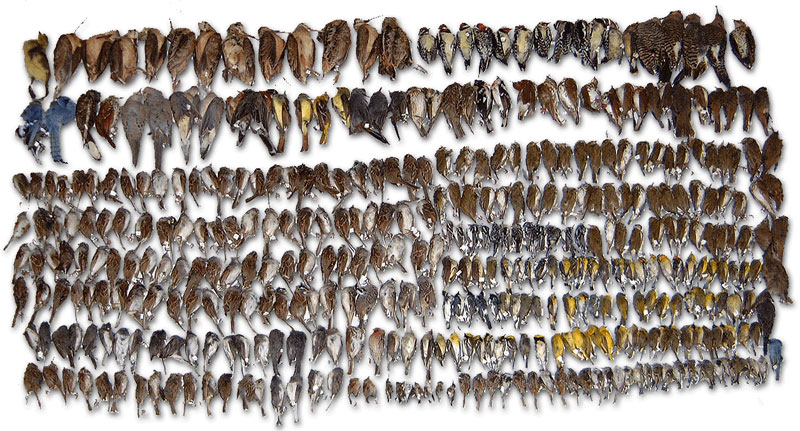
Dead birds collected from Toronto during migration (flap.org)

It's an irrefutable fact birds die from window collisions, especially during spring and fall migration when tens of millions of birds are on the move during the night. The question we would like answered is just how many perish this way. Since there's no conceivable way to collect every single bird that dies, we have to rely on making a reasonable estimate and perform data modeling in order to discern the scope of the problem. This has already been done. If these impish critics were to have actually followed references cited by the author, they might have found this paper (complete with its own references) by Dr. Daniel Klem's on his website stating:

"Researchers differ in their evaluations of the magnitude of the toll that glass exacts on individual species and bird populations overall. Before much was known, annual deaths attributable to windows were hypothesized to be 3.5 million in the 1970s. Since then, extensive studies over the past three decades have been used to estimate the annual toll to be between 97 million to 975 million birds in the U.S. alone. The wide-ranging difference among these figures attests to the complexity of attempting to determine accurate amounts from a source in which every individual bird is a potential victim and sheet glass of every size is a potential killing site in the environment. The roughly 100 million to 1 billion toll is based on the assumption that 1-10 birds are killed at one building in the U.S. each year. Another independent study produced similar results, and evaluated this current range of annual mortality figures to be reasonable. This confirming study examined records of 5,500 volunteers who optionally recorded bird strikes at windows while they counted visitors to feeding stations at their homes. To put these numbers in perspective, annual U.S. bird populations are estimated to be 20 billion in the fall, and annual glass kills are estimated to be 0.5 to 5.0% of this figure."

An independent confirming study with empirical data!  How about that?  It's a fact that North American songbirds are experiencing steep population declines. We can choose to ignore window collisions as a prominent cause of bird mortality, but then risk making a mistake when trying to put these population declines into proper context with the other causes. I guess we can't assume Americans actually care about the future of wild birds in our country.  Science denialists come in a variety of forms, all of which are devoid of credibility and virtue. Clearly, there's a lot of sarcasm, apathy, and general mistrust of the scientific community out there, especially when it comes to environmental issues.  Where does that come from, I wonder?

3.08.2010

Trolls


Anonymous wrote:

"Disappointed that you would drive this far to see a bird. I hope you understand how this kind of behavior is what contributes to the destruction of these same birds."

Was it something I said or something I did?
Did my words not come out right?
Though I tried not to hurt you, though I tried
But I guess that's why they say...
Every blog has its trolls
Just like every night has it's dawn
Just like every cowboy sings his sad, sad song
Every blog has its trolls


Yeah it does.

3.07.2010

The Buglers are Back!


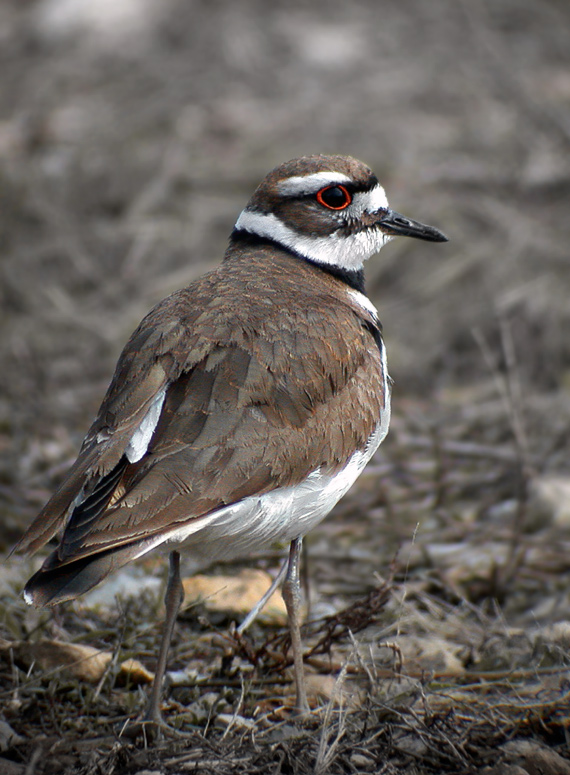
The first sound I heard when I arrived at Pheasant Branch Conservancy yesterday was the bugling of Sandhill Cranes. Birders from all around Wisconsin enthusiastically reported their arrival yesterday. Though spring is still just a few weeks away, the first Killdeer calls offered a sense of assurance that the greatest spectacle of nature on Earth has begun.


I think that most everyone has something from the very first spring they can remember, even if only a fragment of a memory. A favorite of mine is the smell of thawing ground combined with the moist decay of woodland. It's probably one of my earliest memories I have learned to associate with the coming of spring. I think these accumulated fragments fuel our ability to reminisce from spring to spring throughout our lives.


As a learned amateur naturalist, the accumulation of these memories matures over time into a phylogenic parade of reunion and rebirth. Whether a stream swelling with runoff, blossoming wildflowers, an insect hatching, or perhaps a recoiling earthworm, such "first of the season" observations can trigger a peculiar emotion that seems similar to déjà vu. Even if merely an anomaly of memory, it adds a kind of transcendent quality to spring's glory as it unfolds through March, April, and May.


Spring is also a time of reunion with fellow birders and friends I haven't seen since fall migration. During this spring's transition, rebirth, and reunion, remember let your binoculars rest against your chest once in a while and simply let your eyes, ears, and lungs collect the natural beauty all around you. Looking at the ground, you might decide to kneel in the grass and inspect the tiny lives residing there. To the sky, face south and feel the wind. If the breeze feels warm against your face, then perhaps millions of feathered promises will reunite with your favorite bird haunt the following morning!


All images © 2010 Mike McDowell

3.05.2010

Spring Field Trips!


Here's my spring field trip schedule:

April 29th - Madison Audubon, Pheasant Branch Conservancy
May 6th - Madison Audubon, Pheasant Branch Conservancy
May 8th - Horicon Marsh NWR Birding Festival
May 9th - Horicon Marsh NWR Birding Festival
May 13th - Madison Audubon, Pheasant Branch Conservancy
May 27th - Madison Audubon, Pheasant Branch Conservancy
June 12th - The Nature Conservancy, Spring Green Preserve

All field trips are free and open to the public!

I'll include details and exact times in a future post.

Mike M.

3.04.2010

Cooper's Hawk Portraits


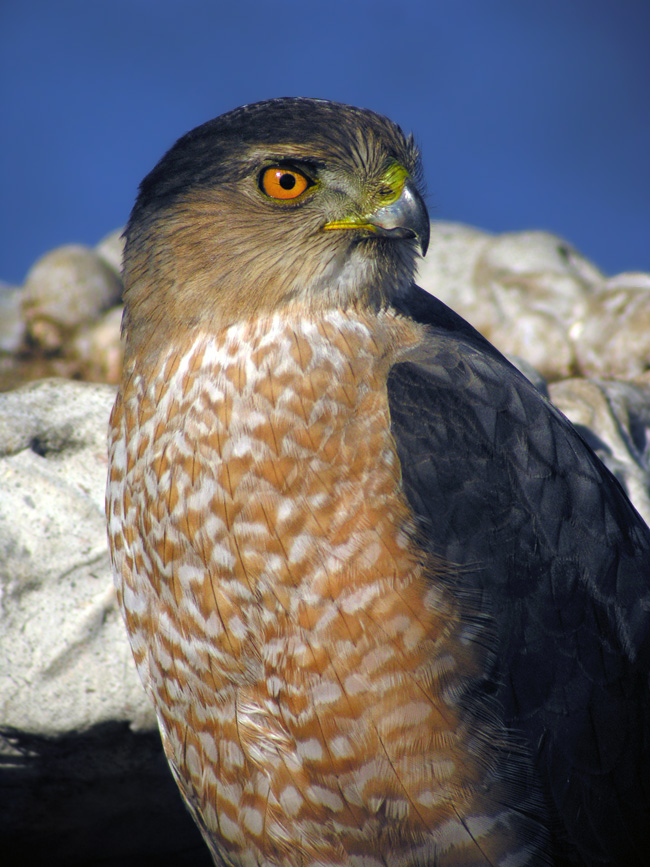
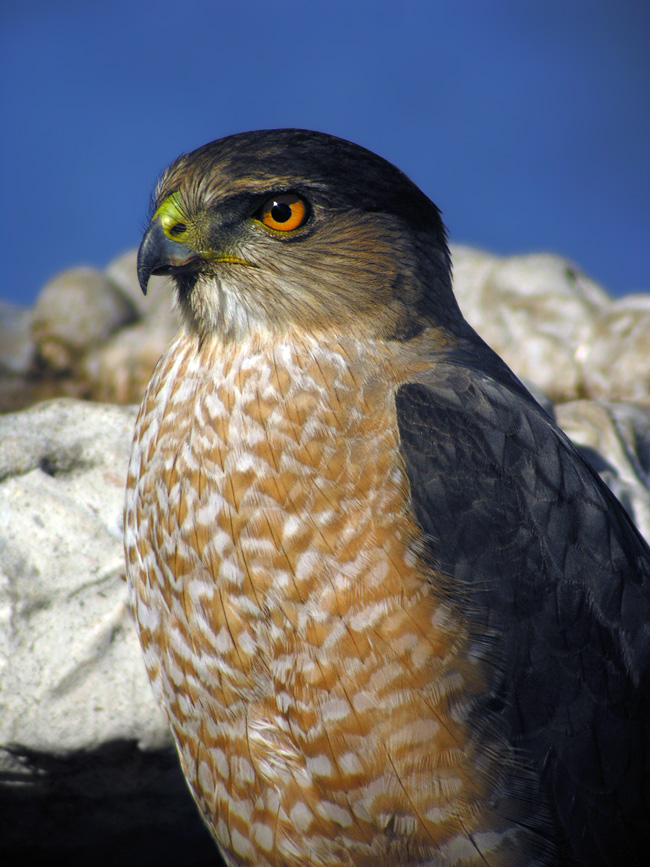
This Cooper's Hawk (a male, I believe) has been hunting songbirds at our store's feeders for the past several days. I've debated taking the feeders down until the hawk loses interest and moves on. No matter what I do, though, the hawk is still going to find something to eat somewhere. On one hand, wintering songbirds can benefit from birdseed feeders, but they're not a necessity for their survival. On the other hand, its super interesting to observe the Coop's urbanized hunting strategy. Do you think it's a nasty bird? A winged thug? Collisions with man-made objects account for 70% of Cooper's Hawk deaths in urban areas.


The keen predator seems to know exactly where and when House Sparrows are hiding under various vehicles in our parking lot and patiently waits for them to reemerge. Sometimes the hawk takes to running on the pavement and darts beneath parked cars in hopes of flushing sparrows into the open where more they're easily taken. It's prey is usually a Morning Dove or House Sparrow, but I recently saw it fly off with a Dark-eyed Junco in its talons.

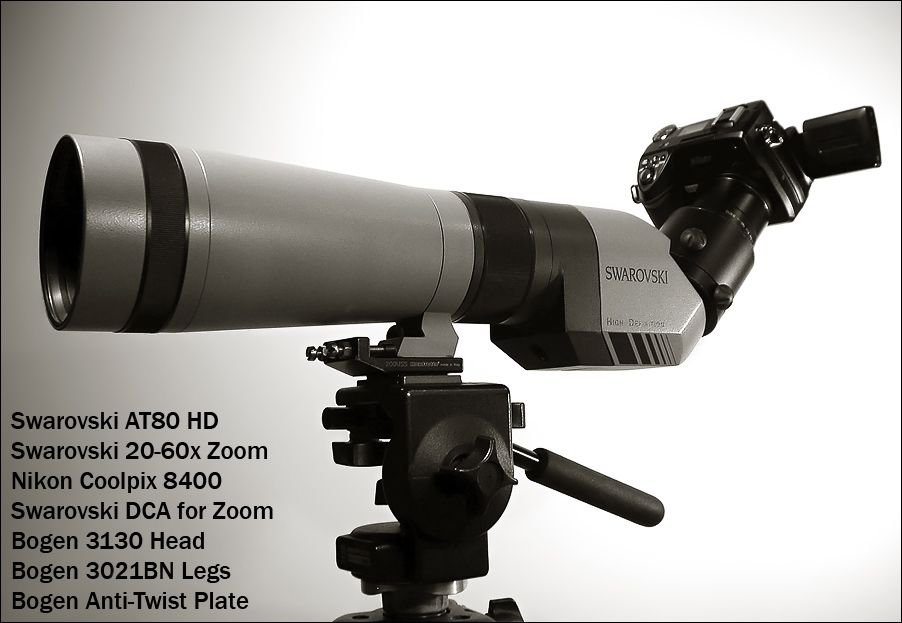
(Digiscoped with Swarovski AT80 HD & Nikon Coolpix 8400)

All images © 2010 Mike McDowell

Question about Optical Zoom


Q: Most point & shoot digital cameras come with lenses that are 3x, 10x, 12x, etc., but most SLR cameras use telephoto lenses that are 100mm, 300mm, etc. What is the relationship between the two systems? In other words, a 12x digital point and shoot equals what in a telephoto SLR lens? What is the conversion factor?

A: Point & shoot digital cameras have 35mm equivalencies, but they cannot be derived from knowing just the optical zoom because every model can be unique. For example, each digital camera model below is listed with its maximum optical zoom and corresponding 35mm equivalency zoom range (focal lengths) provided by the manufacturer:

  • Canon PowerShot SX10:  20x Optical Zoom / 28 - 560 mm
  • Sony Cyber-shot DSC-H20:  10x Optical zoom / 38 - 380mm
  • Nikon Coolpix 8400:  3.5x Optical Zoom / 24 - 85mm
  • Nikon Coolpix P5000:  3.5x Optical Zoom / 36 - 126mm

Notice that each camera has a different 35mm equivalency at 1x optical zoom. The two Nikon cameras have the same optical zoom (3.5x), but different 35mm equivalencies. This is because digital camera manufacturers can put whatever configuration of lens elements they want into an optical zoom system and won't necessarily render the same 35mm equivalency. However, the optical zoom can be computed by dividing the maximum 35mm equivalency focal length by the minimum:

  • 560mm / 28mm = 20x
  • 380mm / 38mm = 10x
  • 85mm / 24mm = 3.5x
  • 126mm / 36mm = 3.5x

And that's where the optical zoom number comes from! Optical zoom is only regarded as magnification in the sense of how many times the minimum focal length in 35mm equivalency is being multiplied. If you want to calculate true magnification, simply divided focal length by 50 (from 50mm = 1x in 35mm equivalency).