4.11.2010

Weekend Birding & Digiscoping


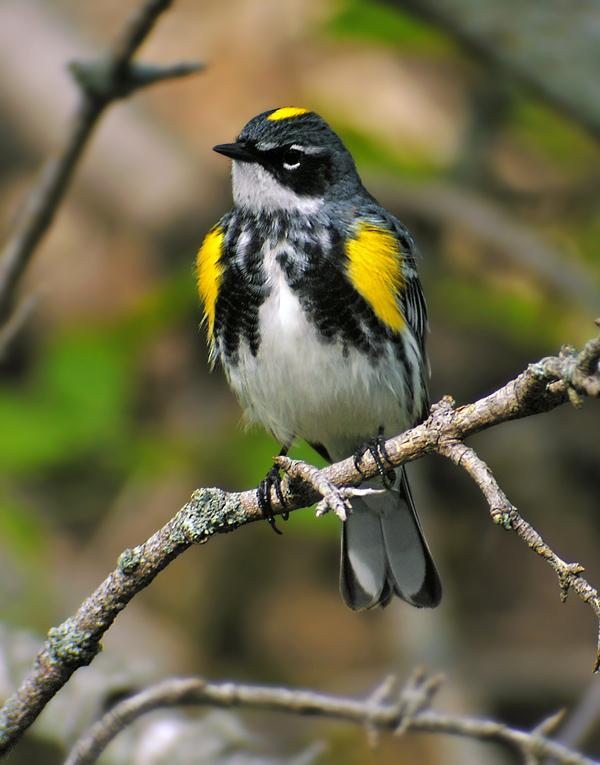
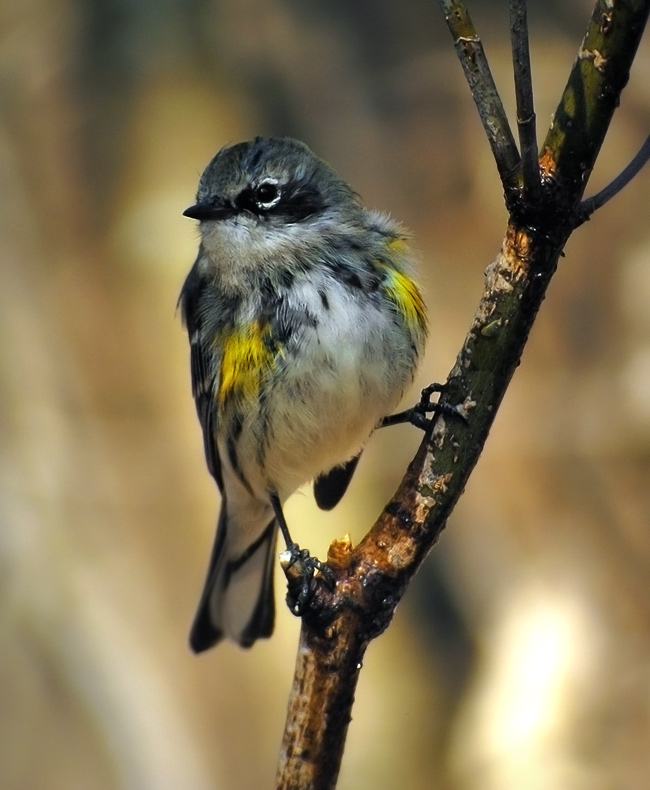
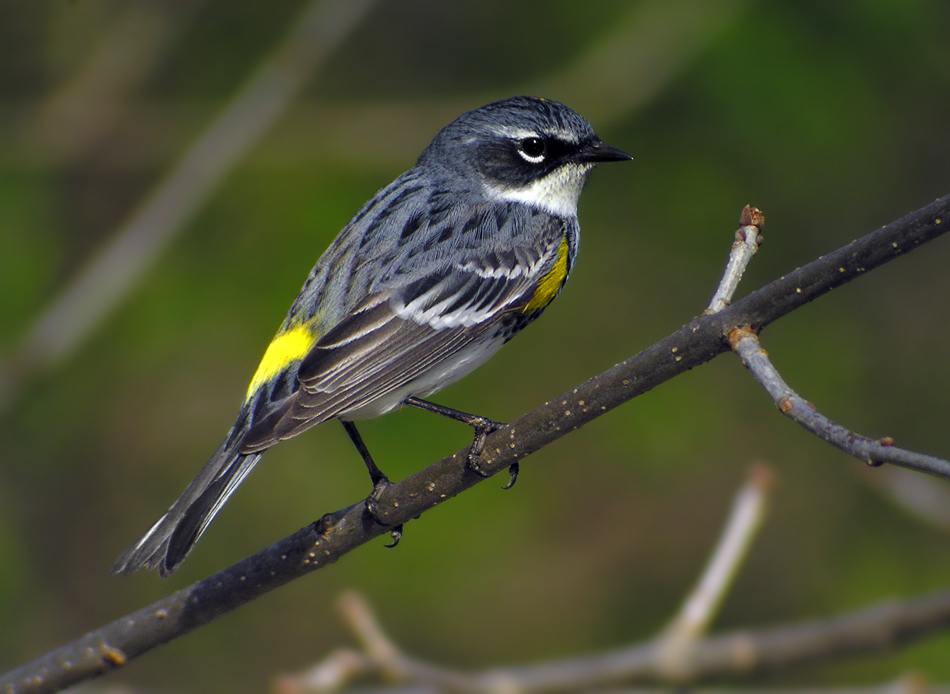
When it comes to digiscoping warblers, sometimes I wish all were as cooperative as the Yellow-rumped (Myrtle) Warbler. This sentiment is illusory, however. If it was just a single individual Yellow-rump, the challenge would likely be about the same as it is for most other warbler species, though they're typically far less abundant. But because there were literally hundreds of Yellow-rumps at Pheasant Branch Conservancy this morning, it would have been more surprising if I had left the field without a picture of one!
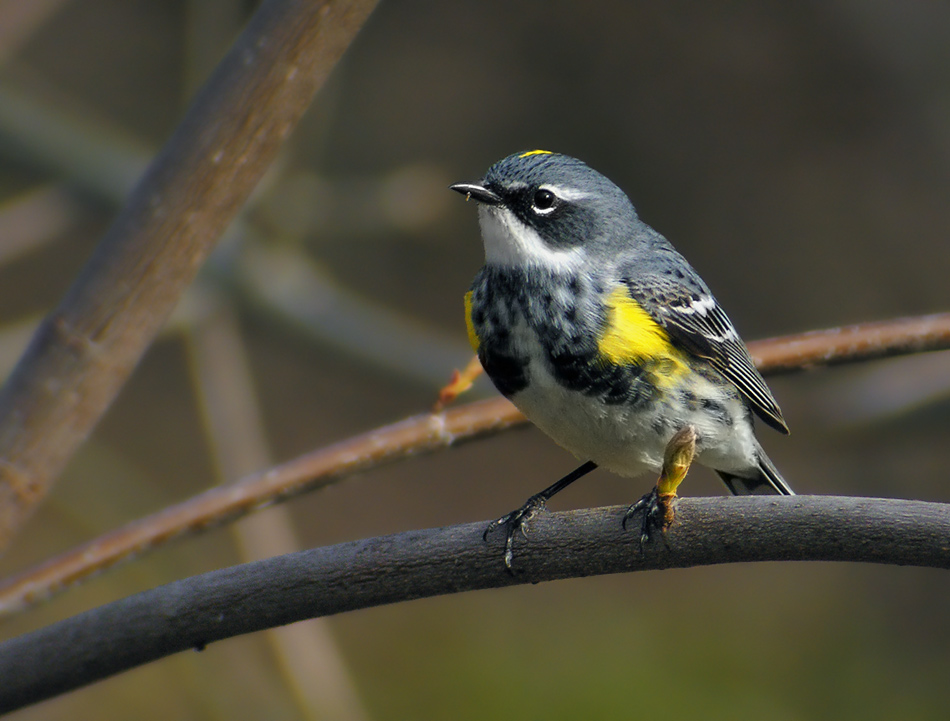
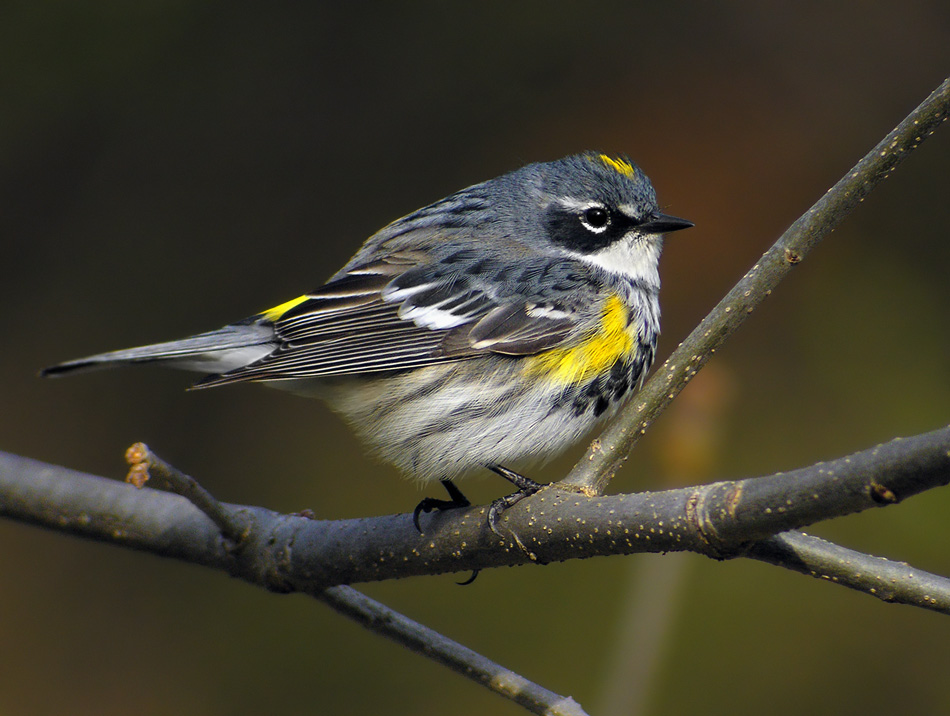


Ever since I began digiscoping in 2002, it's been something of a tradition of mine to try and obtain a top-notch portrait of a Yellow-rumped Warbler each spring. Well, after this morning it looks like I'm done until next year! Naturally, should a Yellow-rumped Warbler cross my lens any time throughout the remainder of spring migration, I'll still try and digiscope it.
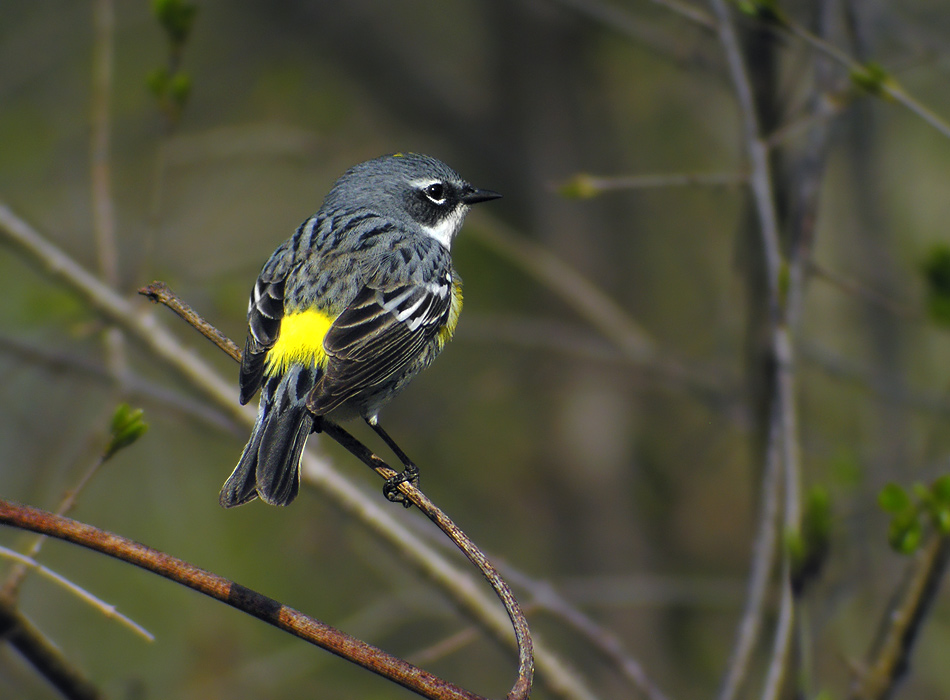
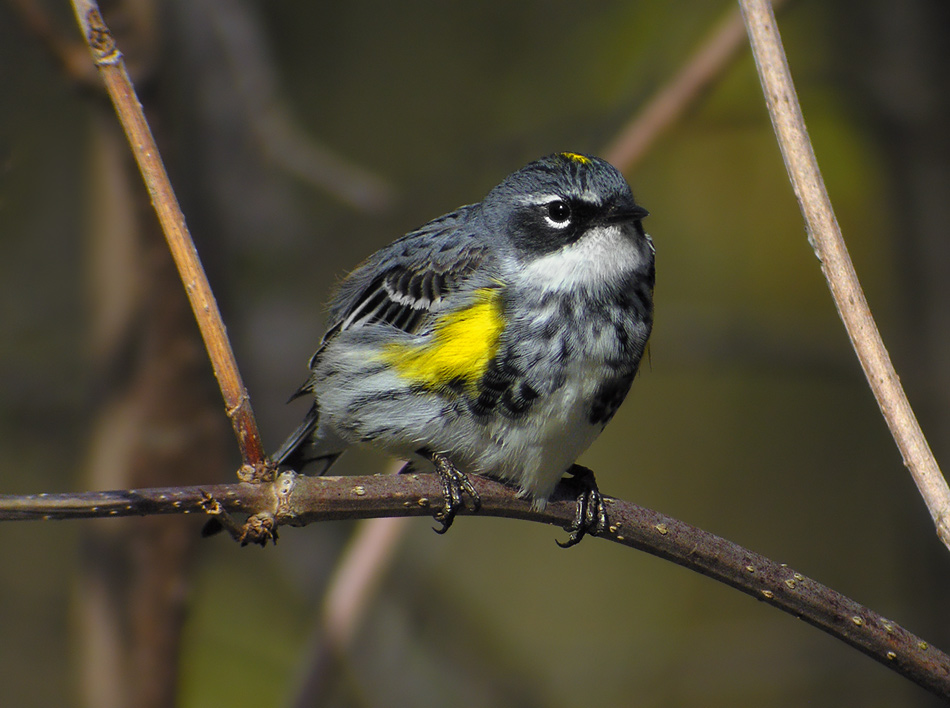


As a nature photographer, it's a nice feeling to end the weekend with so many stunning images of birds and other things. There's a keen sense of accomplishment and satisfaction; it's the fix for the addiction. As a birder and dreamer, the sights I witnessed today will form mental imagery as I drift off to sleep tonight.
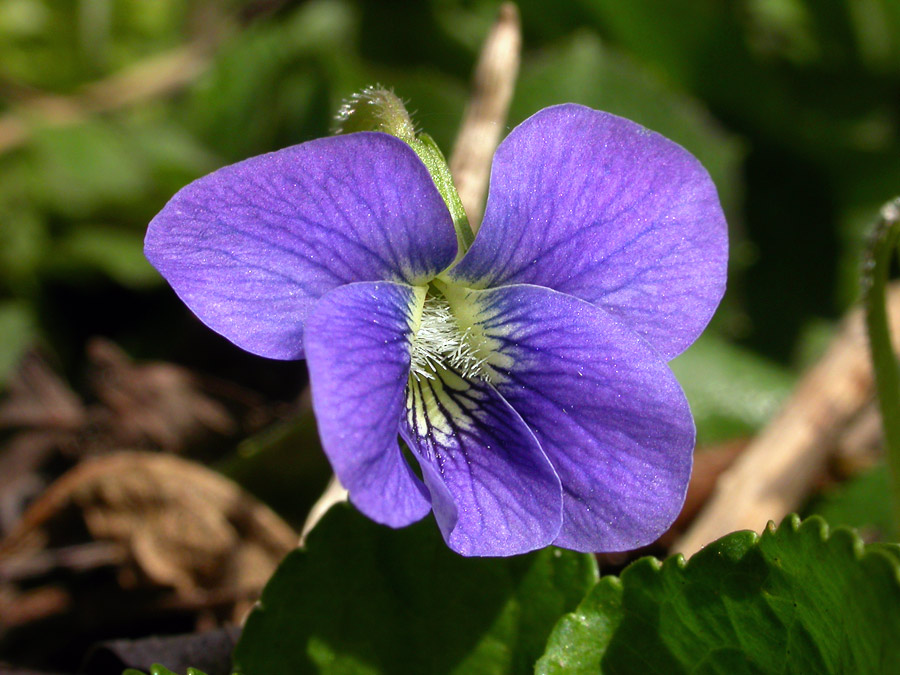
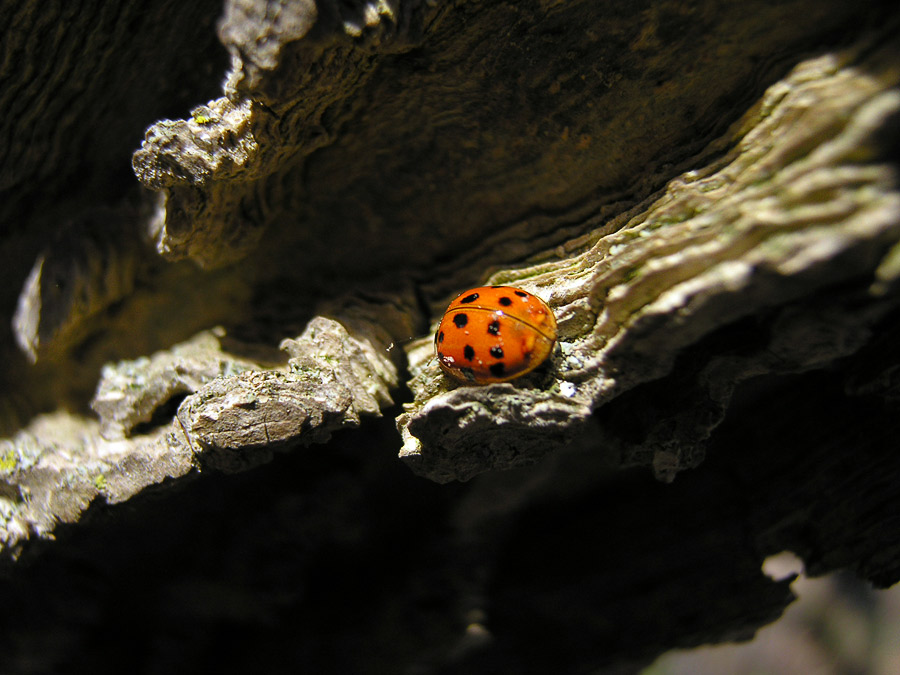


I'll probably think back to the American White Pelicans I saw flying over the drumlin, especially the turn. I'll recall the beautiful Osprey making its way northwest riding on thermals. Even now, if I close my eyes, I can still see Yellow-rumped Warblers sallying for flying insects over the creek corridor. If I concentrate, my imagination can render the sound of their bill snapping.
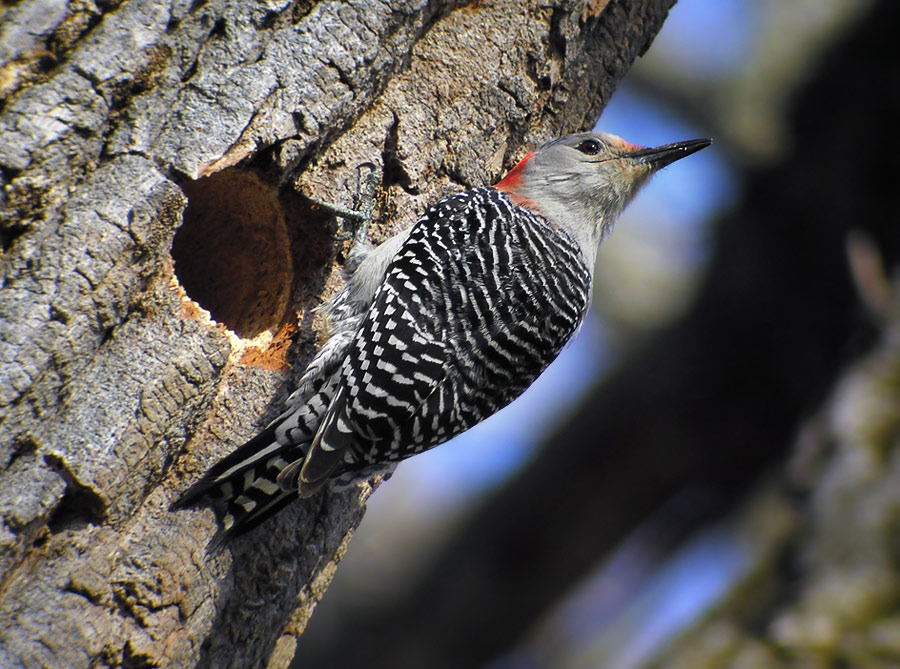

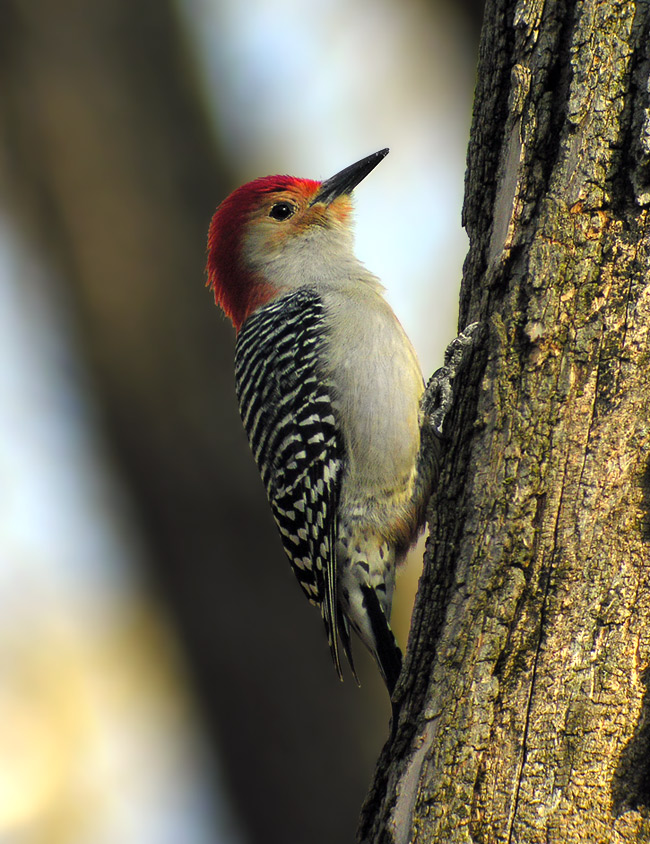
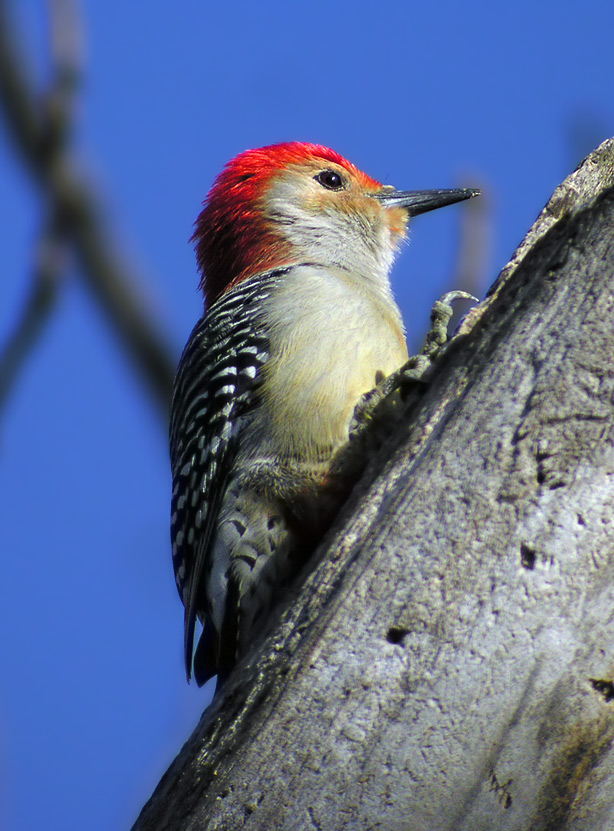
Red-bellied Woodpecker


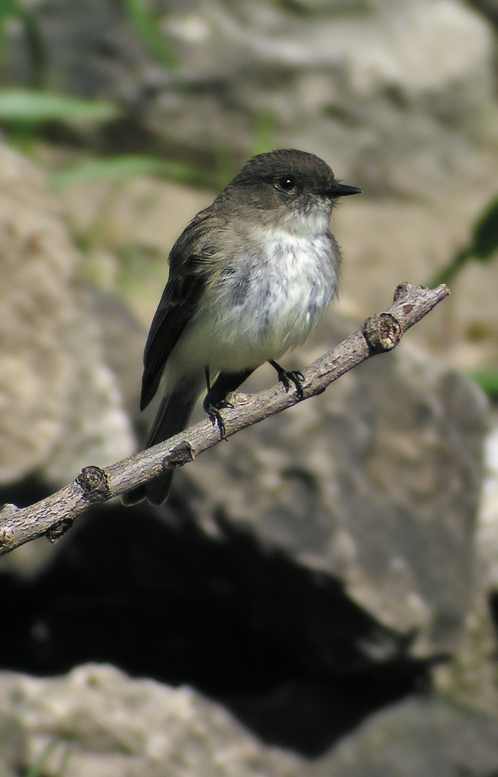
Eastern Phoebe


Wood Duck (female)


Wood Duck (male)


Location: Pheasant Branch
Observation date: 4/11/10
Number of species: 60

Canada Goose
Wood Duck
Mallard
Northern Shoveler
Green-winged Teal
Ring-necked Pheasant
Common Loon
Pied-billed Grebe
American White Pelican
Double-crested Cormorant
Turkey Vulture
Osprey
Northern Harrier
Cooper's Hawk
Red-tailed Hawk
American Coot
Sandhill Crane
Killdeer
Ring-billed Gull
Mourning Dove
Great Horned Owl
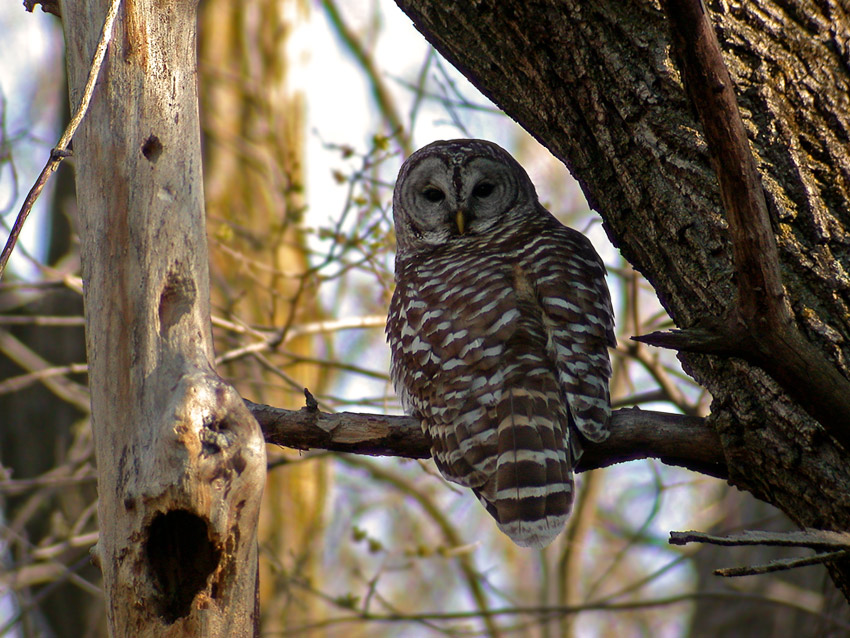
Barred Owl
Belted Kingfisher
Red-bellied Woodpecker
Yellow-bellied Sapsucker
Downy Woodpecker
Hairy Woodpecker
Northern Flicker
Eastern Phoebe
Blue Jay
American Crow
Tree Swallow
Black-capped Chickadee
Tufted Titmouse
White-breasted Nuthatch
Brown Creeper
Winter Wren
Golden-crowned Kinglet
Ruby-crowned Kinglet
Eastern Bluebird
Hermit Thrush
American Robin
Brown Thrasher
European Starling
Cedar Waxwing
Yellow-rumped Warbler
Eastern Towhee
Chipping Sparrow
Field Sparrow
Song Sparrow
White-throated Sparrow
Dark-eyed Junco
Northern Cardinal
Red-winged Blackbird
Eastern Meadowlark
Common Grackle
Brown-headed Cowbird
House Finch
American Goldfinch
House Sparrow

All images © 2010 Mike McDowell
4.09.2010

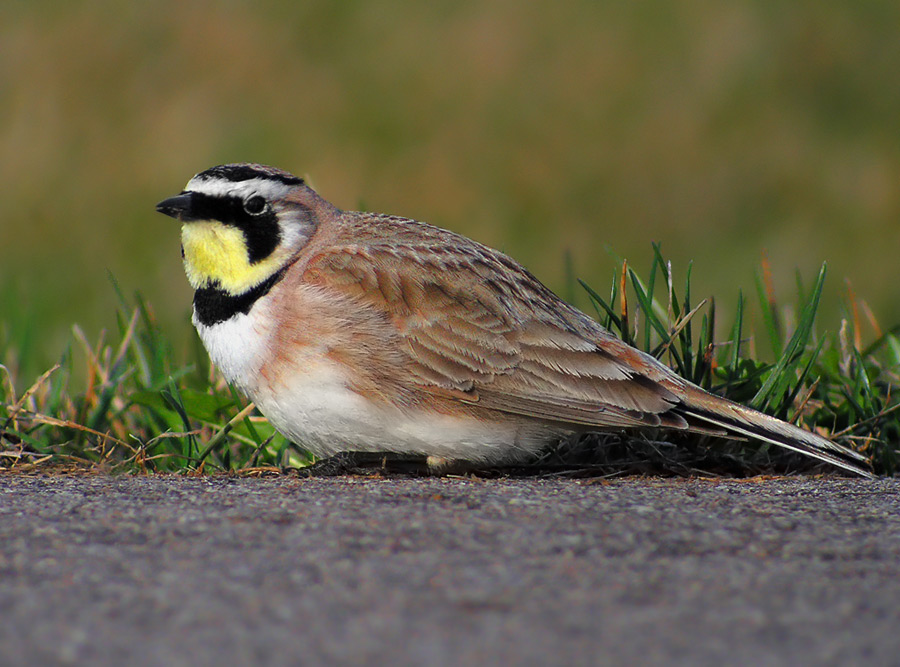
Close-up Horned Lark!


Last week when I was digiscoping an Eastern Meadowlark, I happened to spot this Horned Lark foraging along a nearby bike trail. A few people who saw this photograph before I published it asked if the bird was stunned or injured because of the way it's sitting. I'm happy to report the bird was perfectly fine. Horned Larks typically walk while they forage, but will sometimes sit in a single spot for several minutes if they happen upon a bonanza. Over the course of 30 minutes, this bird covered about a 25 foot stretch along the trail. When it had apparently eaten its fill of whatever it was finding, it took wing to the north, disappearing into the sky.

© 2010 Mike McDowell

4.08.2010

WI Nature Conservancy Photo Contest


Since 1960, The Nature Conservancy in Wisconsin has protected almost 142,000 acres of forests, wetlands, prairies, lakes and streams for current and future generations to enjoy. Help us celebrate 50 years of conservation by submitting your Wisconsin photos. We are looking for striking digital images of nature, highlighting the diversity of life in Wisconsin. Your images may be taken anywhere in Wisconsin, showing wildlife in natural habitats, plant life, Nature Conservancy preserves or people interacting with nature.

First place winners will be featured in the Wisconsin Nature Conservancy’s Fall 2010 Update, and the top 10 finalists will be featured in a slideshow on www.nature.org/wisconsin. Contest starts April 6, 2010, and entries will be accepted through August 2, 2010, 11:59 p.m. Central Standard Time.

Get details on the contest and how to load your images at:

TNC Wisconsin - 50th Anniversary -- Call for Photos.

4.07.2010

More Yellow-rumps!


I confined myself to my apartment over the weekend on account of coming down with a really bad cold.  I finally felt well enough to get back out to Pheasant Branch Conservancy yesterday and was pleased to find a flock of foraging Yellow-rumped Warblers along the west creek corridor trail. These birds were unlike the first few bedraggled arrivals from late last month; these were sporting super-smart looking, fresh spring suits. The warblers were accompanied by several Ruby-crowned and Golden-crowned Kinglets, their sweet diminutive calls emanating from the thicket where they were foraging for insects. I also observed my first Hermit Thrush of spring. Despite feeling a little under the weather, it was rejuvenating to be outside breathing fresh air.

Location: Pheasant Branch
Observation date: 4/6/10
Number of species: 43

Canada Goose
Wood Duck
Mallard
Northern Shoveler
American Coot
Killdeer
Ring-billed Gull
Mourning Dove
Great Horned Owl
Barred Owl
Belted Kingfisher
Red-bellied Woodpecker
Yellow-bellied Sapsucker
Downy Woodpecker
Hairy Woodpecker
Northern Flicker
Eastern Phoebe
Blue Jay
American Crow
Black-capped Chickadee
Tufted Titmouse
White-breasted Nuthatch
Brown Creeper
Golden-crowned Kinglet
Ruby-crowned Kinglet
Eastern Bluebird
Hermit Thrush
American Robin
European Starling
Yellow-rumped Warbler
Eastern Towhee
Field Sparrow
Fox Sparrow
Song Sparrow
White-throated Sparrow
Dark-eyed Junco
Northern Cardinal
Red-winged Blackbird
Eastern Meadowlark
Common Grackle
House Finch
American Goldfinch
House Sparrow

© 2010 Mike McDowell

4.01.2010

The Last Song


Breaking away from my traditional close-up bird portraiture, here's a lovely digiscoped photograph of an Eastern Meadowlark surveying his domain at a field near Airport Road in Middleton this morning. When I was born in 1966, nearly 25 million of these gorgeous black, brown, yellow, and white grassland birds graced our fields and prairies, singing their sweet melody of notes. In just my lifetime their numbers have plummeted over 70%. The meadowlark in this photograph will sing throughout spring, establish and defend a territory, pair up with a mate, and with a little luck they'll bring forth their progeny into this world. But to what end?

Mortality is high for them and their young will probably never experience their own spring migration. Our greed for commerce and land may have already sealed the fate for Eastern Meadowlarks. With little mercy, our veritable national motto “bigger, better, faster, more” is pushing this species toward the brink of impossible recovery. Through no fault of his own evolutionary makeup, he can't possibly know what's coming and what we're planning. With regret and no one else to blame, the last paragraph of the final chapter on Eastern Meadowlarks seems to be written.


The common bird isn't as cherished, but we should reverse this unwise tendency of our character. In no way would my sense of value for this species be diminished if their numbers were as high today as they were 40 years ago. The meadowlark pictured above is telling us a story through his melodious song. He sings how he, and unseen millions of his brethren before him, once dominated North America's grasslands … for tens of thousands of years. That such an incredible legacy across a huge expanse of time can cease to exist so abruptly should serve as a warning, but I'm fairly certain too few of us can be bothered to be away from our televisions long enough to listen to a meadowlark's song. The last Eastern Meadowlark will look just like this one. The bird of the future will sing the same song, but then there will be no answer.

© 2010 Mike McDowell

3.28.2010

Red belly & Yellow rump!

But where is the female he drums for? Where?

Jane Hirshfield - The Woodpecker Keeps Returning


Just a hint of its red belly!

And that's what this gorgeous male Red-Bellied Woodpecker was doing throughout the morning. It was interesting to observe that his drumming locations were not the tree with the cavity he was defending. Instead, he would hammer his bill into a nearby tree which seemed to assure a more suitable volume.


Climbing!

However, his efforts kept tempting a competing male. The two would chase each other around the woods for a considerable distance, but eventually the red-bellied returned to maintain his claim. The victorious woodpecker perched atop the tree with the cavity and resumed his vocal invitations, occasionally flying over to his special drumming tree.


Later on this morning Bill Grimm spotted our first Yellow-rumped Warbler of spring migration. Five birders gathered and watched it with considerable enthusiasm. Ah! The first warbler is always exciting and special, but soon there will be so many "butter-butts" that they're relegated by birders to something of a second-class status as far as warblers go. I think their plumage is actually quite spectacular and their appreciation, or rather lack thereof, seems largely due to the fact that they're so successful as a species!


Warbler #1 for 2010!

Pheasant Branch Conservancy – 3/28/2010

Canada Goose
Wood Duck
Mallard
Red-tailed Hawk
Killdeer
Mourning Dove
Great Horned Owl
Barred Owl
Red-bellied Woodpecker
Downy Woodpecker
Hairy Woodpecker
Northern Flicker
Eastern Phoebe
Blue Jay
American Crow
Black-capped Chickadee
Tufted Titmouse
White-breasted Nuthatch
Brown Creeper
Golden-crowned Kinglet
American Robin
European Starling
Yellow-rumped Warbler
Fox Sparrow
Song Sparrow
Northern Cardinal
Red-winged Blackbird
Common Grackle
House Finch
American Goldfinch
House Sparrow

All images © 2010 Mike McDowell

3.27.2010

Eastern Phoebes Return!


Southeasterly winds carried new spring migrants into the conservancy overnight, adding calls of Eastern Phoebes to this morning's choir of birdsong along the stream corridor. It was easy to predict their arrival. The phoebes normally would have been here last week, but several days of northerly winds kept on standby just to our south. When I looked at a wind direction map for Friday night, I knew they were very likely to be included in the next batch of birds flying into southern Wisconsin. Other new arrivals included Golden-crowned Kinglets and a Winter Wren. Winds are out of the north again, but next week's warming trend ought to include more phoebes, kinglets, plus the first Yellow-rumped Warblers.

© 2010 Mike McDowell
3.26.2010

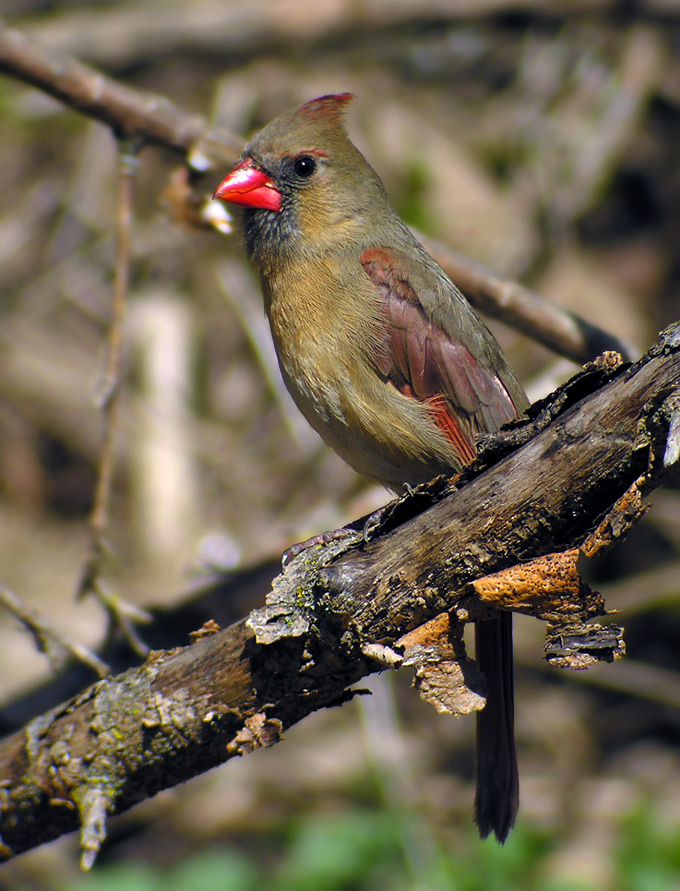
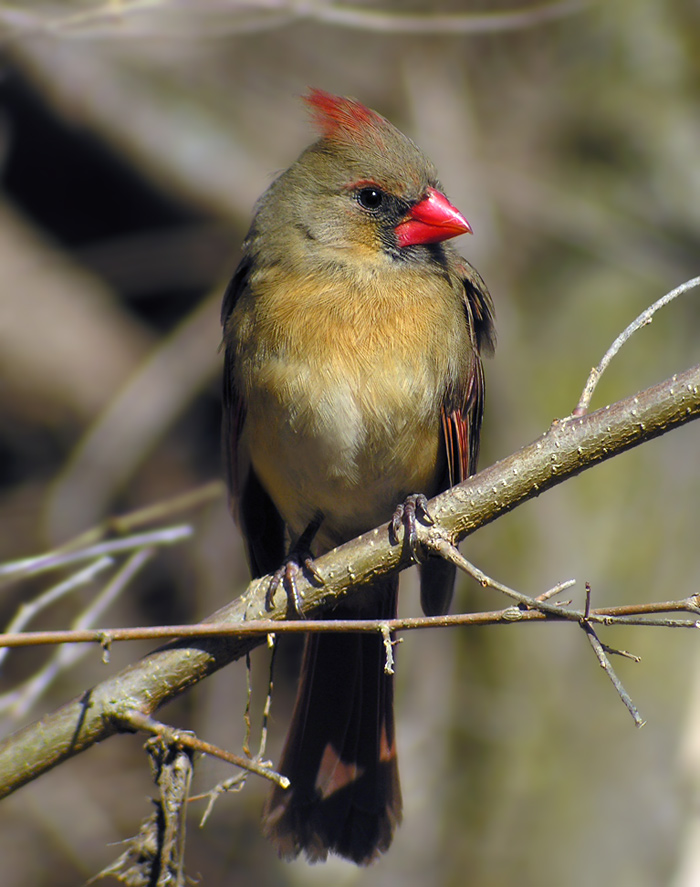
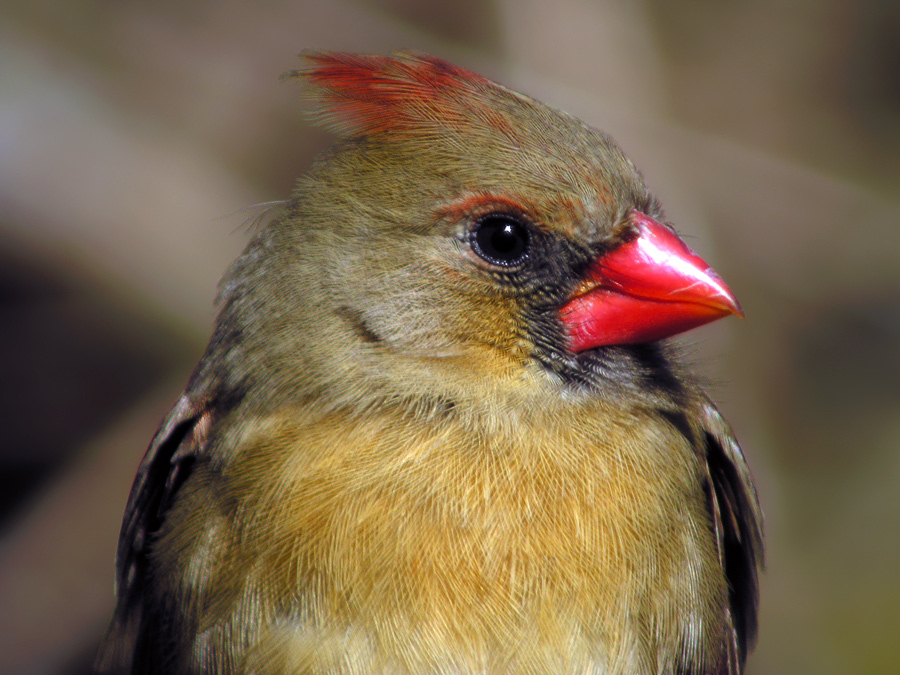
Female Northern Cardinal


March is still a month of bare trees and branches, making it a comparatively easy time easy to snap photographs of early spring migrants. But it remains so for resident birds, too. As birders know, the best views of birds come before spring's big bloom. Almost any time of year, though, Northern Cardinals provide many opportunities for the nature photographer. They're probably one of the most photographed North American birds behind the American Robin and Blue Jay. Nevertheless, after photographing birds for nearly a decade, I can’t ever recall capturing images of a female cardinal as stunning as these until yesterday at Pheasant Branch Conservancy.


Going 60X on the eyepiece:


© 2010 Mike McDowell
3.24.2010

A Wounded Ego


Last evening I was standing on a trail in the woods of Pheasant Branch, quietly waiting for something to happen. The sun was just above the western horizon when a male Barred Owl began to call for his mate. At first there was no response, but he continued calling to get her attention. Finally, though, her half-muted but recognizable replies began to emanate from deep within a tree; she was nestled inside a cavity. Eggs? Perhaps still early for southern Wisconsin Barred Owls, but not impossible. The two birds continued to exchange a dialogue understood only by them, until all that was necessary to say had apparently been said.

Silence befell the woods. Well, almost. I could still hear a few Song Sparrows, cardinals, chickadees, and woodpecker chatter. Feeling very zen-like and mindful to the brim of Birding Nirvana, the peace and tranquility was abruptly ended by a young man (early 20's, I'm guessing) on a mountain bike. Skidding to a stop he blurted, "Hey, can I ask what you're looking at?" I responded truthfully, "Well, at the moment I'm looking in the trees." (I was scanning for owls). I don't think I ever would have anticipated what he was going to tell me next. Overselling his knowledge of avians he said, "I'm interested in birds. I can tell you every bird that's in this conservancy right now. I know all their songs. There are blah-blah number of birds found in Wisconsin annually, and blah-blah total species native to the state. I took blah-blah course work at the UW … biology … birds … blah blah blah …" and soon I was utterly disinterested but nodded along and pretended to pay attention.

I needed an escape, but didn't want to be rude. I confess I was a little annoyed by his deluge of ornithological statistics and lecture, which felt presumptuous about my birding skills and familiarity with the conservancy, what he must have assumed was a lack thereof on my behalf.  I was patient. Calm. I continued to smile politely and nod as he kept right on talking. I certainly couldn't deny him his enthusiasm, but I also couldn't purge the thought of quizzing him on identifying every birdsong occurring at that very moment. You know, just to see! Unseen but audible, a nearby Red-bellied Woodpecker began chirring and provided the perfect opportunity. Pointing in its apparent direction I interrupted, "So, what's that one right there?" He paused in thought then guessed, "Is it a Downy Woodpecker?" Ah well, he didn't know. At least he knew it was a woodpecker species, though. I gave him a quick pat on the back to console his wounded ego and said, "Nope! Now back to school with you!"

© 2010 Mike McDowell

3.20.2010

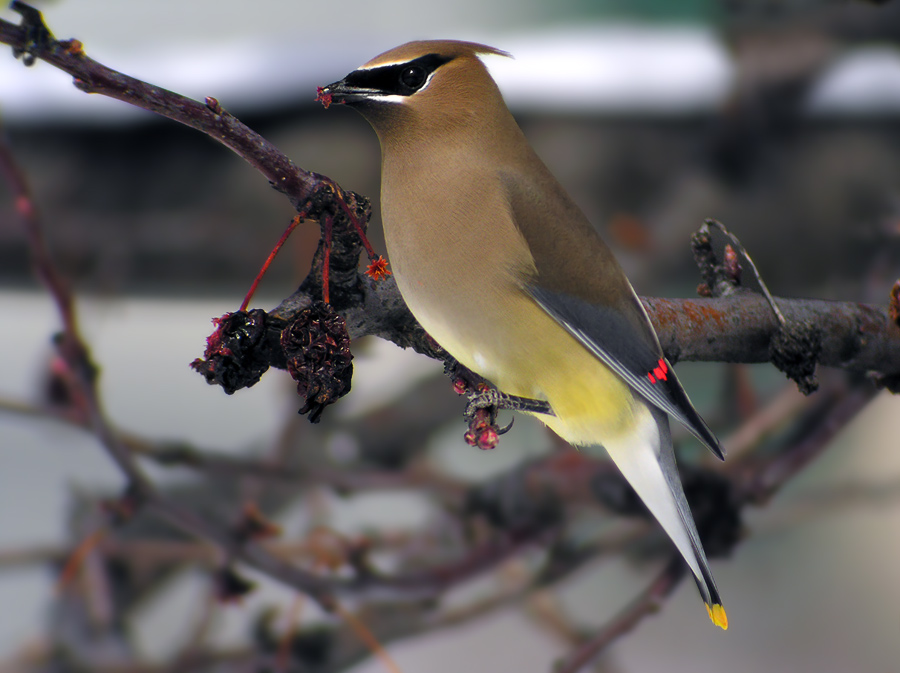
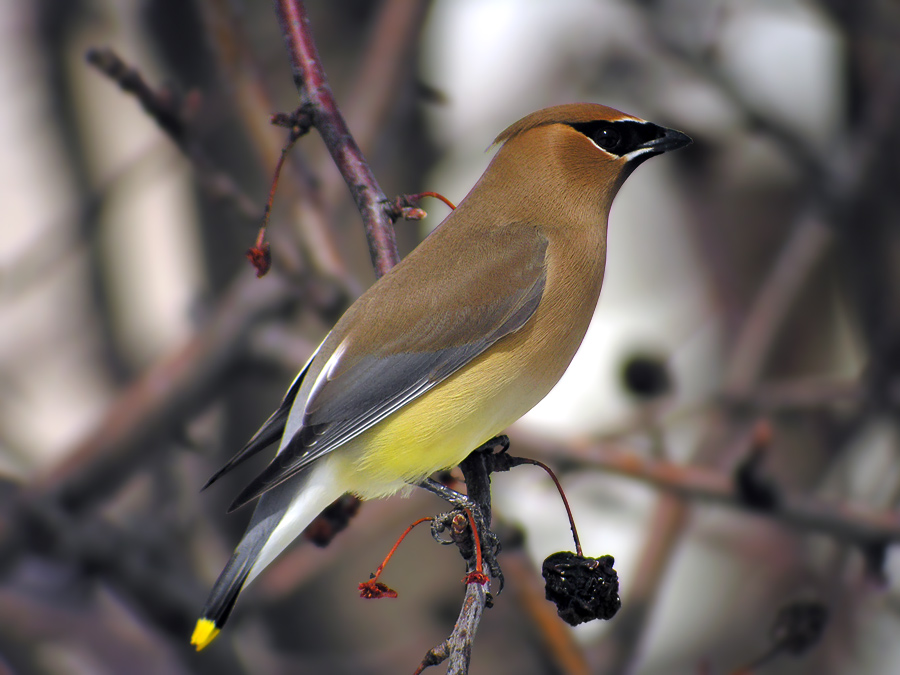
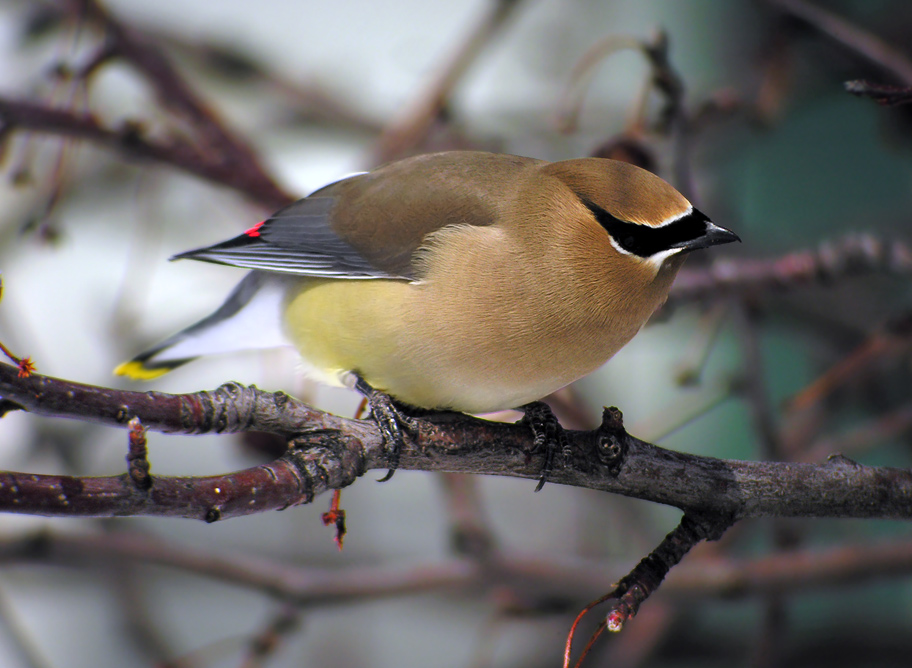
Simply Cedar Waxwings

Mr. Forgetful failed to insert a compact flash card in his camera this morning before heading out to go birding and digiscoping at Pheasant Branch Conservancy.  Still, luck seemed to be on my side once I got back to my apartment. As I got out of my car, I noticed dozens of Cedar Waxwings feeding on various berry trees in the courtyard. I dashed upstairs to fetch a flash card, came down and went right to work. The best angle on the birds exposed my face to the wind, causing my eyes to water, which made it difficult to tell how good my focus was. While a few were a little blurry, I think I managed to get some pretty good shots!


Swarovski AT80 HD & 20-60x zoom
Nikon Coolpix 8400

© 2010 Mike McDowell

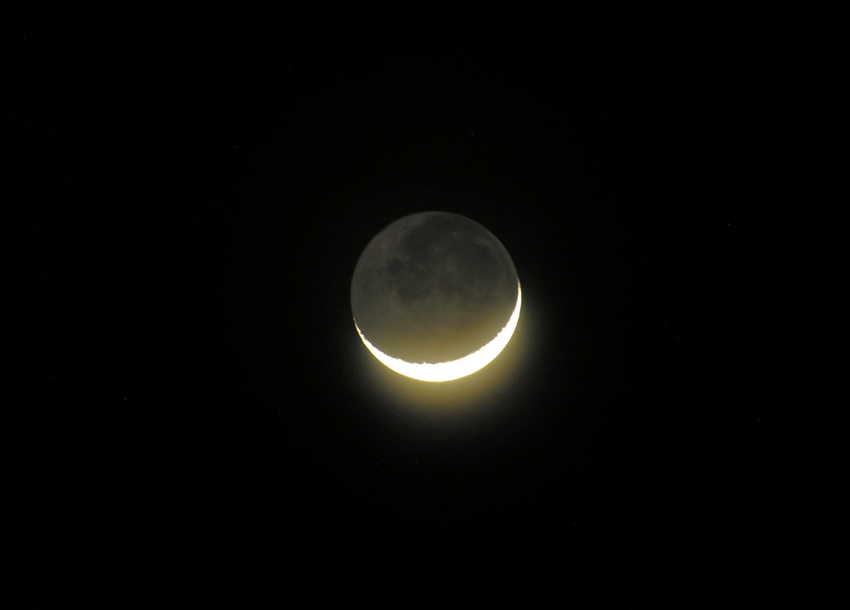
Earthshine


Here's another digiscoped waxing moon shot from Thursday evening showing significantly more earthshine than the young moon image from a few days ago. It's called "earthshine" because the light that's illuminating the dark side of the moon is reflected sunlight off of the Earth. Some people mistakenly think this image is of a solar eclipse, when in fact it's a crescent moon. It does resemble an eclipse, I'll admit, but the more visible crescent is blown out because of the intentional overexposure to capture the dark portion. The end result is still a pretty cool photograph!

© 2010 Mike McDowell
3.19.2010

Removing Chromatic Aberration II

Q: "What is that purple glow in my digiscoped bird images?"


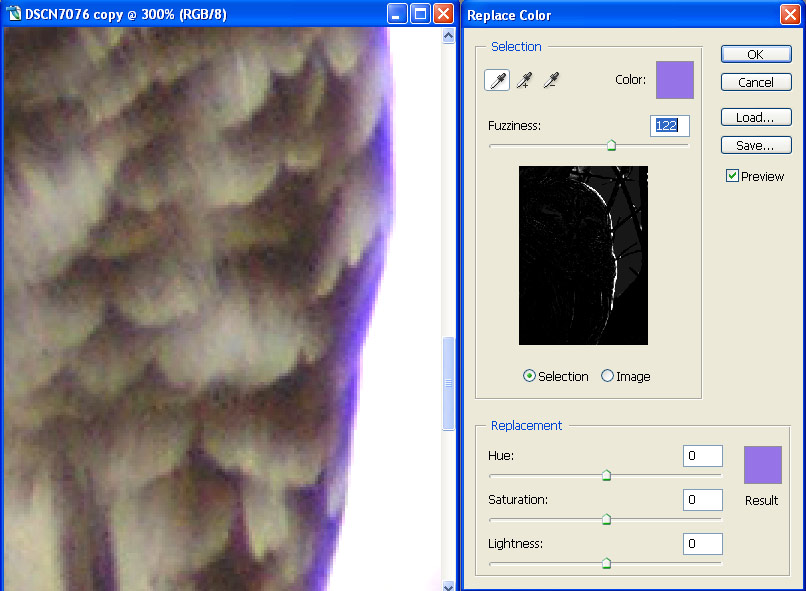
The purple color anomaly along the right side of this Barred Owl is an artifact that occurs when the optical system fails to focus all colors to the same convergence point. It can appear visually when viewing through a binocular or spotting scope, as well as a photo, and is typically exhibited along terminating edges of contrast areas. It's especially prevalent in digiscoped photographs. Technically known as Chromatic Aberration, this purple color fringing threatens to diminish the aesthetic appeal of your hard won photographic efforts.

Here's a quick & easy way that I remove Chromatic Aberration from digiscoped images using Adobe Photoshop CS. For demonstration purposes, I've cropped the original image to where the greatest amount of Chromatic Aberration is present.

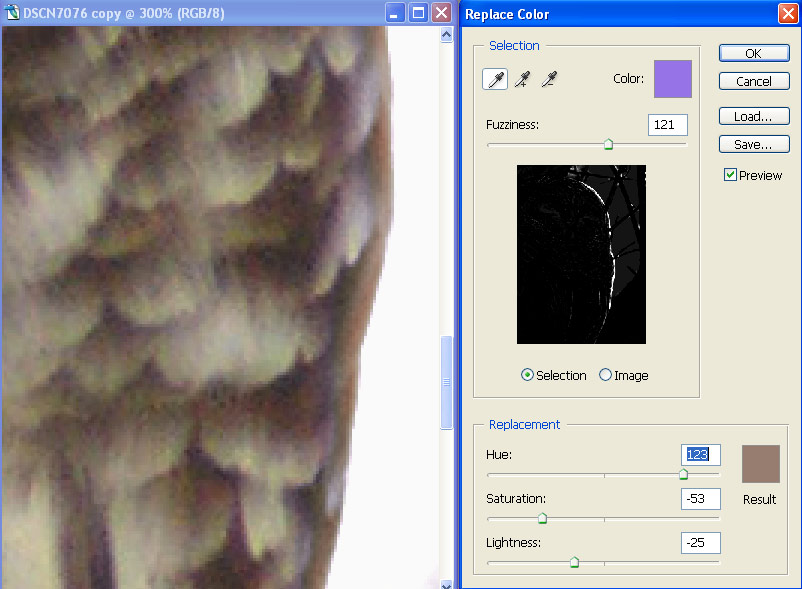
To remove the aberration, we'll use Photoshop's "Replace Color" adjustment, which can be found from the menu: Image -> Adjustments -> Replace Color. This will bring up a window that looks like this (click on image for larger version):


Using the eye-dropper, make a color selection from the purple area. Repeat this while holding down the SHIFT-KEY, sampling and adding a variety of purple hues to the selection. As you do this, you'll notice that the black and white selection image becomes more defined to match the complete purple area. Once you're done selecting purple hues, move the Fuzziness slide control to the left until the area you want to fix is completely white and everything else is black:


In the final step, adjust the Replacement Hue, Saturation, and Lightness slide controls until the selected area (previously purple) matches the rest of the bird as close as you're able to:


Click [OK] to apply the changes, and presto! No more annoying purple color fringing!


© 2010 Mike McDowell