1.28.2010

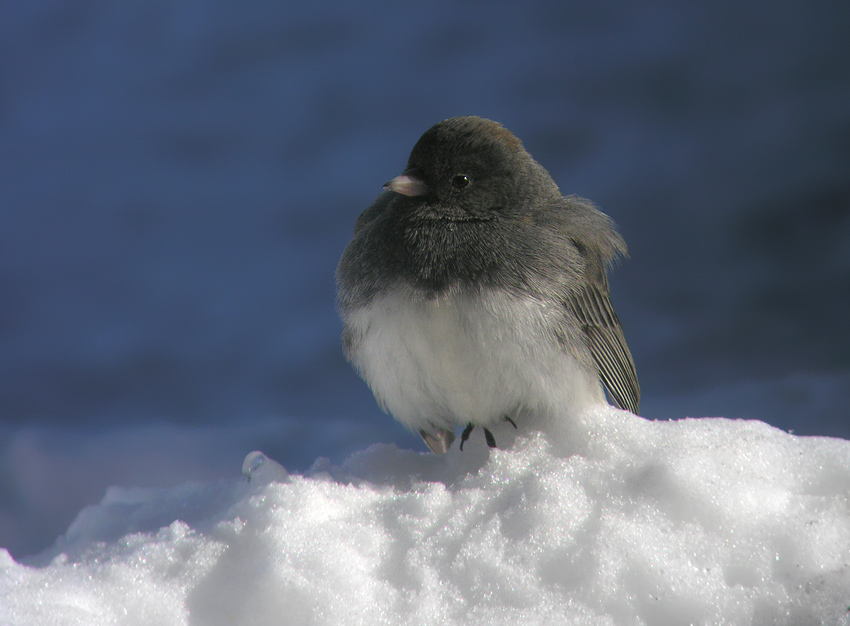
January Juncos


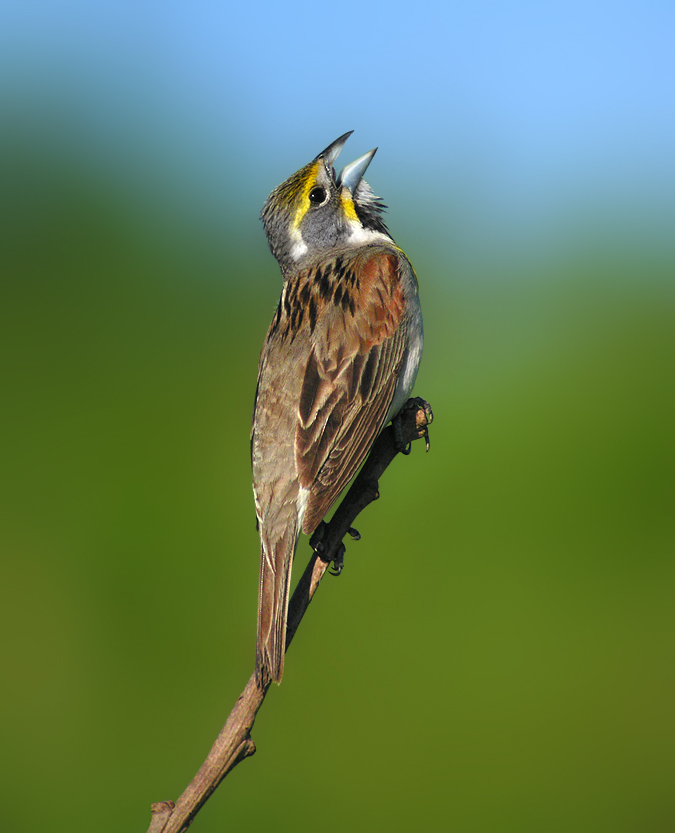
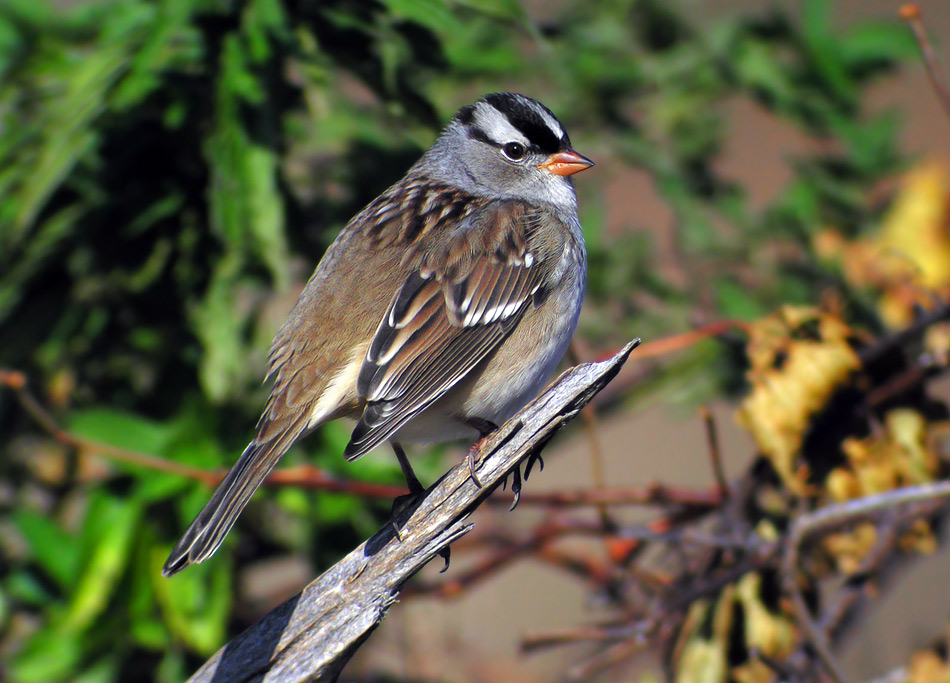
We finally have sunny weather after what seems like weeks of overcast skies, but bitter cold temperatures have returned with the clearing. I haven’t been out birding since my last blog post, and it doesn’t look like I’m going to be able to get out this weekend either. At least I have sprightly juncos outside my window at work to keep me company!

© 2010 Mike McDowell

1.17.2010

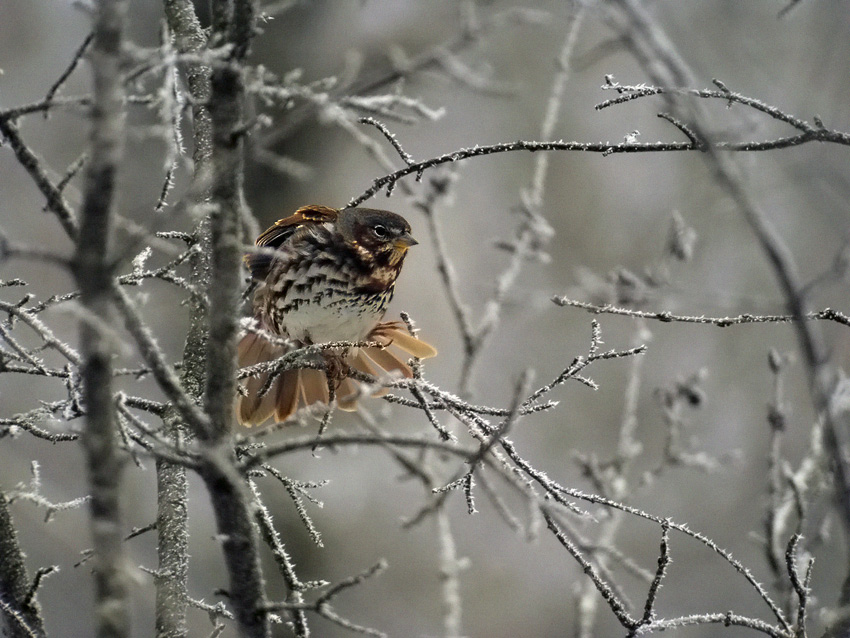
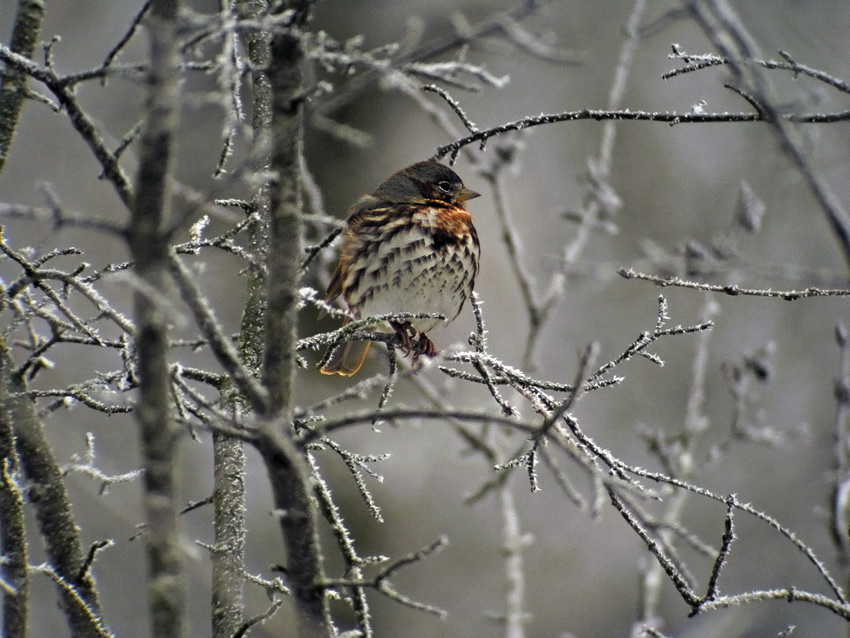
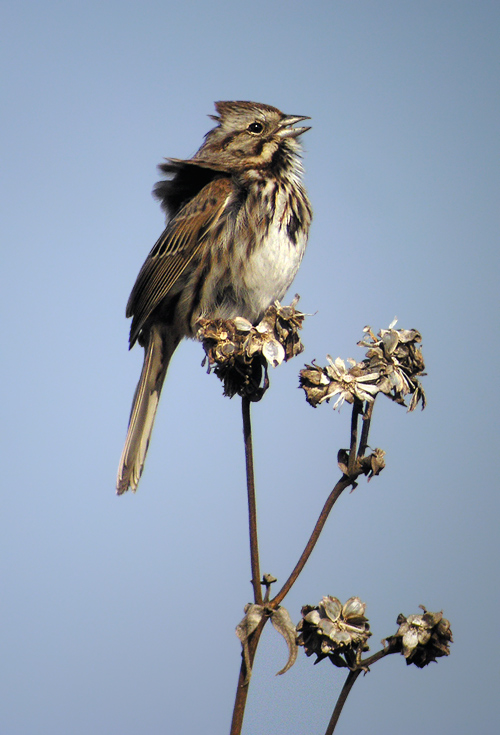
Winter Fox Sparrow


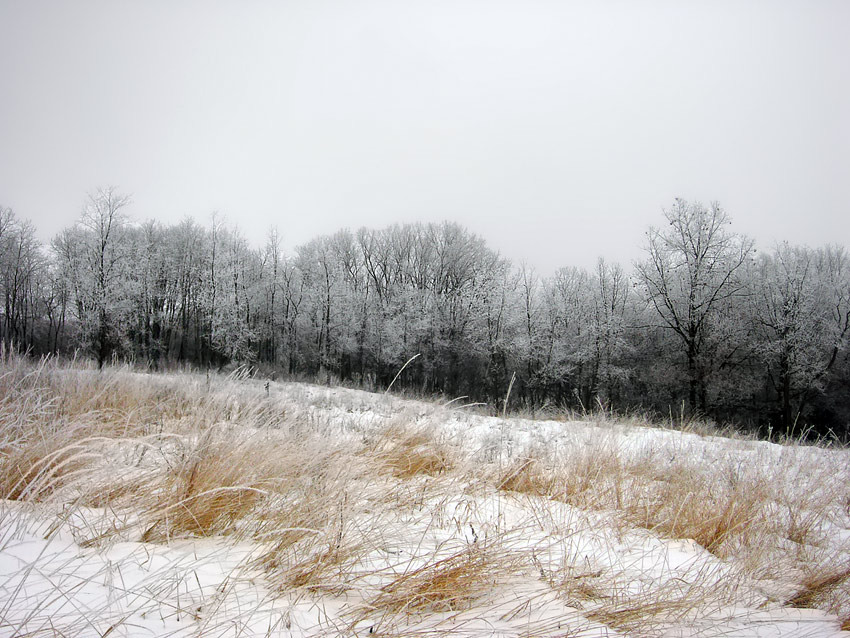
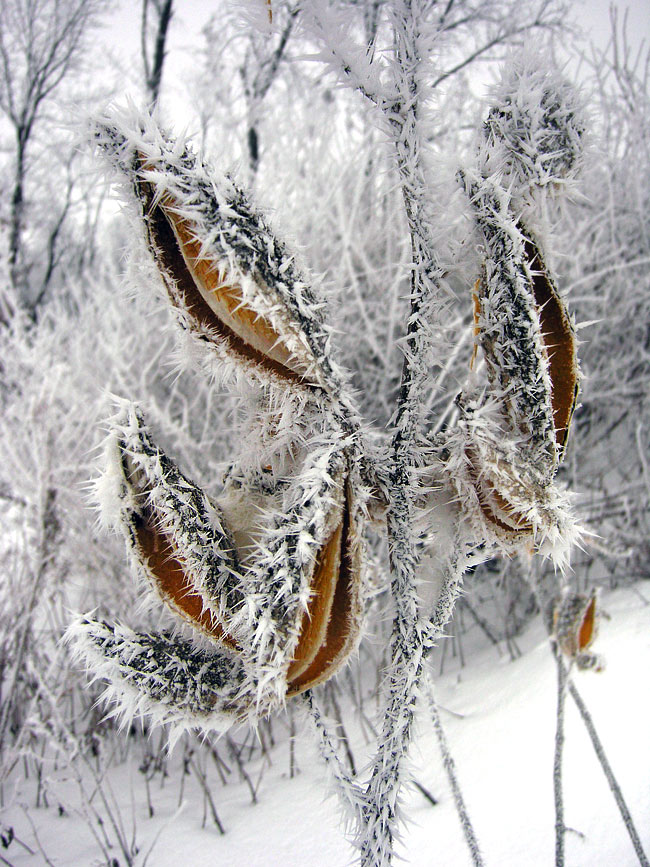
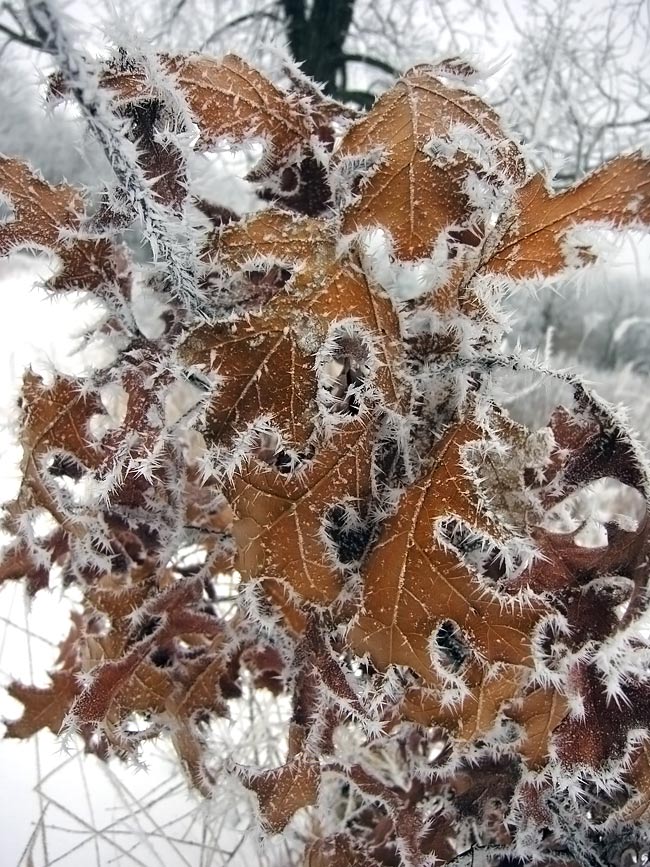
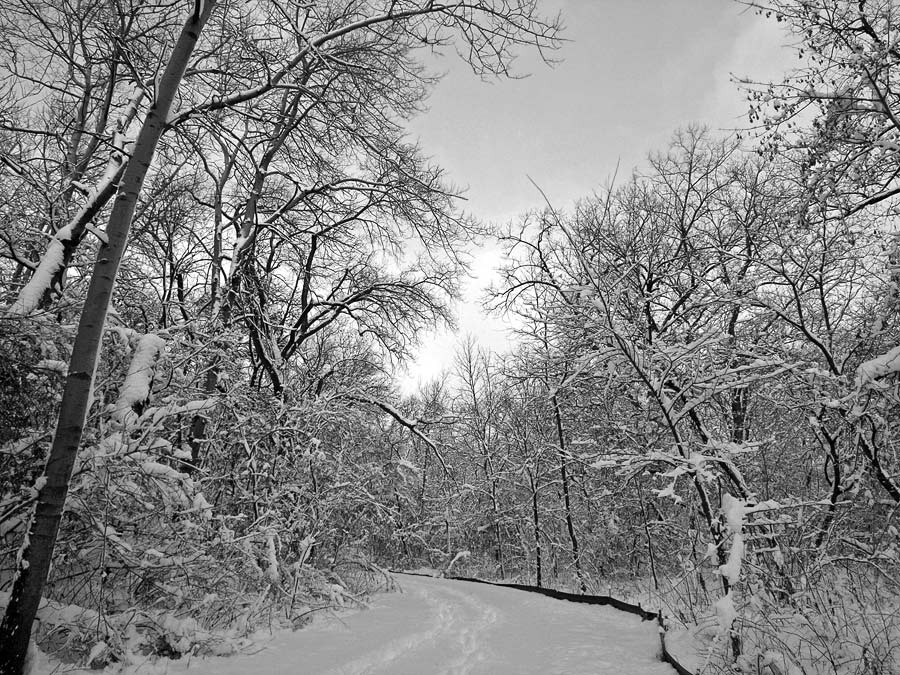
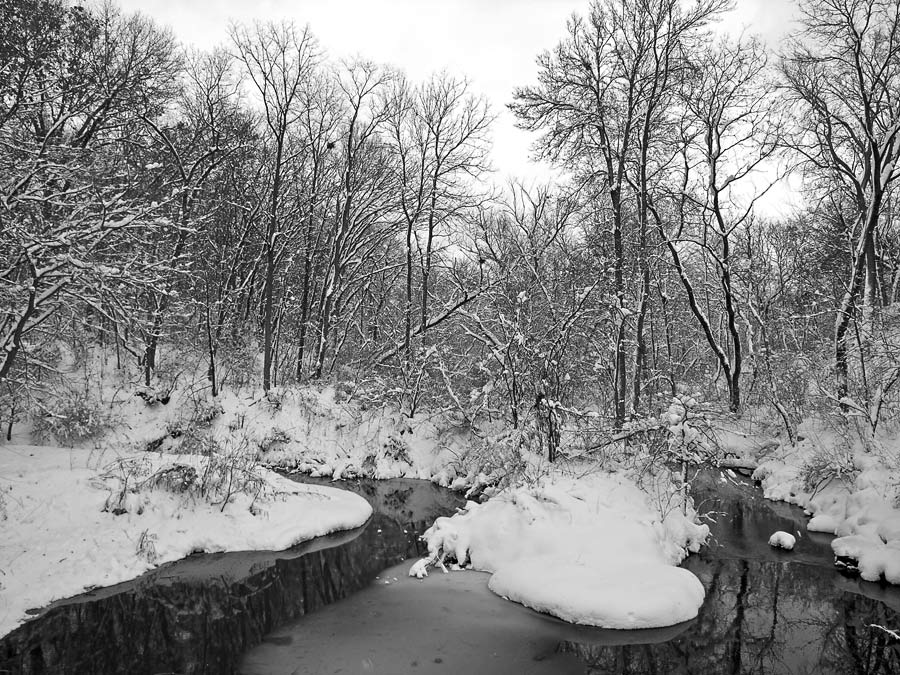
I looked out my window this morning to see everything in the courtyard and beyond covered in beautiful frozen white crystals, giving an impression of a three-dimensional black-and-white photograph. Though meteorologists predicted sunshine for the weekend, it was once again overcast with light fog. Lighting conditions were less than optimal for digiscoping, but I was beckoned by the frost to check in on the woods and the feathered ones who call it home.


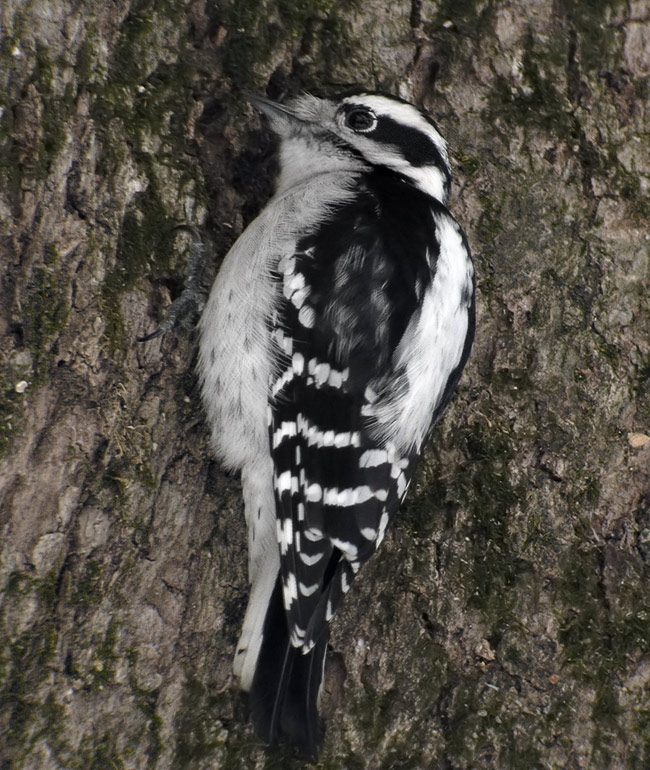
I entered Pheasant Branch at 8:00 a.m. from the overlook parking area and headed down the trail toward the bridge at the bottom of the hill. Just before the stream crossing, I found myself surrounded by a mixed-flock of spritely songbirds. I spotted Dark-eyed Juncos, American Tree Sparrows, a few White-throated Sparrows, Tufted Titmouse, White-breasted Nuthatches, Black-capped Chickadees, American Robins, Red-bellied Woodpecker, Hairy Woodpecker, Downy Woodpecker, and other birds typically found this time of year.


As I made my way along the trail adjacent to the springs, I recognized an alert call that belonged to a Fox Sparrow. I quickly spotted the bird through dense thicket below the oak trees. The curious sparrow briskly made its way up the branches to a higher perch so it could inspect the danger (me). Shifting my spotting scope for a better glimpse, I found a relatively unobstructed view of the bird through the tree branches and managed to get a few photographs.


Sometimes these I'm-looking-at-you-looking-at-me moments feel like a staring contest.  I know I'm being watched, but which of us would win? The Fox Sparrow stretched, puffed its feathers, and settled into its perch. Though anthropomorphizing this fictional match, the sparrow seemed pretty confident. But as it turned out, my imaginary game ended when a Cooper's Hawk buzzed through, sending all the songbirds for cover.


All images © 2010 Mike McDowell

1.15.2010

Getting "The Tail" from a Sedge Wren

I was organizing images and videos from 2009 this morning and came across this gem:


I'm not sure exactly what this Sedge Wren was trying to convey, and I might have felt a little insulted if it wasn't so hilarious!

Here are a few other digiscoped videos from 2009:


Watch carefully. The fish escapes between the heron's legs.


A Lark Sparrow just being ... a sparrow.

© 2010 Mike McDowell

1.08.2010

This is Shrike Country


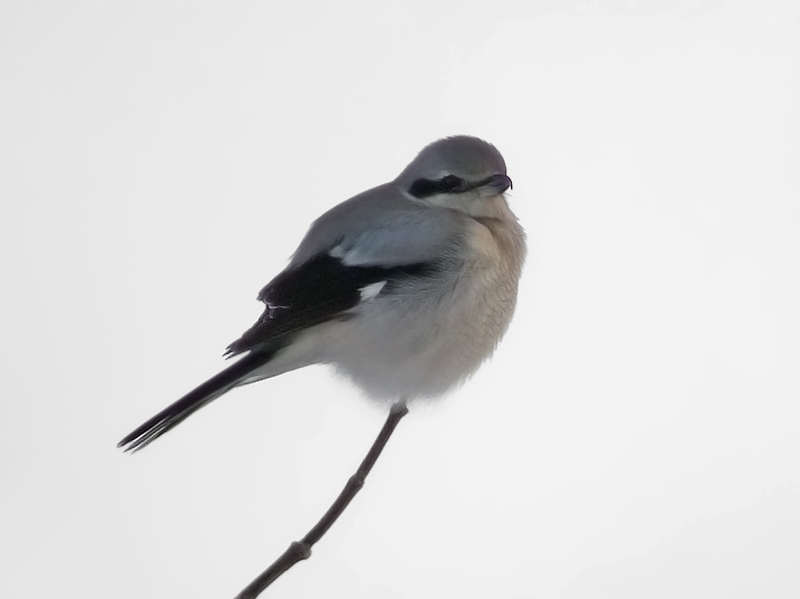
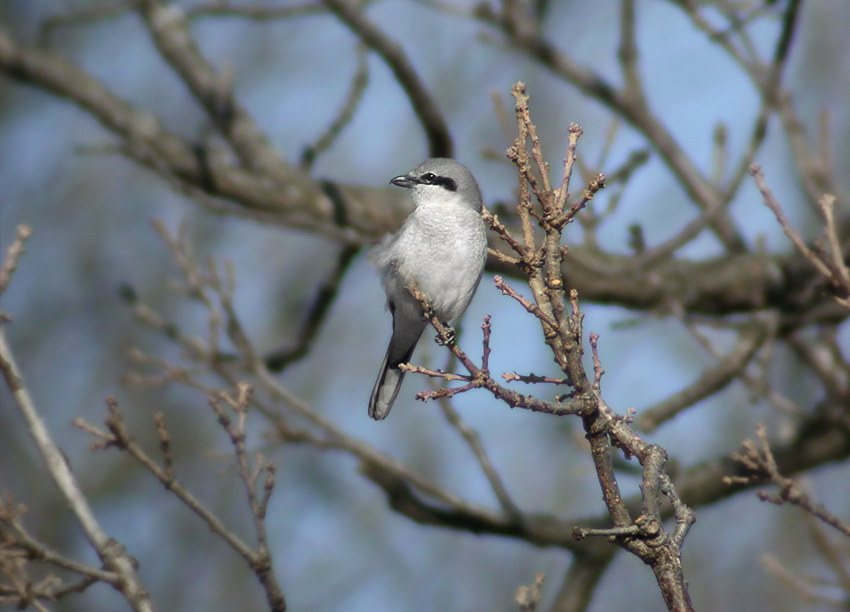
Shrike country is open country. Shrike country has peripheral perches, scrubby habitat, and lots of prey items. For as long as I've been visiting Pheasant Branch Conservancy, a Northern Shrike has claimed its snowy prairies throughout the winter months. Occasionally there's been more than one shrike. Even though I've observed a shrike there just once so far this winter, I enjoy the thought that it's there, perhaps perched atop a skinny branch protruding from the dogwood or willow thickets, intensely surveying its territory. I can also picture it hovering over the field and calling as it searches for a meal.


I know it isn't the same shrike that's been visiting, because there's been a mix of adults and juveniles over the years. But I think this speaks to the suitability of this particular habitat for shrikes. If there have been repeat visits by a particular bird, its sort of fun to imagine the prairie belonging to it. (Or do shrikes belong to the prairie?) I'm unsure what the lifespan is for these sojourners from the north, but I would assume it's longer than your typical songbird.


I was astonished and shocked to discover that Northern Shrikes were once shot in Boston Common to protect newly introduced English Sparrows. Such a fact causes me to ponder how future environmentalists will view our present conservation efforts decades from now. Might we be viewed as misguided as that?

Hark - hark - from out the thickest fog
Warbles with might and main
The fearless shrike, as all agog
To find in fog his gain.

Hi steady sail he never furls
At any time o'year,
And perched now on winter's curls,
He whistles in his ear.
 
- Henry David Thoreau

All images © 2010 Mike McDowell

1.05.2010

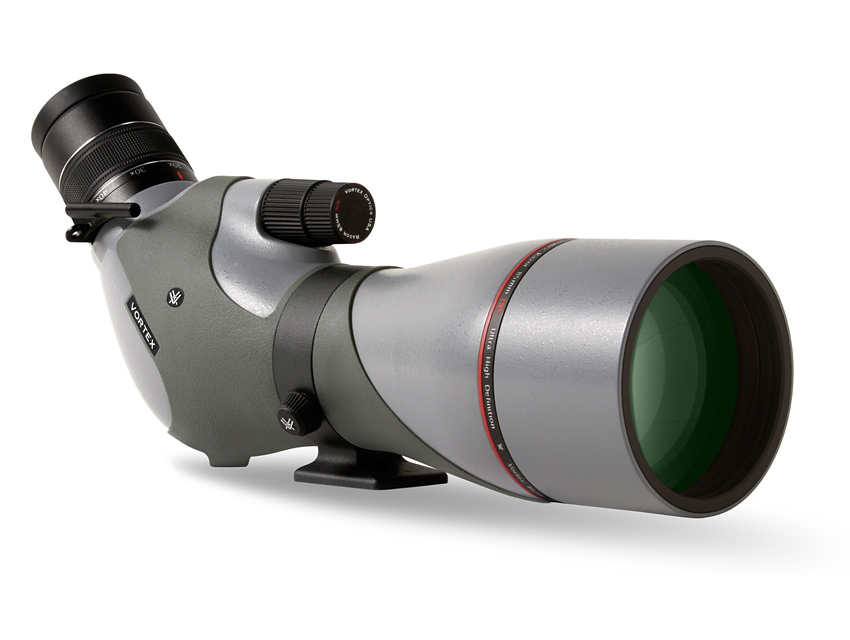
Vortex Razor 20-60x85 HD Spotting Scope!


Vortex Razor 20-60x85 HD

We'll begin 2010 with a spotting scope review!

I recently spent a few hours evaluating the Vortex Razor 20-60x85 HD spotting scope alongside some of its market rivals. Considering the comparatively friendly price of the Vortex Razor scope at $1,599.99, I was curious how it would stack up against my personal favorite high-end spotting scopes. Under overcast lighting, I compared it with a Swarovski 80 HD, Zeiss 85, Kowa 88 Prominar, and Leica 82 APO on a resolution chart placed at 100 yards.

To my critical eye, the Kowa Prominar and Swarovski HD offer marginally better detail at 60x, viewing a resolution chart at 100 yards. Compared to the other scopes, the Zeiss 85 exhibits a distracting warm colorcast, with whites tinged yellow. The Leica and the Kowa beat everything else in terms of brightness under low light. All but the Zeiss 85 has excellent edge-to-edge sharpness. These were the obvious differences in optical performance that most scope observers should be able to discern. For an 85mm aperture scope, the Vortex Razor HD is very compact. At 65.7 ounces, it may feel a little heavy when holding it in your hands, but it's well-balanced when mounted on a tripod. The Leica APO 82 is the heaviest at 68.16 ounces. Typical of other high-end spotting scopes on today's market, the Razor HD has a dual fine and coarse focusing knob.

Digiscoping with the Razor HD

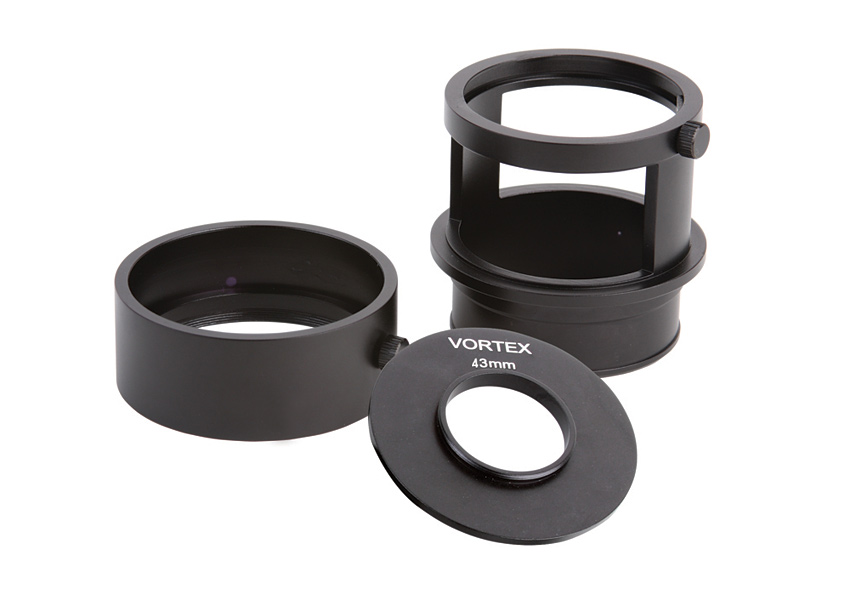
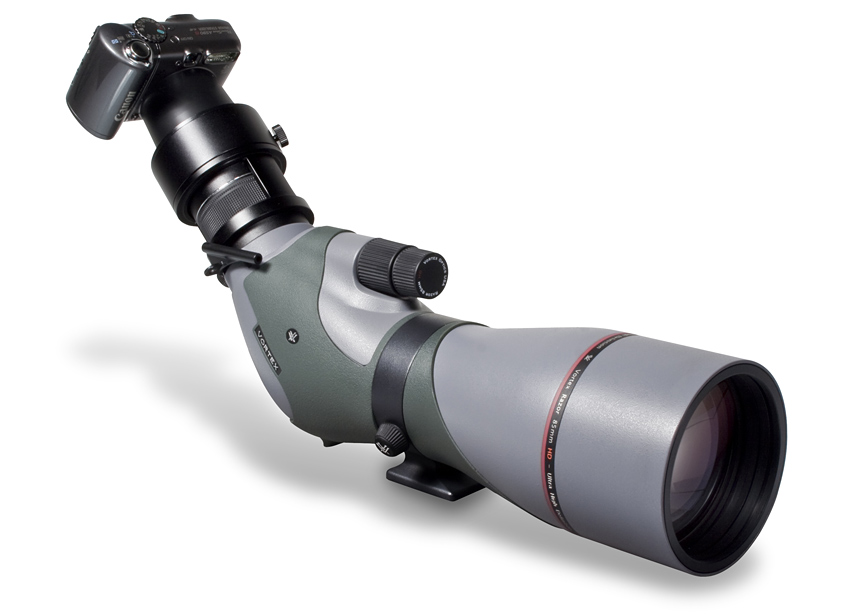
Of particular interest to me was the Razor's digiscoping adapter (sold separately). Like the extremely popular Digital Camera Adapters made by Swarovski and Kowa, the Razor DCA is thread-based and includes adapter rings in these sizes: 30mm, 37mm, 43mm, 52mm, 55mm, and 58mm. This adapter will support the best point-and-shoot digital cameras for digiscoping as well as a DSLR coupled to the spotting scope's eyepiece.


Vortex Razor Digiscoping Adapter


Vortex Razor digiscoping setup

Digiscoping Samples:


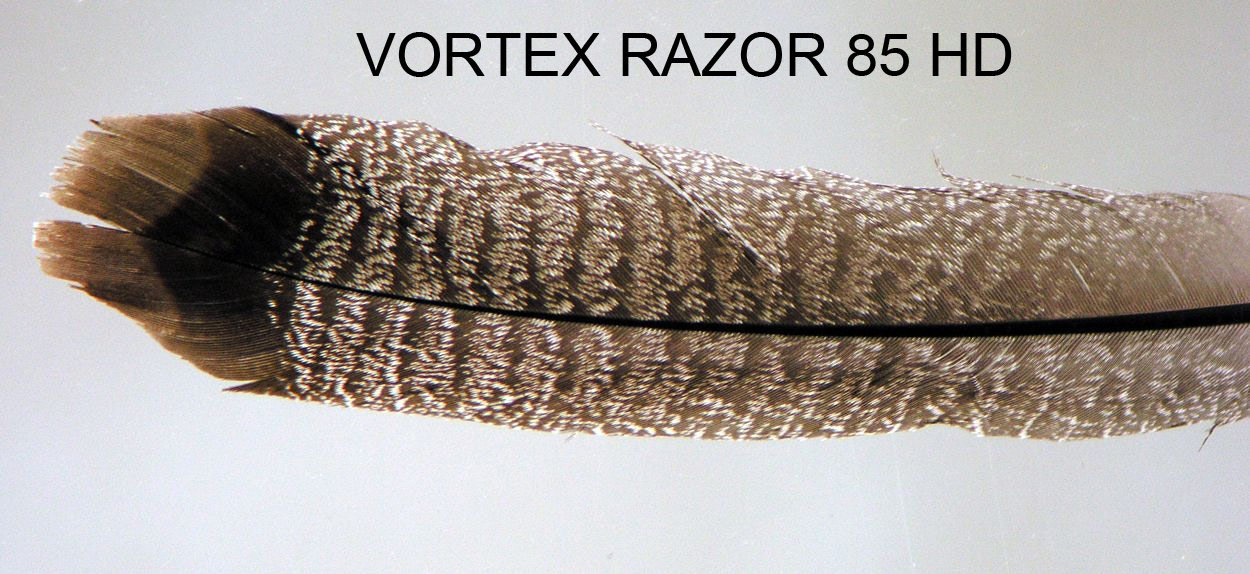
The top feather was digiscoped with a Swarovski 80 HD and the bottom through a Vortex Razor HD, same digital camera (Nikon Coolpix 8400) and settings. I can tell the top image is a little sharper in some detail areas, but admit they're pretty close. Again, when considering the price difference by performance, the Vortex Razor HD is a very attractive option even for digiscoping. So, if you're in the market for a new spotting scope but want to keep the price tag under $2,000.00, there's nothing out there that'll beat the Razor HD in its price class. At the same time, you'll enjoy optical performance that's right up there with the top scopes!

Strengths:

  • Optical views comparable to rival high-end scopes at a fraction of the cost.
  • Vortex HD System: XR coatings, XD Objective lens elements, XT Optical Design.
  • Digiscoping Friendly!
  • Eyepiece included!
  • Waterproof & Fogproof (Argon gas purged).
  • Dual (fine and coarse) focusing system.
  • Unconditional Warranty.

Weaknesses:

  • A bit heavy at 65.7 ounces.
  • At present, only available in an angled body format.

© 2010 Mike McDowell

12.22.2009

That's all for 2009!

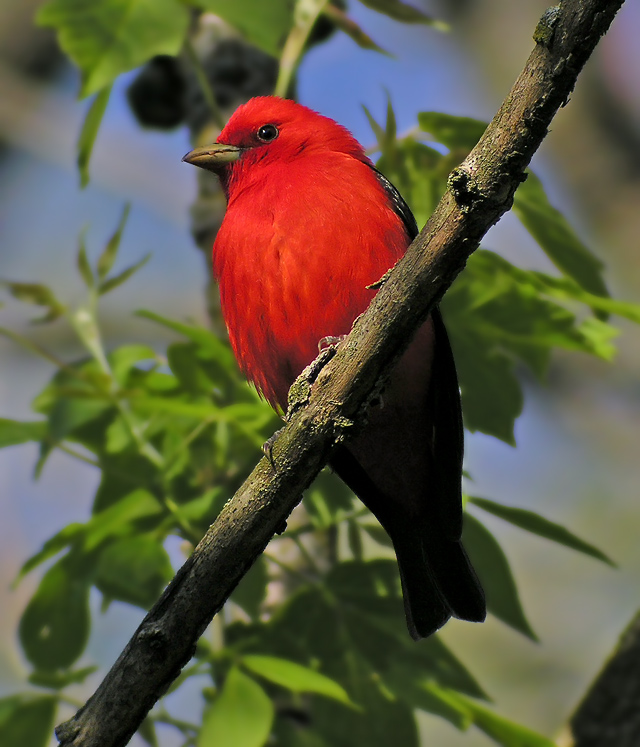
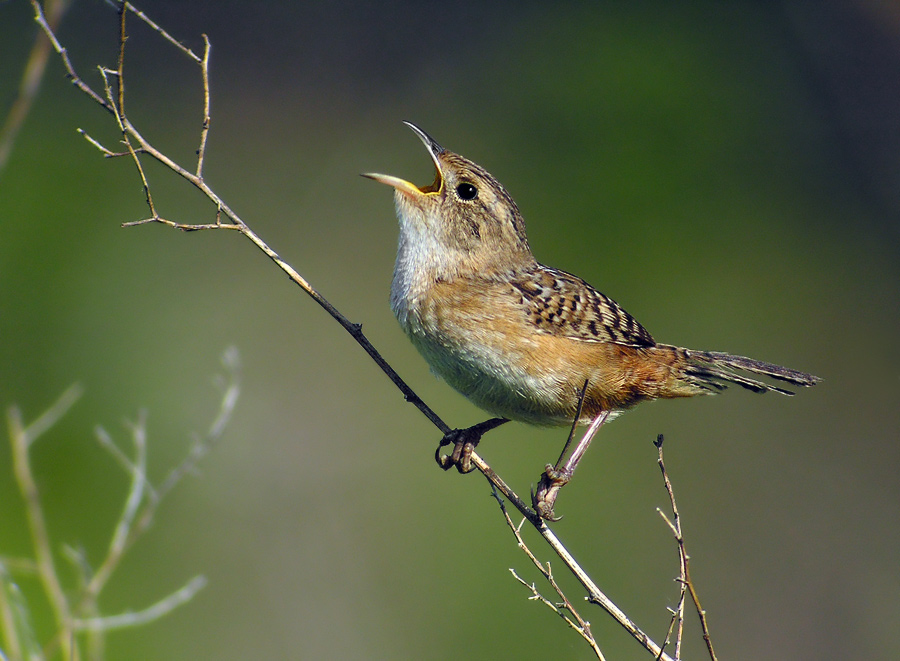
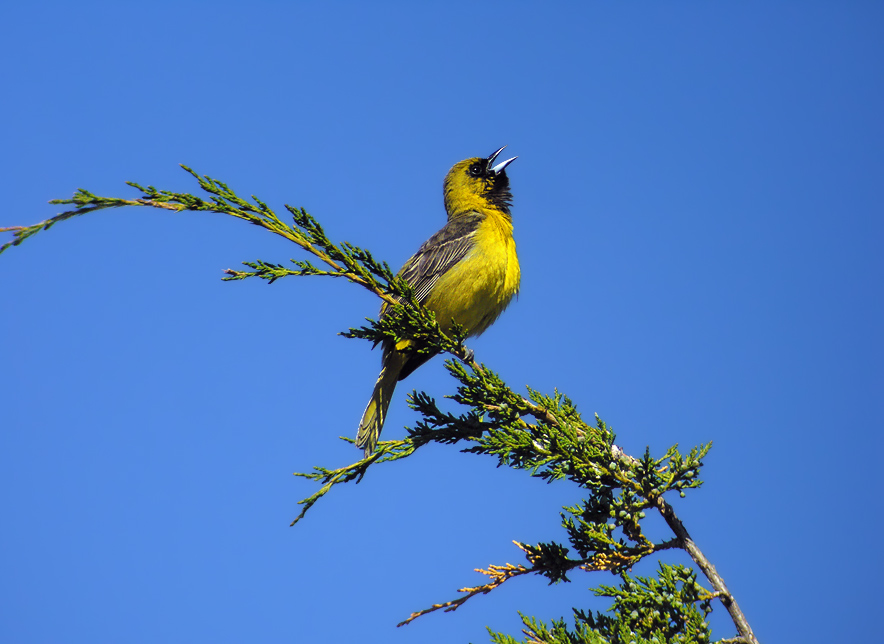
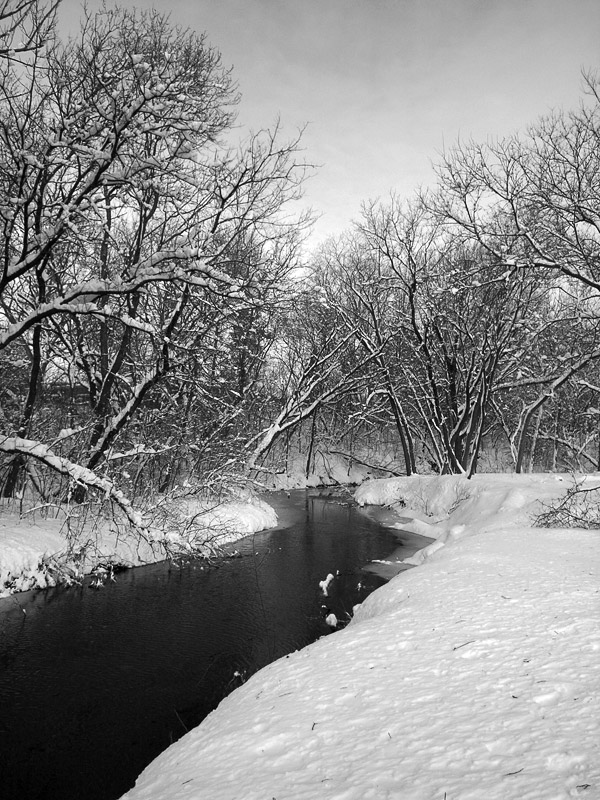
Keeping it relatively green, I kept close to home for the majority of my birding excursions in 2009. In terms of numbers, I had my best year ever at Pheasant Branch Conservancy with 167 bird species in 75 visits. (eBird's total for the conservancy is up to 209 species.) My Wisconsin 2009 year list stands at 207, my lowest on record (a good thing). My longest drive to watch birds was Horicon NWR to attend the annual festival as a volunteer field trip leader. I also led several field trips for Madison Audubon and one for The Nature Conservancy. Birding locations outside of Dane County included Baxter's Hollow, Spring Green Preserve, and Cook Arboretum. I donated to several conservation groups, including Operation Migration, Raptor Education Group, Inc., and The Nature Conservancy. While the overall output of my digiscoping was down, I was fortunate to experience one of my most productive years in terms of quality. Here's a sampling of 2009's beautiful bird memories:


All of these birds were photographed in their natural environment. No playback devices were used to attract them. Songbirds were not provided with birdseed or any other food items to lure them into the open. Birds of prey were not baited with living animals.

See you in 2010!

© 2009 Mike McDowell
12.17.2009

Digiscoper of the Year!

A Winning Shot!

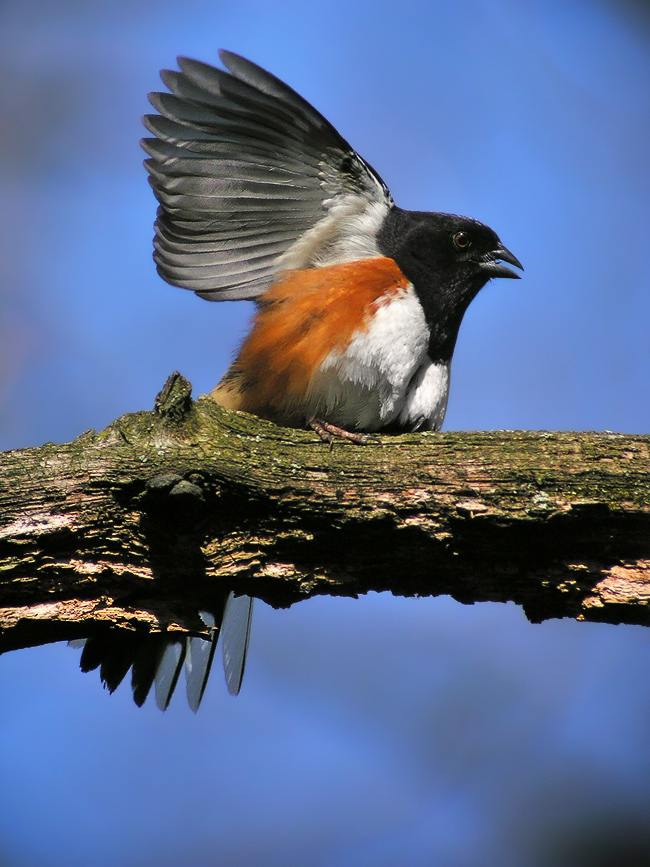
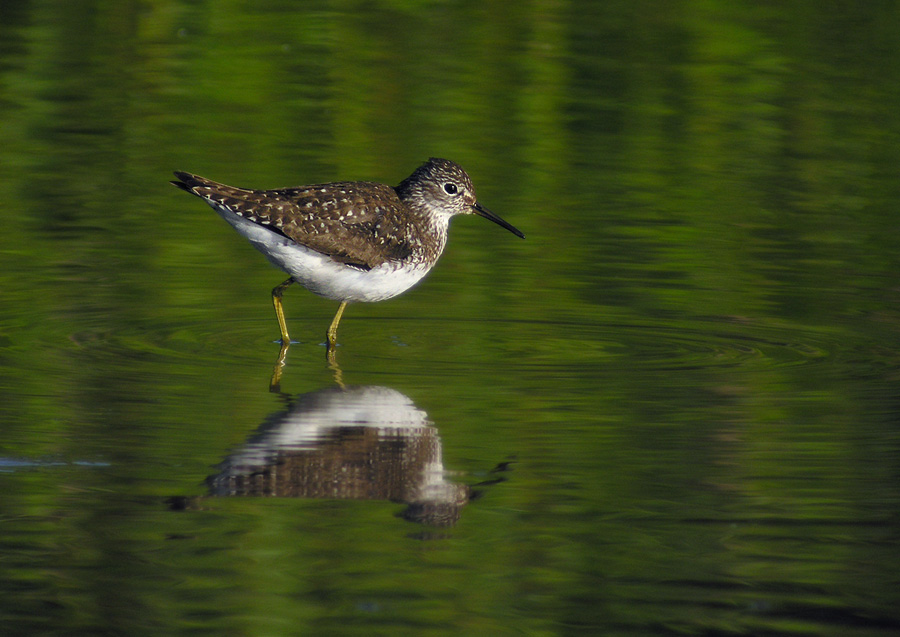
"Jersey Digiscoper" Kevin Bolton notified me this morning via email that I'm one of ten winners of Swarovski's 2009 Digiscoper of the Year Contest! The 1st place prize went to Steve Berliner for his fabulous shot of a Pileated Woodpecker sipping from a pool of water with a nice reflection. Of the images I submitted, I thought my Eastern Towhee shot was the best, but I'm also very fond of the Sedge Wren (above) the judges selected.

Check out all the contest winners at the Digiscoper of the Year website!

Link: More Winners! (Birdchick's)

© 2009 Mike McDowell
12.16.2009

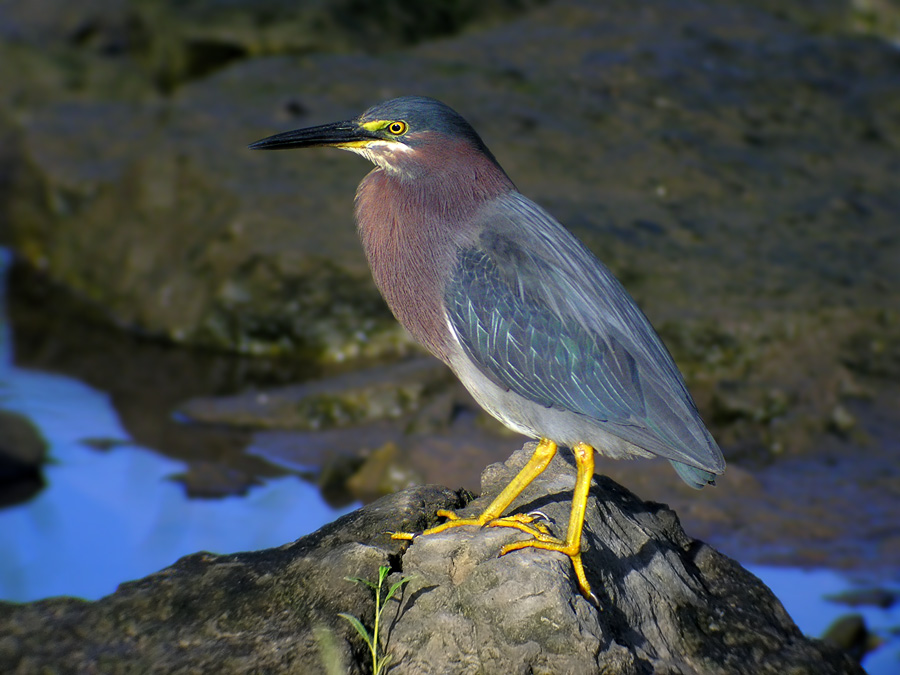
Record Year for Fledged Bluebirds!


"A record-breaking 28,814 fledging bluebirds were reported by BRAW monitors in 2009. This is 7,435 more fledglings than last year and slightly better than the previous all-time record two years ago when 28,244 fledglings were reported."

Link: Bluebird Restoration Association of WI

Link: 2009 Report (Adobe .PDF)

© 2009 Mike McDowell

12.14.2009

Barrow's Goldeneye in Madison!


While birding Madison area lakes yesterday, Aaron Stutz found a Barrow's Goldeneye on University Bay, probably the first Dane County record for the species. Jesse Peterson stopped by to pick me up on his way to see the bird. Knowing it was going to be too far from shore for a close-up, I went along to at least try for a documentation photograph.

© 2009 Mike McDowell
12.10.2009

After the Blizzard


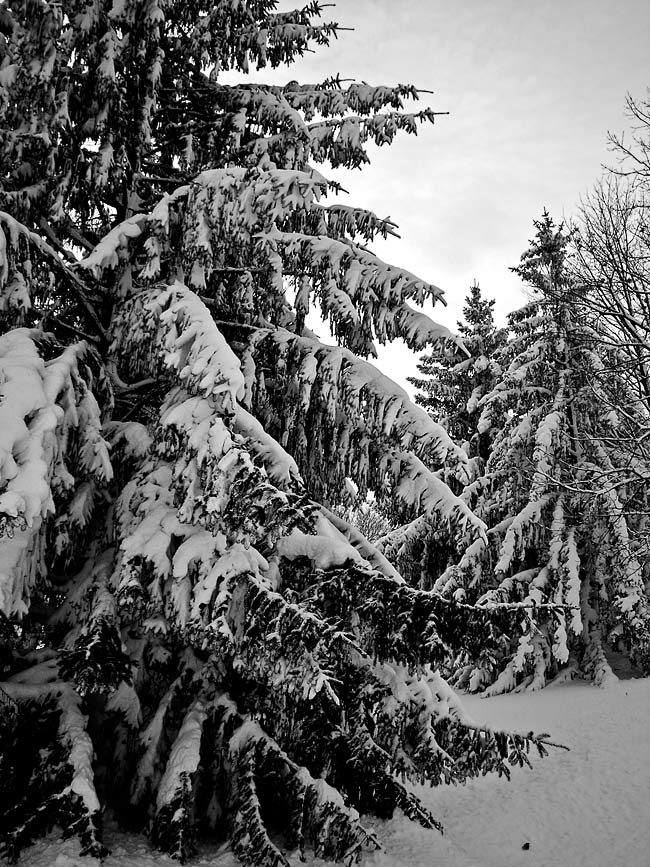
So, what do you do when Mother Nature drops 18 inches of snow on you? Go snowshoeing! Madison, and the entire state of Wisconsin, was pretty much shut down Wednesday. After doing a few chores around my apartment, I began to get restless. I needed to get out and do some exploring and photography.


I managed muster up enough courage and energy to go for a 3 mile snow hike before the winds picked up and temperature dropped. It's Thursday morning as I write, and the wind chill is a bitter -16 degrees Fahrenheit. Now the temperature matches the forlornness of woods under a fresh blanket of snow with a grey canopy. Snow is pretty for a little while, but by early January I'm ready for spring.


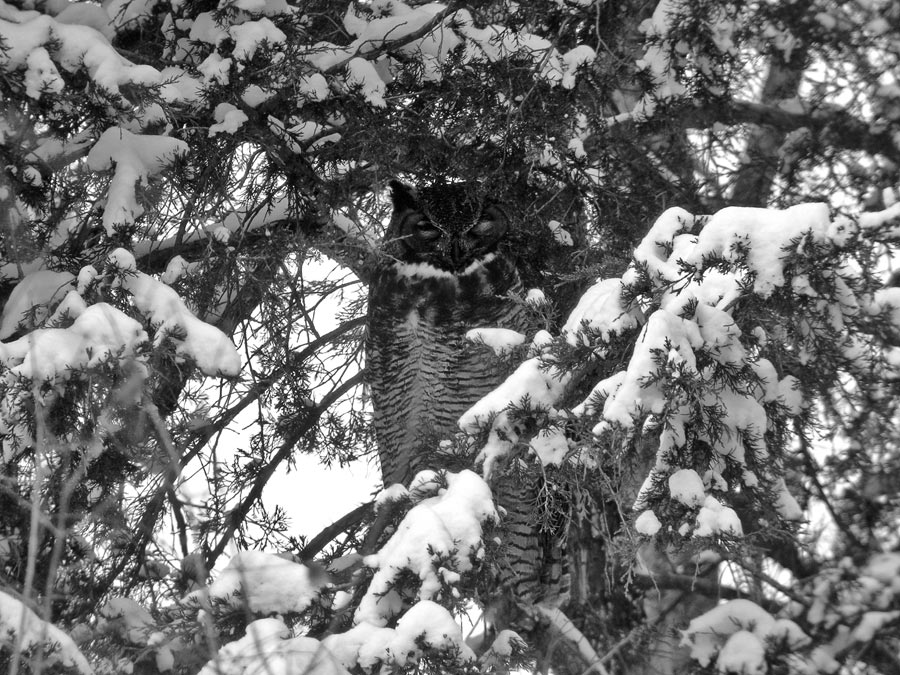
Birds were fairly scarce, but I managed to find a Red-tailed Hawk, American Crow, Brown Creeper, White-breasted Nuthatch, Black-capped Chickadee, Northern Cardinal, and a few Dark-eyed Juncos. Scanning carefully through the few conifers dotted along the creek corridor, I found a roosting Great Horned Owl.


All images © 2009 Mike McDowell

12.08.2009

2010 Phenology Calendar


This year's calendar includes images from local photographers Mike McDowell, Elizabeth Thompson, Eric Peyrot and Colette Kolker Wagner. Eric Peyrot's wetland scene is featured on the cover. You can see more from Mike McDowell in his digiscoping blog on birds and nature, and Colette Kolker Wagner's photos are on exhibit in Elegance in Nature at the University of Wisconsin Library December 3, 2009 through January 21, 2010.
  • Full color photos by local photographers
  • Checklists of animal and plant events
  • Climate and sunrise/sunset data
  • Monthly nature notes

Great gift for nature enthusiasts!

Link: 2010 Phenology Calendar now available